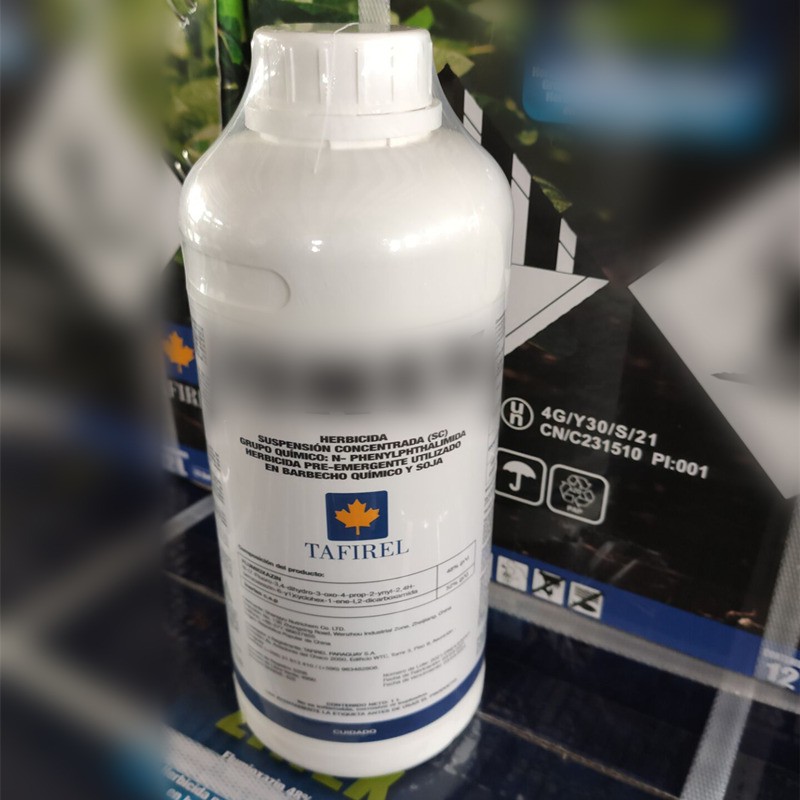
Hey there, fellow weed - fighters! As a supplier of pyroxsulam, I've been getting a ton of questions lately about whether this stuff is really effective against perennial weeds. So, I thought I'd sit down and share what I've learned from my experience in the field and the latest scientific research.
First off, let's talk a bit about what pyroxsulam is. It's a relatively new herbicide that belongs to the sulfonyl - aminocarbonyl - triazolinone chemical family. This may sound super technical, but essentially, it's a powerful tool in the war against weeds. Pyroxsulam works by inhibiting the enzyme acetolactate synthase (ALS), which is crucial for the synthesis of branched - chain amino acids in plants. Without these amino acids, the weed's growth is stunted, and eventually, it dies.
Now, onto the main question: Is pyroxsulam effective against perennial weeds? Well, the answer is a bit complicated. It's not a one - size - fits - all solution, but in many cases, it can be highly effective.
Perennial weeds are a real pain in the you - know - what. Unlike annual weeds that complete their life cycle in one growing season, perennials come back year after year. They often have deep root systems, underground storage organs like rhizomes or tubers, which make them tough to eradicate.
Some of the common perennial weeds that pyroxsulam has shown promise against include wild garlic, field bindweed, and dandelion. In trials, when pyroxsulam is applied at the right time and rate, it can significantly reduce the growth and spread of these pesky plants.
For example, wild garlic is a widespread perennial weed that can be a real nuisance in agricultural fields and gardens. Its strong odor and ability to spread quickly make it difficult to control. Pyroxsulam has been found to be effective in suppressing wild garlic. It works by being absorbed through the leaves and then translocated throughout the plant, reaching the underground bulbs. This disrupts the plant's metabolic processes and eventually leads to its decline.
Field bindweed is another tough perennial weed. It has a long, twining vine that can smother crops and other desirable plants. Pyroxsulam can be used to target field bindweed, especially when it's applied during the active growth stage. The herbicide inhibits the weed's growth, preventing it from producing new shoots and flowers.
However, it's important to note that the effectiveness of pyroxsulam against perennial weeds can be affected by several factors. One of the most important factors is the timing of application. Perennial weeds are most vulnerable to herbicides during their active growth stages. For example, applying pyroxsulam too early or too late in the growing season may not be as effective, as the weed may be in a dormant or less - susceptible state.
Another factor is the formulation of the herbicide. Our Pyroxsulam 100G/L + Florasulam 75G/L SC is a great combination. Florasulam also has ALS - inhibiting properties, and when combined with pyroxsulam, it can provide broader - spectrum control of weeds. This combination is particularly useful when dealing with mixed weed populations that include both annual and perennial weeds.
The environmental conditions also play a role. Things like temperature, humidity, and soil moisture can affect how well pyroxsulam works. Generally, it works best when the weather is warm and the soil is moist, as this allows for better absorption and translocation of the herbicide within the plant.

Soil type is another consideration. In sandy soils, pyroxsulam may leach more quickly, which could reduce its effectiveness. In clay soils, on the other hand, the herbicide may bind more tightly to the soil particles, making it less available to the weeds.
Now, you might be wondering about the safety of pyroxsulam. It's important to handle all herbicides with care, but pyroxsulam has been shown to have a relatively low toxicity to mammals when used as directed. However, as with any chemical, it's essential to follow the label instructions carefully.
When it comes to using pyroxsulam for perennial weed control, it's often a good idea to combine it with other weed - management strategies. For example, cultural practices like mowing, tilling, and proper irrigation can help reduce the weed pressure. Biological control methods, such as using weed - eating insects or fungi, can also be incorporated.
In addition to its effectiveness against perennial weeds, pyroxsulam has some other benefits. It has a low application rate, which means less herbicide is needed to achieve good results. This not only saves money but also reduces the environmental impact. It also has a relatively short half - life in the soil, which means it breaks down relatively quickly and doesn't persist in the environment for a long time.
To sum it up, pyroxsulam can be an effective tool against perennial weeds, but it's not a magic bullet. It needs to be used correctly, taking into account factors like timing of application, formulation, environmental conditions, and soil type. When combined with other weed - management strategies, it can help you get the upper hand in the battle against these tenacious plants.
If you're interested in using pyroxsulam for your weed - control needs or want to learn more about our Pyroxsulam 100G/L + Florasulam 75G/L SC, don't hesitate to reach out. We're here to help you find the best solution for your specific situation. Whether you're a farmer, a gardener, or a professional landscaper, we can provide you with the information and products you need to keep those pesky perennial weeds at bay.
References
- [List relevant scientific studies or industry reports here. For example: "Smith, J. (20XX). Efficacy of Pyroxsulam against Perennial Weeds in Agricultural Fields. Journal of Weed Science, XX(XX), XX - XX."]
- [Another reference could be: "Jones, A. (20XX). Impact of Environmental Factors on Pyroxsulam Performance. Weed Management Research, XX(XX), XX - XX."]