

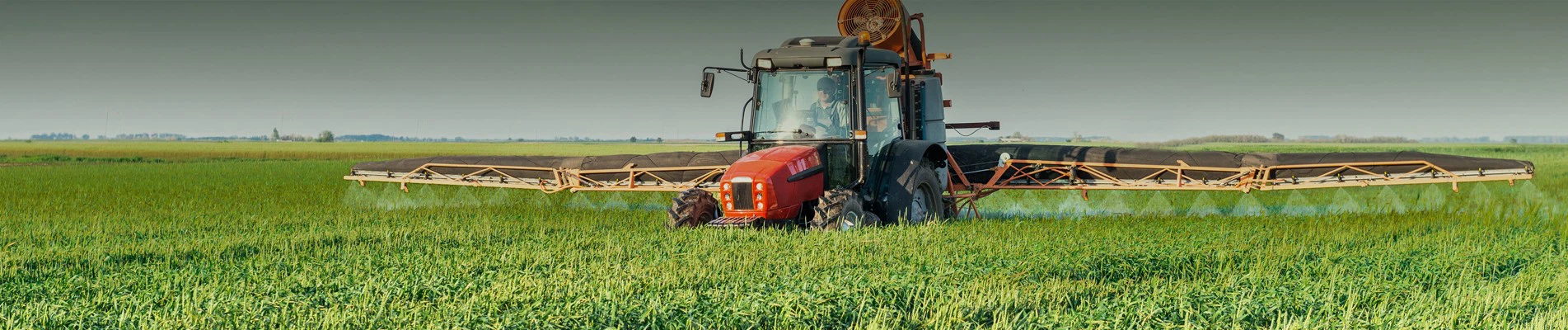
Your Professional Plant Growth Regulator Supplier
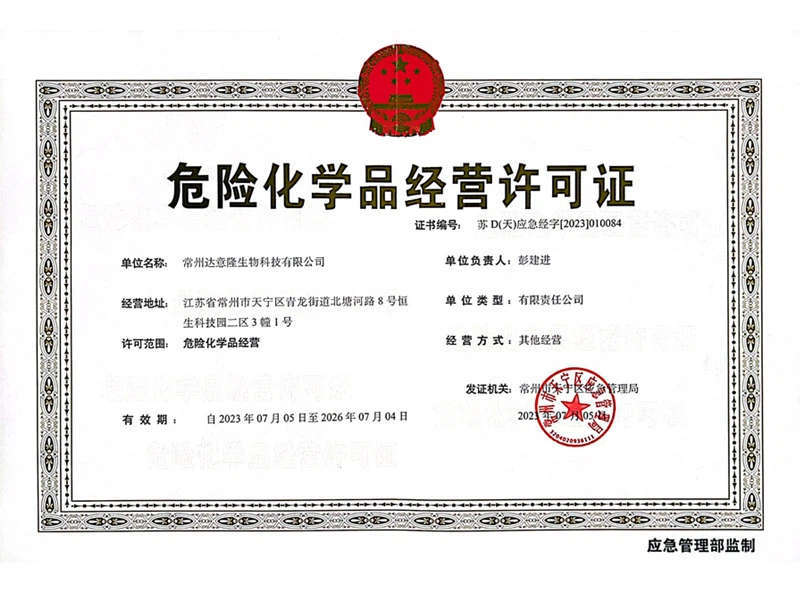
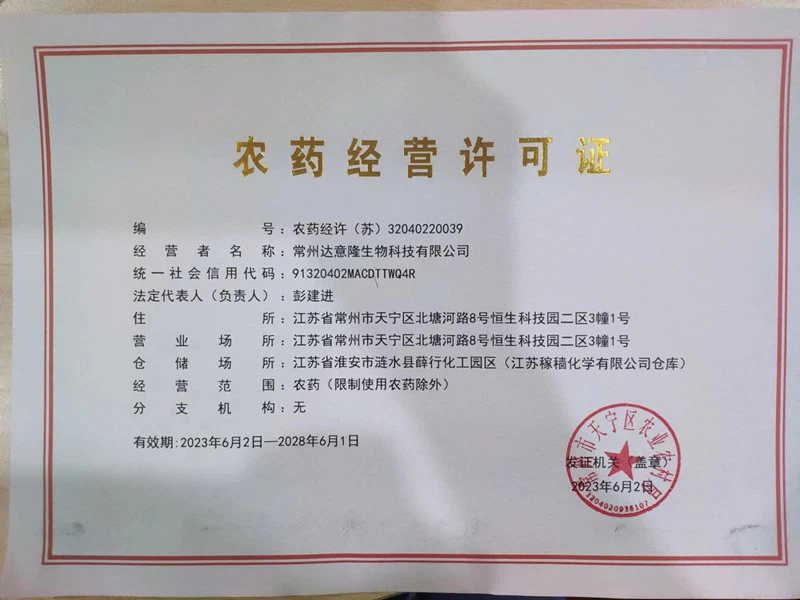
Changzhou Dayilong Bio-Tech Co., Ltd. is a specialized manufacturer dedicated to the production of insecticides, fungicides, herbicides, plant growth regulators, pesticide intermediates, and pesticide auxiliaries.
Complete Production Equipment
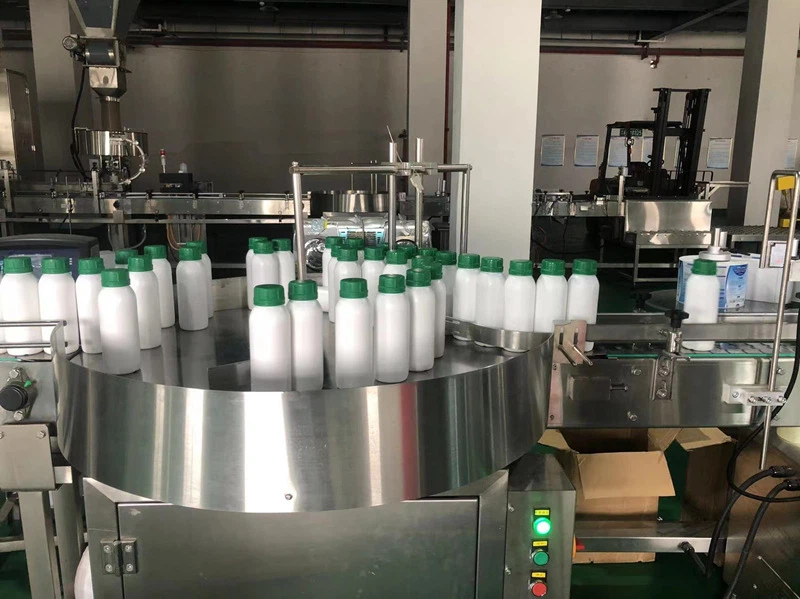
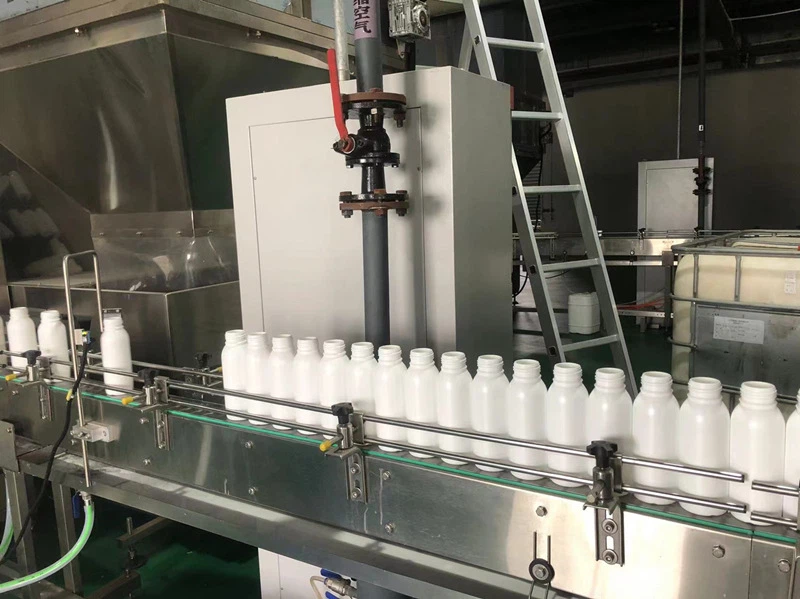
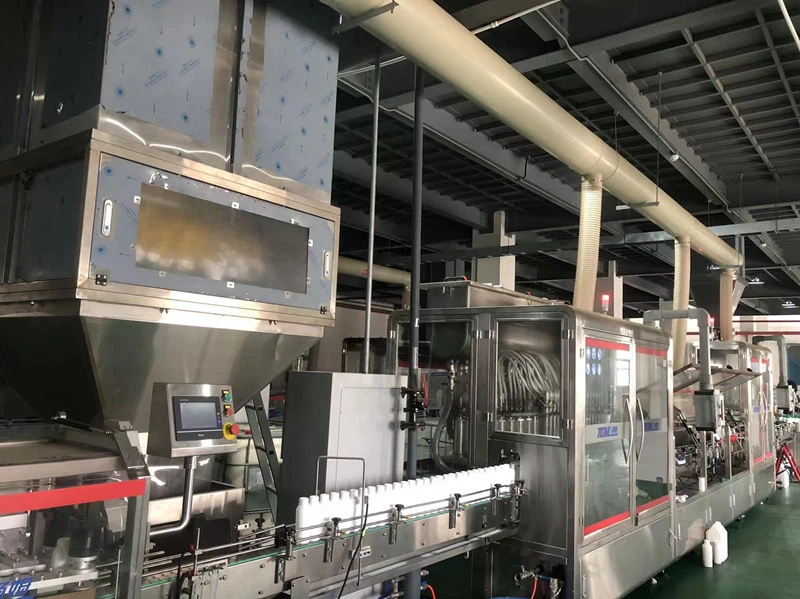
The company has complete OD, SC, SL, EC, FS and other liquid dosage form production equipment, such as grinding machine, colloid shear mill, all kinds of reaction devices, etc. With automatic filling equipment, capping equipment, packaging equipment, packaging equipment, etc.
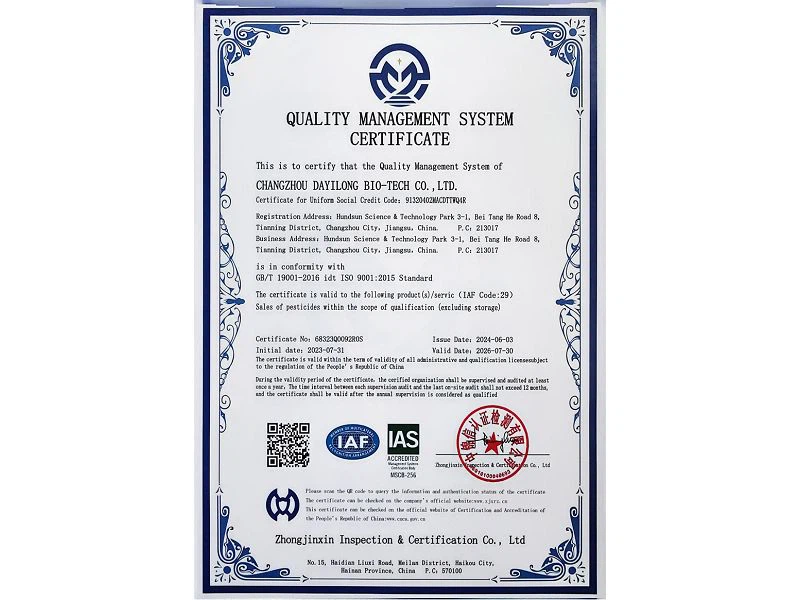
Strict Quality Management
The company strict quality management, from the procurement of raw and auxiliary materials, to product formula verification, production, analysis and testing, sample retention, to packaging, shipping and other links, product quality supervision infiltrates into each process, implemented to every employee.
Professional Services
Fully communicate with customers before sales, provide professional guidance, and help them choose suitable products. Professional personnel track orders during sales to ensure that products reach customers with quality and quantity assurance, and provide detailed usage instructions and technical support.
-
![Gibberellic Acid A3 5% ST]() Gibberellic Acid A3 5% STFormulation: ST. Packing: 20L, 10L, 5L, 1L, 500ml, 250ml, 100ml, 50ml; 1kg, 500g, 250g, 100g
Gibberellic Acid A3 5% STFormulation: ST. Packing: 20L, 10L, 5L, 1L, 500ml, 250ml, 100ml, 50ml; 1kg, 500g, 250g, 100g

Specification
|
Formulation |
4.5g/Kg+12.5g/Kg SP |
|
Appearance |
White powder |
|
Melting point |
141 to 150℃ |
|
Density |
1.1032 g/mL |
Safety
Regulating the growth of plants, especially once mature, helps them maintain a size and shape for a longer period of time that reduces obstruction of signs, encroaching into structures, and growing into utility lines. Regulating growth can also help reduce lifting of sidewalks and tripping hazards associated with mature root systems that can cause paved structures around your property to become compromised.
Drought Resistance
Decreasing production of gibberellic acid allows for an increase in production of other key plant hormones and enzymes that influence the development of the cuticle, which is the waxy outer layer of the leaf that helps prevent desiccation. Stomates on the leaf can close faster when the environment is dry, and more leaf hairs are produced to protect leaves from drying winds.
Disease Reduction
While not specifically designed to help plants resist disease, there have been positive results in reducing disease symptoms on certain hosts as a result of applying plant growth regulators. For severe diseases, other treatments are still recommended.
Improved Root Systems
An increase in fibrous root production expands the area of soil that plants can draw water, minerals, and other resources from. This also helps with drought resistance!
Improved Plant Appearance
Finally, a healthy plant is usually a beautiful plant. Reducing gibberellic acid production causes and increase in chlorophyll production, which results in darker, greener leaves!
Uses of Plant Growth Regulators
In Agriculture
Boost maize, rice, wheat, cotton, and sugarcane yields.
In Horticulture
Prolong flower life, shape bonsai, and propagate orchids.
In Stress Management
Reduce crop loss from drought or salinity.
Post-Harvest Applications
Control fruit ripening and improve shelf life.
Application Method of Plant Growth Regulator
Foliar Spray Method
Foliar spray application of plant growth regulators (PGRs) is another means of applying them, providing fast absorption into the foliage for quick results. It is typically applied using a backpack sprayer. To apply a foliar spray, mix PGR at its recommended concentration and use a sprayer to evenly spread it across the plant’s leaves.
Soil Drench
A soil drench is an easy and highly effective way of applying plant growth regulators (PGRs). It involves directly applying PGR solutions into the soil surrounding plants. Then, their root systems absorb these growth regulators and distribute them throughout their system. Commercial settings typically prefer soil drench application due to its simplicity and relatively low costs.
Soil Injection
Soil injection is another popular PGR application technique. This process involves injecting PGR solution directly into the soil nearer its root zone for easy absorption by plants. It works particularly well when treating larger, well-established trees or shrubs, allowing deeper root systems to access PGR solutions.

Precautions for Using Plant Growth Regulators
● Crops grown in moderate-to-warm climates typically require lower application rates than those grown in hot and humid climates.
● Taller, more vigorous varieties typically require a higher application rate than the naturally short, less vigorous varieties.
● Younger, smaller plants of the same species will respond differently than older, larger plants even though volume and pot size may remain the same.
● Remember to only apply to plants that are not under stress.
● The growing medium should be moist for even PGR application for each plant.
Packaging and Shipping
|
Packaging |
20L, 10L, 5L, 1L, 500ml, 250ml, 100ml, 50ml; 1kg, 500g, 250g, 100g or as your needs |
|
Shipping |
Shipping by sea, by air, by express are acceptable. According to your requirements. |


Our Factory
Our company is located in Hengsheng Science and Technology Park, Tianning Economic Development Zone, Changzhou, covering an area of more than 800 square meters. Another processing factory in Huaian Lianshui Industrial Park, covers an area of more than 60 mu.
Our Certificate
FAQ
As one of the most professional plant growth regulator manufacturers and suppliers in China, we're featured by quality products and good price. Please rest assured to buy high-grade plant growth regulator from our factory.
Popular Products


