

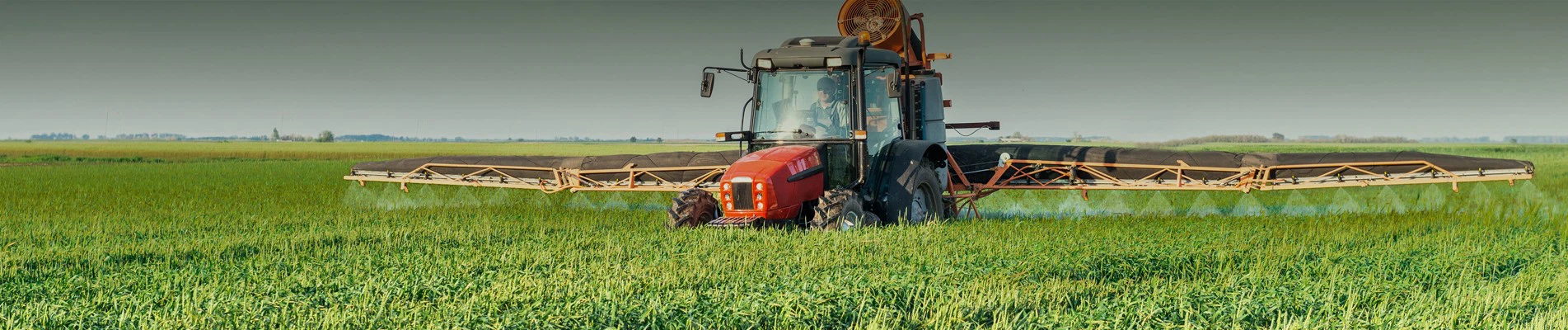
Your Professional Imidacloprid Supplier
Changzhou Dayilong Bio-Tech Co., Ltd. is a specialized manufacturer dedicated to the production of insecticides, fungicides, herbicides, plant growth regulators, pesticide intermediates, and pesticide auxiliaries.
Complete Production Equipment
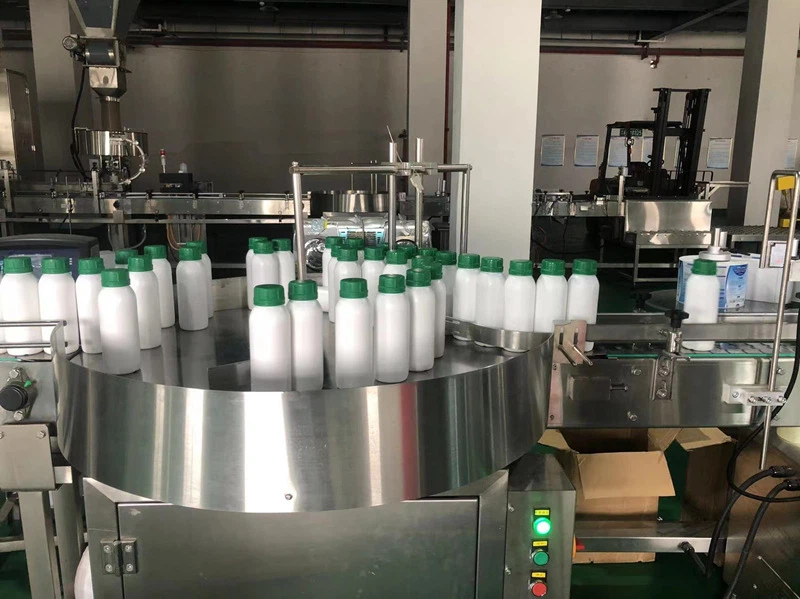
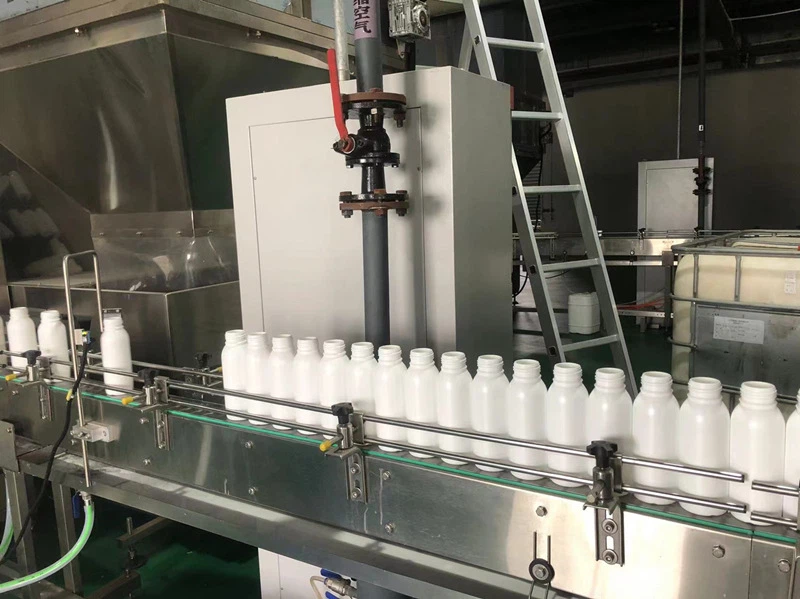
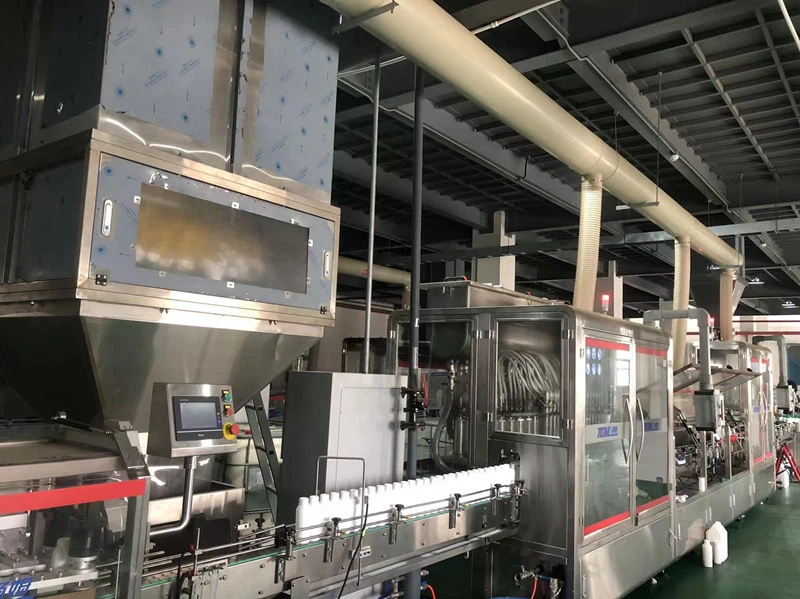
The company has complete OD, SC, SL, EC, FS and other liquid dosage form production equipment, such as grinding machine, colloid shear mill, all kinds of reaction devices, etc. With automatic filling equipment, capping equipment, packaging equipment, packaging equipment, etc.
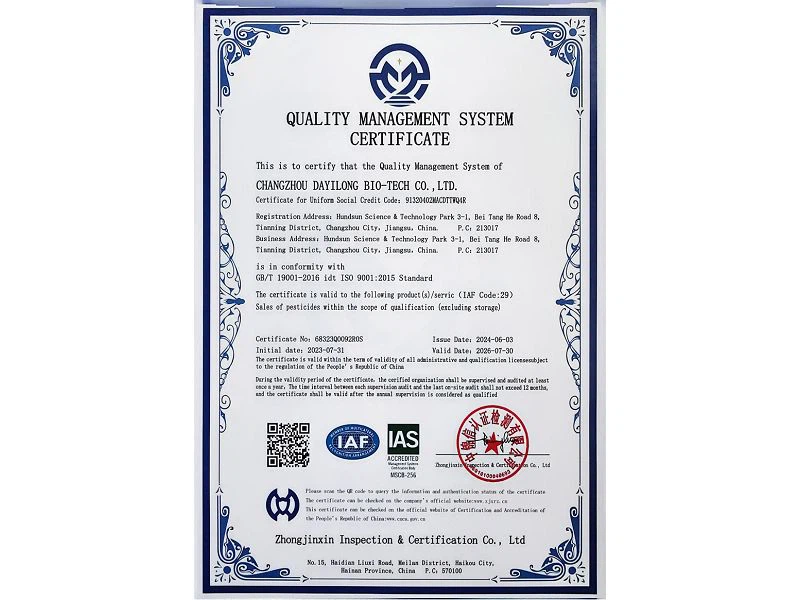
Strict Quality Management
The company strict quality management, from the procurement of raw and auxiliary materials, to product formula verification, production, analysis and testing, sample retention, to packaging, shipping and other links, product quality supervision infiltrates into each process, implemented to every employee.
Professional Services
Fully communicate with customers before sales, provide professional guidance, and help them choose suitable products. Professional personnel track orders during sales to ensure that products reach customers with quality and quantity assurance, and provide detailed usage instructions and technical support.
-
![Imidacloprid 350G/L SC]() Imidacloprid 350G/L SCFormulation: FS. Packing: 20L, 10L, 5L, 1L, 500ml, 250ml, 100ml, 50ml; 1kg, 500g, 250g, 100g
Imidacloprid 350G/L SCFormulation: FS. Packing: 20L, 10L, 5L, 1L, 500ml, 250ml, 100ml, 50ml; 1kg, 500g, 250g, 100g

Specification
|
CAS Number |
138261-41-3 |
|
Molecular Formula |
C9H10ClN5O2 |
|
Molecular Weight |
255.66 g/mol |
|
Structure |
Pyridine-based neonicotinoid with a nitroimine functional group |
|
Chemical Family |
Neonicotinoid |
|
Synonyms |
Admire, Confidor, Gaucho, Merit, Provado |
|
Appearance |
Colorless to light brown crystalline solid |
|
Density |
1.54 g/cm³ |
|
Melting Point |
143–144 °C |
|
Boiling Point |
Decomposes before boiling |
|
Solubility |
Soluble in water (0.51 g/L at 20 °C); soluble in organic solvents |
|
Mode of Action |
Binds to nicotinic acetylcholine receptors in the insect nervous system, causing paralysis |
|
Target Pests |
Aphids, whiteflies, leafhoppers, thrips, termites, and other sucking pests |
|
Formulation Types |
600 g/L FS, 350 g/L SC, 200 g/L SL, 70% WG, 25% WP |
|
Environmental Impact |
Highly toxic to bees and aquatic organisms; low toxicity to mammals |
Features of Imidacloprid
Broad-Spectrum Efficiency
Effective against aphids, leafhoppers, whiteflies, planthoppers, and thrips.
Also controls pests like rice weevils, leaf miners, and certain Lepidopteran species.
Systemic Activity
Absorbed and transported within the plant, ensuring long-lasting pest protection.
Targets both above-ground and below-ground pests, such as grubs and golden needleworms.
Long Residual Period
Provides protection for up to 25 days, significantly reducing the frequency of applications.
Temperature Dependence
Enhanced efficacy at higher temperatures, making it particularly effective during warm growing seasons.
Applications of Imidacloprid
Agriculture and Crops
Imidacloprid is used to protect fruits, vegetables, grains, and ornamental plants. It is particularly effective against sap-sucking pests like aphids and whiteflies.
Soil Treatments
Imidacloprid works well in soil drench applications to control pests like grubs, rootworms, and termite colonies. It remains active in the soil for an extended period, providing long-term protection.
Tree and Shrub Care
It is used for systemic protection in trees and shrubs against pests like borers and leaf miners.
Turf Management
Imidacloprid is effective against white grubs and chinch bugs in lawns and golf courses.
Differences Between Imidacloprid And Bifenthrin
|
Feature |
Imidacloprid |
Bifenthrin |
|
Chemical Class |
Neonicotinoid |
Pyrethroid |
|
Mode of Action |
Targets nicotinic acetylcholine receptors |
Disrupts sodium channels in nerve cells |
|
Primary Use |
Systemic control for sucking pests |
Contact and residual control for crawling pests |
|
Target Pests |
Aphids, whiteflies, termites, beetles |
Termites, ants, spiders, grubs, fleas |
|
Systemic Activity |
Yes (absorbed by plants and soil) |
No (contact and surface residual) |
|
Residual Effect |
Long-lasting in soil and plants |
Long residual on surfaces (weeks to months) |
|
Preferred Use |
Agricultural crops, lawns, tree treatments |
Structural pest control, lawns, and gardens |
|
Toxicity to Bees |
High risk to bees |
Low to moderate risk depending on exposure |
The safe interval of Imidacloprid on cabbage was 14 days, and the maximum use time was 2 times per season.
Imidacloprid is toxic to human and livestock. When using imidacloprid, you should wear protective equipment. Smoking and eating are strictly prohibited. Do not apply medicine in the wind. Avoid direct contact with liquid medicine and prevent inhalation by mouth and nose. Clean hands, face and body contaminated parts and clothes after application.
It is suggested that insecticides with different mechanisms should be used in rotation.

Packaging and Shipping
|
Packaging |
20L, 10L, 5L, 1L, 500ml, 250ml, 100ml, 50ml; 1kg, 500g, 250g, 100g or as your needs |
|
Shipping |
Shipping by sea, by air, by express are acceptable. According to your requirements. |
Our Factory
Our company is located in Hengsheng Science and Technology Park, Tianning Economic Development Zone, Changzhou, covering an area of more than 800 square meters. Another processing factory in Huaian Lianshui Industrial Park, covers an area of more than 60 mu.
Our Certificate
FAQ
As one of the most professional imidacloprid manufacturers and suppliers in China, we're featured by quality products and good price. Please rest assured to buy high-grade imidacloprid from our factory.
sodium metal 100g, garden insect killer, yard insect killerPopular Products


