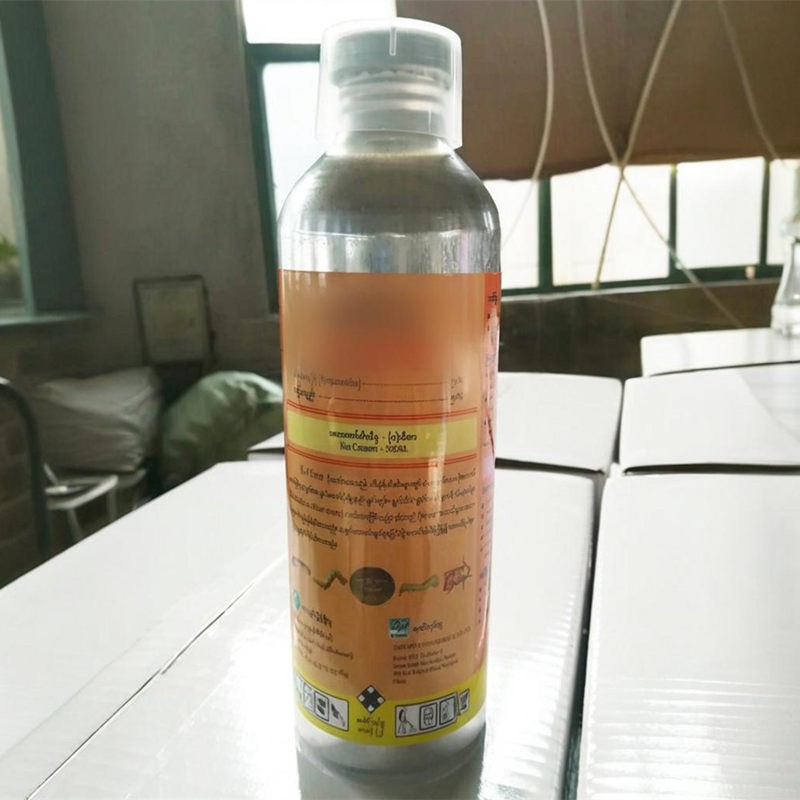
As a supplier of imazapic, I've received numerous inquiries from farmers, agricultural researchers, and land managers about the residual effect of imazapic. This herbicide has been a staple in weed control strategies for quite some time, but understanding its residual characteristics is crucial for its effective and responsible use. In this blog, I'll delve into the science behind imazapic's residual effect, exploring its implications for various applications and sharing insights based on my experience in the industry.
Understanding Imazapic
Imazapic is a selective herbicide belonging to the imidazolinone chemical family. It works by inhibiting the enzyme acetolactate synthase (ALS), which is essential for the biosynthesis of branched - chain amino acids in plants. This disruption ultimately leads to the death of susceptible weeds. Imazapic is known for its broad - spectrum activity against a wide range of annual and perennial grasses and broadleaf weeds, making it a valuable tool in many agricultural and non - agricultural settings.
Factors Influencing the Residual Effect
The residual effect of imazapic can vary significantly depending on several factors. One of the most important factors is soil type. Soils with high organic matter content tend to adsorb imazapic more strongly, which can reduce its availability in the soil solution and potentially decrease its residual activity. On the other hand, sandy soils with low organic matter and cation exchange capacity may allow imazapic to remain more mobile and have a longer residual effect.
Soil pH also plays a crucial role. Imazapic is more stable and has a greater residual effect in slightly acidic to neutral soils (pH 5.5 - 7.0). In alkaline soils, the herbicide may degrade more rapidly, reducing its residual activity. Temperature and moisture conditions are additional factors. Warmer temperatures and adequate soil moisture generally enhance the microbial activity that can break down imazapic. In dry and cold conditions, the degradation process slows down, leading to a longer residual effect.
Residual Effect in Agricultural Applications
In agricultural fields, the residual effect of imazapic can be both an advantage and a challenge. On the positive side, it provides long - term weed control, reducing the need for multiple herbicide applications during the growing season. This can save time, labor, and costs for farmers. For example, in soybean fields, imazapic can be applied pre - emergence or early post - emergence, and its residual activity can suppress weeds for several weeks, allowing the soybean plants to establish and grow without significant competition.
However, the long - lasting residual effect can also pose problems. Some crops are sensitive to imazapic residues in the soil. If a farmer rotates to a sensitive crop too soon after imazapic application, it can cause stunting, reduced yields, or even crop failure. For instance, crops like corn, wheat, and some vegetable varieties may be affected by imazapic residues. Therefore, it's essential for farmers to carefully plan their crop rotation schedules based on the soil's residual imazapic levels.
Residual Effect in Non - Agricultural Applications
Imazapic is also used in non - agricultural settings such as rangelands, pastures, and industrial sites. In rangelands and pastures, its residual effect can help control invasive weeds and promote the growth of desirable forage species. The long - term weed suppression allows native grasses and legumes to thrive, improving the overall quality of the grazing land.
In industrial sites, imazapic's residual activity is beneficial for maintaining weed - free areas. It can prevent the growth of weeds that may interfere with infrastructure, such as roads, pipelines, and power lines. However, similar to agricultural applications, care must be taken to avoid potential impacts on adjacent sensitive vegetation or water sources due to the herbicide's residual presence.
Measuring and Monitoring Residual Imazapic
To effectively manage the residual effect of imazapic, it's important to measure and monitor its levels in the soil. There are several analytical methods available, including high - performance liquid chromatography (HPLC). By taking soil samples at different depths and times after imazapic application, farmers and land managers can get an accurate picture of the herbicide's residual concentration.
Based on these measurements, they can make informed decisions about crop rotation, re - application of the herbicide, or the need for remediation if the residual levels are too high. Some soil testing laboratories offer specific tests for imazapic residues, which can provide valuable information for proper land management.
Mitigating the Negative Impacts of Residual Imazapic
If the residual effect of imazapic is causing problems, there are several strategies to mitigate its negative impacts. One approach is to use soil amendments. For example, adding organic matter such as compost or manure can help bind the imazapic in the soil, reducing its availability to plants. Another option is to plant cover crops that are tolerant to imazapic. These cover crops can help break down the herbicide through microbial activity in the root zone.
In some cases, if the residual levels are extremely high and causing severe crop damage, soil remediation techniques such as soil washing or phytoremediation may be considered. However, these methods are often expensive and time - consuming, so prevention through proper application and monitoring is the best strategy.
Our Product Portfolio and Related Offerings
As a supplier of imazapic, we offer high - quality products that are formulated to provide optimal weed control with a well - balanced residual effect. In addition to imazapic, we also supply Imazethapyr 100G/L SL, another effective herbicide in the imidazolinone family. Imazethapyr has similar mode of action and can be used in combination with imazapic or as an alternative in some situations, providing farmers and land managers with more options for weed management.

Conclusion and Call to Action
In conclusion, imazapic does have a residual effect, and understanding this characteristic is essential for its successful use. The residual effect can be influenced by various factors such as soil type, pH, temperature, and moisture. While it offers long - term weed control benefits in both agricultural and non - agricultural applications, it also requires careful management to avoid negative impacts on sensitive crops and the environment.
If you're interested in learning more about imazapic or our other herbicide products, or if you have questions regarding the residual effect and its management, we encourage you to reach out to us. Our team of experts is ready to assist you in finding the best weed control solutions for your specific needs. Whether you're a large - scale farmer, a small - holder grower, or a land manager, we can provide you with the knowledge and products to achieve effective and sustainable weed management.
References
- Shaner, D. L. (2014). Herbicide Biochemistry and Physiology. Academic Press.
- Tomlin, C. D. S. (Ed.). (2011). The Pesticide Manual: A World Compendium. BCPC.
- Senseman, S. A. (Ed.). (2007). Herbicide Handbook. Weed Science Society of America.