


Flumioxazin is a well - known herbicide that has gained significant attention in the agricultural industry. As a flumioxazin supplier, I've had numerous inquiries about its performance in cool climates. In this blog, I'll delve into how flumioxazin works in such conditions, its effectiveness, and what farmers and growers need to know.
Understanding Flumioxazin
Flumioxazin belongs to the N - phenylphthalimide class of herbicides. It is a pre - emergent and early post - emergent herbicide, which means it can be used before the weeds emerge from the soil or shortly after they start to grow. The active ingredient inhibits protoporphyrinogen oxidase (PPO), an enzyme involved in the synthesis of chlorophyll in plants. When a weed absorbs flumioxazin, the inhibition of PPO leads to the accumulation of a toxic intermediate, which causes membrane disruption, cell leakage, and ultimately, the death of the weed.
Flumioxazin in Cool Climates: How Does It Work?
Soil Activity
In cool climates, soil temperature plays a crucial role in the performance of flumioxazin. The herbicide is absorbed by the germinating weed seeds and emerging seedlings through the roots and shoots. In cooler soil temperatures, the rate of herbicide uptake and translocation within the weed can be slower compared to warmer conditions. However, flumioxazin has relatively good soil residual activity. Once it is applied to the soil, it binds to soil particles, forming a reservoir of active ingredient. This means that even in cool climates where the initial uptake might be slow, the herbicide remains available in the soil for an extended period, waiting for the weeds to germinate and grow.
The soil type also interacts with flumioxazin's performance in cool climates. In sandy soils, the herbicide may leach more easily, but in cooler temperatures, the leaching rate is generally reduced. In clayey soils, flumioxazin binds more tightly to the soil particles, which can further enhance its residual activity. However, the availability of the herbicide to the weeds might be slightly delayed due to the strong binding.
Weed Susceptibility
Different weed species have varying levels of susceptibility to flumioxazin, and this can be influenced by cool climates. Some weeds are more cold - tolerant and may continue to germinate and grow even in lower temperatures. Flumioxazin can still be effective against these weeds, but the time it takes to achieve visible control may be longer. For example, winter annual weeds such as shepherd's purse and common chickweed are often present in cool - season crops. Flumioxazin can prevent their emergence by targeting the germinating seeds in the soil.
Cool - season grasses, on the other hand, may have a different response. Some species may be less affected by flumioxazin in cool climates, especially if the herbicide is applied too early and the grass is in a dormant or slow - growth phase. However, as the temperatures start to rise and the grasses become more active, the herbicide can then exert its control effect.
Crop Safety
One of the advantages of flumioxazin is its selectivity in many crops. In cool climates, when crops are often planted in early spring or fall, flumioxazin can be safely used in a variety of crops such as soybeans, peanuts, and vineyards. The crop's ability to tolerate flumioxazin is related to its metabolism and the way it can detoxify the herbicide. In cool climates, the metabolism of the crop may be slower, but if the application rate and timing are correct, the crop can still withstand the herbicide treatment.
For example, in soybean fields, flumioxazin can be applied pre - plant or pre - emergent. In cool spring conditions, the soybeans may germinate slowly, but the herbicide's residual activity in the soil helps to control the emerging weeds without causing significant damage to the soybean seedlings.
Factors Affecting Flumioxazin's Performance in Cool Climates
Application Timing
In cool climates, the timing of flumioxazin application is critical. Applying the herbicide too early when the soil is still very cold may result in a longer waiting period for the herbicide to become fully effective. On the other hand, applying it too late may miss the window of opportunity to control the early - germinating weeds.
A good strategy is to monitor the soil temperature and the weed germination patterns. Generally, a soil temperature of around 10 - 15°C (50 - 59°F) is considered a suitable range for flumioxazin application in many cool - climate regions. This allows for a balance between the herbicide's activation and the weed's growth stage.
Rainfall and Irrigation
Rainfall and irrigation are important factors in cool - climate herbicide performance. In cool climates, rainfall may be less frequent but more intense. Adequate rainfall or irrigation after flumioxazin application is necessary to move the herbicide into the soil profile where the weed seeds are located. However, excessive rainfall can also cause the herbicide to leach out of the root zone, reducing its effectiveness.
If there is a lack of natural rainfall, light irrigation can be used to activate the herbicide. In cool climates, the evaporation rate is lower, so the herbicide remains in the soil for a longer time, but it also means that over - irrigation can lead to waterlogging, which may affect both the crop and the herbicide's performance.
Flumioxazin 480G/L SC: A Product for Cool Climates
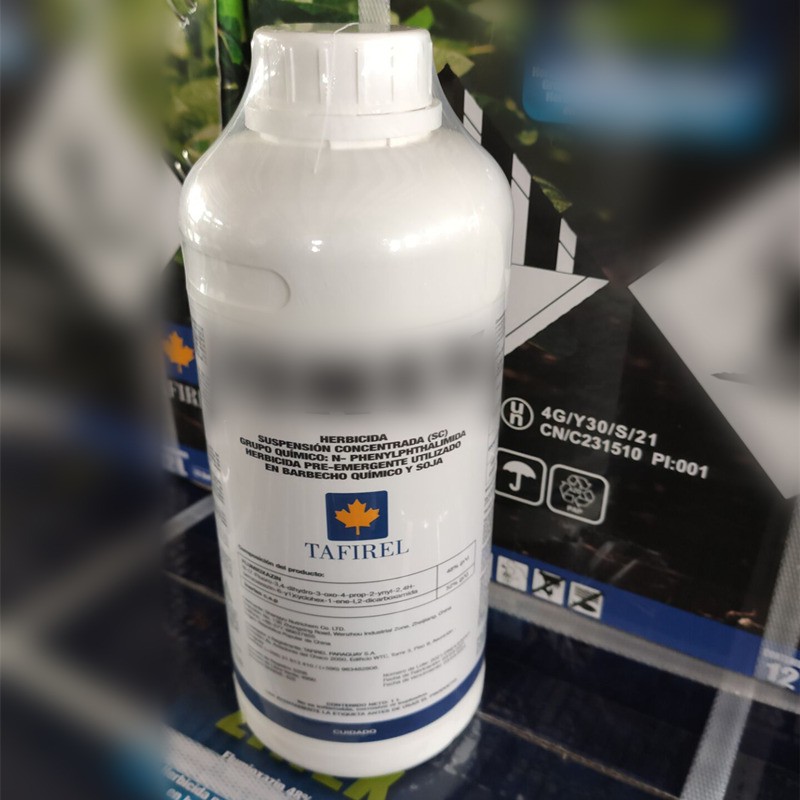
Our Flumioxazin 480G/L SC is a specially formulated product that is well - suited for cool - climate conditions. The suspension concentrate formulation allows for easy mixing and application. It has a high concentration of the active ingredient, which means that a smaller volume of the product can be used to achieve the desired herbicidal effect.
In cool climates, the stability of the formulation is important. Flumioxazin 480G/L SC remains stable in lower temperatures, ensuring that the active ingredient retains its potency during storage and application. The formulation also helps the herbicide to adhere to the soil particles more effectively, enhancing its residual activity in cool - climate soils.
Contact Us for Procurement
If you're a farmer, grower, or agricultural professional interested in using flumioxazin in cool - climate conditions, we're here to help. Our team of experts can provide you with detailed information about the product, application rates, and best practices for cool - climate use. We offer high - quality flumioxazin products at competitive prices and can customize solutions to meet your specific needs. Contact us today to start a discussion about your herbicide requirements and how we can assist you in achieving effective weed control in cool climates.
References
- Shaner, D. L. (2014). Herbicides and Plant Physiology. Routledge.
- Senseman, S. A. (Ed.). (2007). Herbicide Handbook (9th ed.). Weed Science Society of America.
- Vencill, W. K. (2002). Herbicide Handbook of the Weed Science Society of America. Weed Science Society of America.


