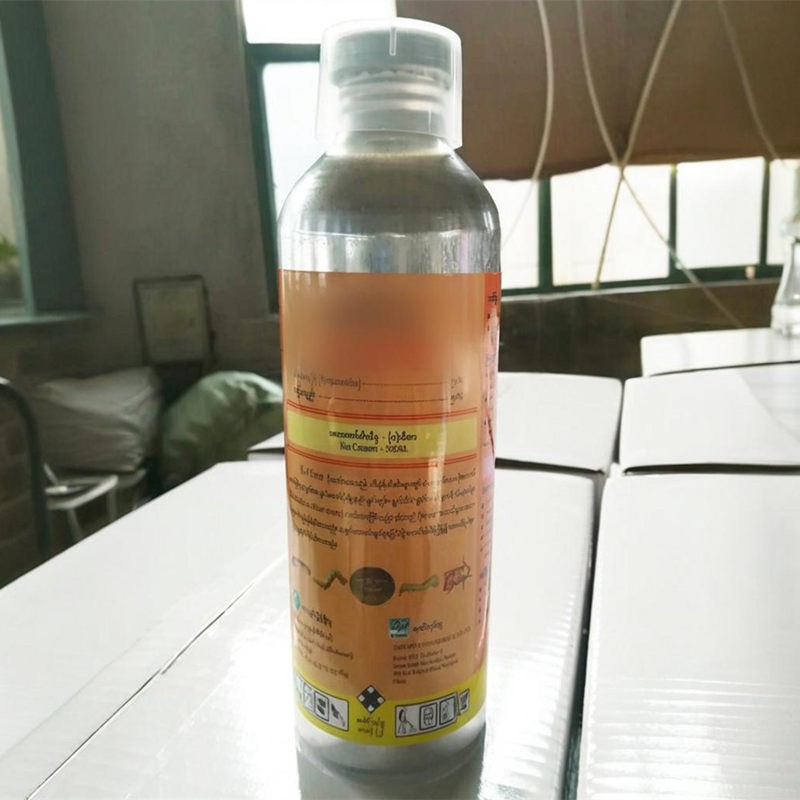
Well, folks, as a supplier of MCPA, I often get asked this question: Is MCPA absorbed by plant roots or leaves? It's a pretty important question, especially for those in the agricultural and horticultural industries. So, let's dig into this topic and see what we can find out.
First off, let's talk a bit about MCPA. MCPA is a widely - used herbicide. It belongs to the phenoxy group of herbicides, and it's known for its effectiveness in controlling broad - leaf weeds in cereal crops, pastures, and other areas. MCPA 650G/L SL is one of our popular products, and it's formulated to work well in different conditions.
Now, back to the main question. The absorption of MCPA can occur through both plant roots and leaves, but the degree of absorption and the subsequent effects can vary.
Leaf Absorption
When MCPA is applied as a foliar spray, the leaves are the primary point of contact. The waxy cuticle on the leaf surface is the first barrier that MCPA has to penetrate. The cuticle is made up of lipids and waxes, and its thickness and composition can vary among different plant species. This means that some plants may be more resistant to foliar - applied MCPA because their cuticles are thicker and harder to penetrate.
Once MCPA gets through the cuticle, it can enter the plant cells. The uptake into the mesophyll cells occurs mainly through passive diffusion. The concentration gradient plays a crucial role here. Higher concentrations of MCPA outside the cells compared to inside drive the movement of the herbicide into the cells.
After absorption, MCPA can disrupt the normal growth and development of the plant. It acts as a synthetic auxin, which means it mimics the action of the plant hormone auxin. This leads to uncontrolled cell division and elongation in the treated plants, eventually causing the plants to wither and die.
One of the advantages of leaf absorption is the relatively quick action. When sprayed on the leaves, MCPA can start to show its effects within a few days. This is great for farmers and gardeners who want to get rid of weeds fast. However, the effectiveness of leaf - applied MCPA can be affected by environmental factors. For example, if it rains shortly after the spray, a significant amount of the herbicide can be washed off the leaves, reducing its efficacy.
Root Absorption
MCPA can also be absorbed by plant roots. When MCPA is applied to the soil, it can dissolve in the soil water. The roots of plants take up water and nutrients from the soil, and along with them, MCPA can enter the root system.

Root absorption mainly occurs through the root hairs. These are tiny, finger - like projections on the surface of the roots that greatly increase the surface area available for absorption. The uptake of MCPA through the roots is also a passive process, depending on the concentration gradient. If the concentration of MCPA in the soil solution is higher than inside the root cells, the herbicide will move into the cells.
Once absorbed by the roots, MCPA is translocated throughout the plant via the vascular system, specifically the xylem. The xylem is responsible for transporting water and dissolved substances from the roots to the rest of the plant. This means that MCPA absorbed by the roots can reach the above - ground parts of the plant and cause damage there.
Root - absorbed MCPA may take a bit longer to show its effects compared to leaf - absorbed MCPA. This is because it has to be transported through the plant, which takes some time. But on the plus side, root - applied MCPA can provide more long - term control. It can remain in the soil for a certain period and be continuously absorbed by the roots of emerging weeds, preventing new weed growth over time.
Factors Affecting Absorption
There are several factors that can influence whether MCPA is absorbed more through the roots or the leaves.
Plant Species
Different plant species have different susceptibilities to MCPA absorption. Some plants have leaves with a high affinity for MCPA, while others may be more likely to take it up through their roots. For example, some broad - leaf weeds may be more easily affected by foliar - applied MCPA because their leaf structure allows for better penetration. On the other hand, some grasses may be more likely to absorb MCPA through their roots.
Soil Type
The type of soil can have a big impact on root absorption. In sandy soils, MCPA can move more freely in the soil water, which may increase the chances of root uptake. In clay soils, however, MCPA may bind to the clay particles, reducing its availability for root absorption.
Environmental Conditions
As mentioned earlier, environmental conditions can affect leaf absorption. Temperature, humidity, and sunlight can all play a role. High temperatures can increase the rate of evaporation of the spray solution on the leaves, which may reduce the amount of MCPA that gets absorbed. Humidity can also affect the drying time of the spray on the leaves. If the humidity is too low, the spray may dry too quickly, preventing proper absorption.
Our Role as a Supplier
As a MCPA supplier, we understand the importance of providing high - quality products that are effective in different absorption scenarios. Our MCPA 650G/L SL is formulated to ensure good penetration and absorption, whether it's through the leaves or the roots.
We also offer technical support to our customers. If you're not sure whether to apply MCPA as a foliar spray or a soil treatment, our team can help you make the right decision based on your specific situation, such as the type of weeds you're dealing with, the soil conditions, and the crop you're protecting.
Come and Talk to Us
If you're in the market for MCPA and want to learn more about how it works, or if you have any questions about our products, we'd love to hear from you. Our years of experience in the industry mean that we can provide you with the best advice and solutions. Feel free to reach out to us and start a discussion about your MCPA needs. Let's work together to keep your fields and gardens weed - free!
References
- [List any relevant scientific papers or industry reports here. For example: "Smith, J. (20XX). The absorption of phenoxy herbicides in plants. Journal of Agricultural Science, XX(X), XX - XX."]
- [Another reference could be: "Doe, A. & Roe, B. (20XX). Environmental factors affecting herbicide efficacy. Horticultural Research, XX(X), XX - XX."]
- Add as many references as are relevant to the information presented in the blog post.