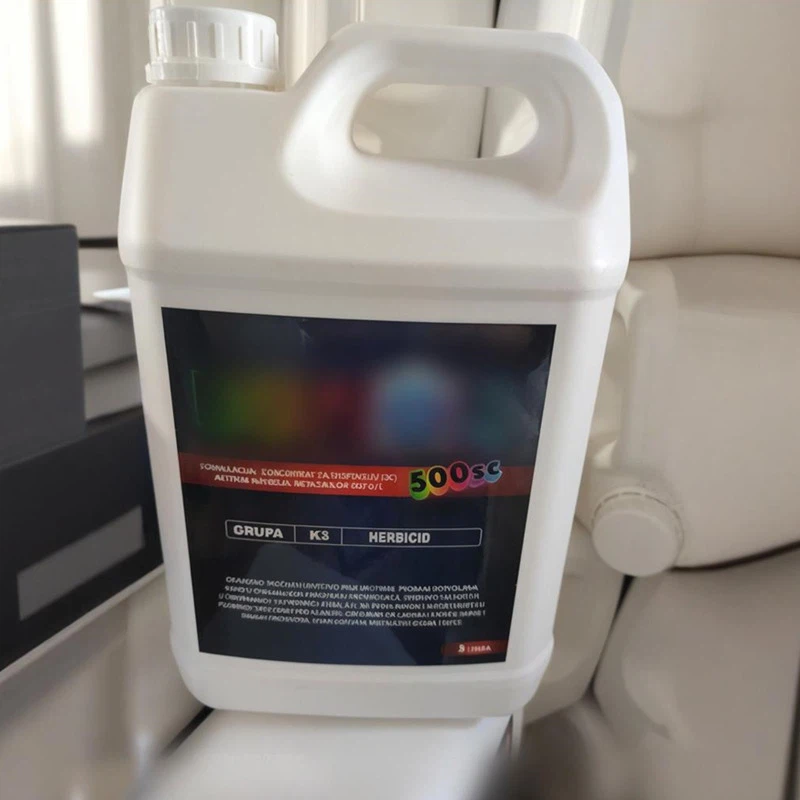
Hey there, fellow agriculturists and pest control enthusiasts! I'm a supplier of profenofos, and today I'm stoked to dive into the physical properties of this powerful insecticide. Profenofos is a well - known organophosphate insecticide that has been widely used in the agricultural sector for years. Let's get into the nitty - gritty details.
Appearance
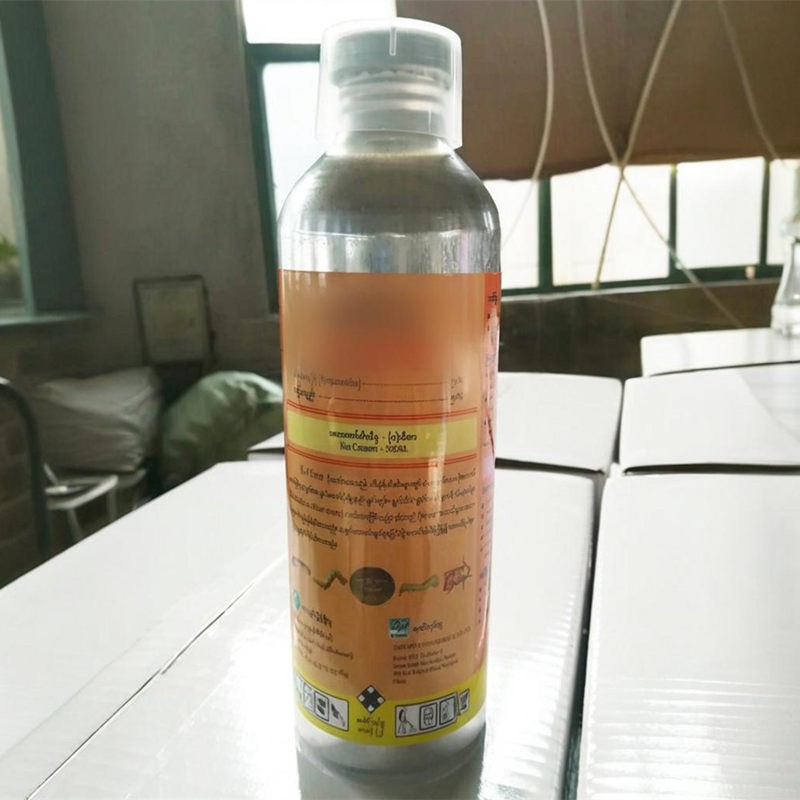
Profenofos, in its pure form, is a yellowish - brown to amber liquid. It's not the most glamorous color, but its appearance is a tell - tale sign of its chemical composition. When you look at it up close, it has a somewhat oily texture. You can tell it's not like your typical water - based substance. This is important because the oiliness affects how it interacts with other substances and how it's formulated into different products.
The fact that it's a liquid also makes it relatively easy to work with in the manufacturing process. For instance, it can be easily mixed with other solvents or additives to create different formulations, like emulsifiable concentrates. And speaking of which, if you're interested in one of our popular formulations, check out Profenofos 500G/L EC.
Odor
Profenofos has a distinct, pungent odor. It's not something you'd want to smell for long, that's for sure. This odor is a result of its chemical structure and the presence of certain functional groups. The smell can be a bit off - putting, but it's also a safety feature in a way. The strong odor can act as a warning sign, letting you know that you're dealing with a potentially hazardous substance.
For farmers and pest control professionals, it's important to take proper precautions when handling profenofos due to its odor. Wearing appropriate personal protective equipment, like masks and gloves, can help reduce the exposure to the smell and also protect you from other potential risks associated with the chemical.
Density
The density of profenofos is around 1.455 g/cm³ at 20°C. This relatively high density means that it's heavier than water. When you're working with profenofos in a liquid form, this density plays a crucial role in how it behaves in a solution. For example, if you mix it with water, it will tend to sink to the bottom rather than float on the surface.
This property is important for formulators. They need to take the density into account when creating mixtures to ensure that the product is well - distributed and effective. If the density is not considered properly, you might end up with an uneven distribution of the active ingredient, which can lead to inconsistent pest control results.
Boiling Point and Melting Point
Profenofos has a boiling point of around 110 - 112°C at 0.1 mmHg. This relatively low boiling point under reduced pressure means that it can vaporize at relatively moderate temperatures. On the other hand, it doesn't have a well - defined melting point. Instead, it starts to decompose before it reaches a clear melting state.
The boiling point property is important in the manufacturing and storage of profenofos. During the manufacturing process, the boiling point is considered when distilling or purifying the chemical. And in storage, the relatively low boiling point means that it needs to be kept in a cool environment to prevent excessive evaporation.
Solubility
Profenofos has limited solubility in water. It's only slightly soluble, with a solubility of about 28 mg/L at 20°C. However, it is highly soluble in many organic solvents such as acetone, benzene, and chloroform. This solubility profile is crucial for formulating profenofos into different products.
Since it's not very soluble in water, it needs to be formulated with other substances that can help it disperse in an aqueous solution. That's why we often see it in the form of emulsifiable concentrates, where it's mixed with emulsifiers and solvents to create a stable mixture that can be easily diluted with water for spraying.
Viscosity
The viscosity of profenofos is an important physical property. It has a relatively high viscosity, which gives it a thick, syrupy consistency. This viscosity affects how the product flows and how it can be applied. For example, when it's used in a sprayer, the high viscosity might require a specific type of nozzle or a different pressure setting to ensure a proper spray pattern.
Formulators need to take the viscosity into account when creating products. They might add certain agents to adjust the viscosity to make it more suitable for different application methods. Whether it's for aerial spraying or ground - based spraying, the right viscosity is essential for an effective application.
Stability
Profenofos is a relatively stable compound under normal conditions. However, it can be affected by factors such as light, heat, and pH. Exposure to strong sunlight can cause it to break down over time. High temperatures can also accelerate its decomposition. And in extreme pH conditions, it can react chemically and lose its effectiveness.
When storing profenofos, it's important to keep it in a cool, dark place and away from strong acids or bases. This will help maintain its stability and ensure that it remains effective for a longer period.
Flash Point
The flash point of profenofos is around 110°C. The flash point is the lowest temperature at which a liquid gives off enough vapor to form an ignitable mixture with air near the surface of the liquid. This property is crucial for safety reasons.
When handling and storing profenofos, it's important to keep it away from open flames and high - temperature sources. Workers need to be aware of the flash point to prevent any potential fire or explosion hazards.
Why These Physical Properties Matter
All these physical properties of profenofos are not just random facts. They have a direct impact on how the insecticide is used, formulated, and stored. For example, the solubility in organic solvents allows formulators to create different types of products that can be tailored to specific pest control needs. The density and viscosity affect the application process, ensuring that the product is distributed evenly and effectively.
As a supplier, we take these physical properties into account when we source and distribute profenofos. We make sure that the products we offer are of the highest quality and that they are formulated in a way that takes advantage of these properties for maximum pest control efficiency.
Contact Us for Procurement
If you're in the market for profenofos and want to take advantage of its powerful pest - control capabilities, we're here to help. Whether you're a large - scale farmer, a small - scale grower, or a pest control professional, we can provide you with the right profenofos products for your needs. Don't hesitate to reach out to us for more information and to start a procurement discussion. We're committed to providing excellent customer service and high - quality products.
References
- "The Pesticide Manual", British Crop Protection Council
- Various scientific research papers on organophosphate insecticides and profenofos specifically.