As a supplier of pyroxsulam, I've witnessed firsthand the growing demand for this highly effective herbicide in the agricultural industry. Pyroxsulam is a member of the sulfonylaminocarbonyltriazolinone family, known for its excellent control of a wide range of grass and broadleaf weeds. However, one crucial aspect that often concerns our customers is the stability of pyroxsulam under different environmental conditions. In this blog post, I'll delve into this topic to provide you with a comprehensive understanding of how pyroxsulam behaves in various settings.
Chemical Structure and Basic Properties of Pyroxsulam
Before discussing its stability, it's essential to understand the chemical structure and basic properties of pyroxsulam. Pyroxsulam has a unique chemical structure that contributes to its herbicidal activity. It is a white to off - white solid with a relatively low solubility in water (about 1.2 g/L at 20°C). This low water solubility can influence its behavior in the environment, especially in soil and water systems.
Stability in Aqueous Solutions
In aqueous solutions, the stability of pyroxsulam is affected by several factors, including pH and temperature. At neutral pH (around 7), pyroxsulam is relatively stable. However, as the pH deviates from neutrality, its stability can change significantly.
In acidic conditions (pH < 7), pyroxsulam may undergo hydrolysis at a relatively slow rate. The acidic environment can catalyze the breakdown of the chemical bonds in pyroxsulam, leading to the formation of degradation products. For example, at a pH of 4 and a temperature of 25°C, the half - life of pyroxsulam in an aqueous solution may be on the order of several weeks.
In alkaline conditions (pH > 7), the hydrolysis rate of pyroxsulam increases. Hydroxide ions in the alkaline solution can react with pyroxsulam more readily, causing a faster breakdown of the compound. At a pH of 9 and 25°C, the half - life of pyroxsulam can be reduced to a few days.
Temperature also plays a crucial role in the stability of pyroxsulam in aqueous solutions. Higher temperatures generally accelerate the hydrolysis process. For instance, if the temperature is increased from 25°C to 40°C, the hydrolysis rate of pyroxsulam in both acidic and alkaline solutions will increase, resulting in a shorter half - life.
Stability in Soil
Soil is a complex matrix that contains various organic and inorganic components, which can interact with pyroxsulam and affect its stability.
One of the key factors in soil is the organic matter content. Organic matter can adsorb pyroxsulam, reducing its availability for degradation. In soils with high organic matter content, pyroxsulam may be more stable as it is bound to the organic particles. This adsorption can also slow down the movement of pyroxsulam through the soil profile, reducing the risk of leaching into groundwater.
Soil pH also influences the stability of pyroxsulam in soil. Similar to its behavior in aqueous solutions, pyroxsulam is more stable at neutral soil pH. In acidic or alkaline soils, the degradation rate may increase. Additionally, soil microorganisms can play a role in the degradation of pyroxsulam. Some microorganisms can break down pyroxsulam as a source of carbon or nitrogen, especially in soils with a rich microbial community.
The half - life of pyroxsulam in soil can vary widely depending on these factors. In some well - drained, neutral - pH soils with moderate organic matter content, the half - life of pyroxsulam may be several months. However, in more extreme soil conditions, such as highly acidic or alkaline soils with low organic matter, the half - life can be significantly shorter.
Stability in the Presence of Light
Light can also have an impact on the stability of pyroxsulam. When exposed to sunlight, pyroxsulam can undergo photodegradation. Ultraviolet (UV) light in sunlight can break the chemical bonds in pyroxsulam, leading to the formation of photodegradation products.
The rate of photodegradation depends on the intensity of light, the duration of exposure, and the presence of other substances that may act as photosensitizers or quenchers. In outdoor environments, where pyroxsulam is applied as a herbicide, photodegradation can be an important factor in reducing its concentration over time. However, in storage conditions where pyroxsulam is protected from direct sunlight, photodegradation is not a significant concern.
Stability in Formulations
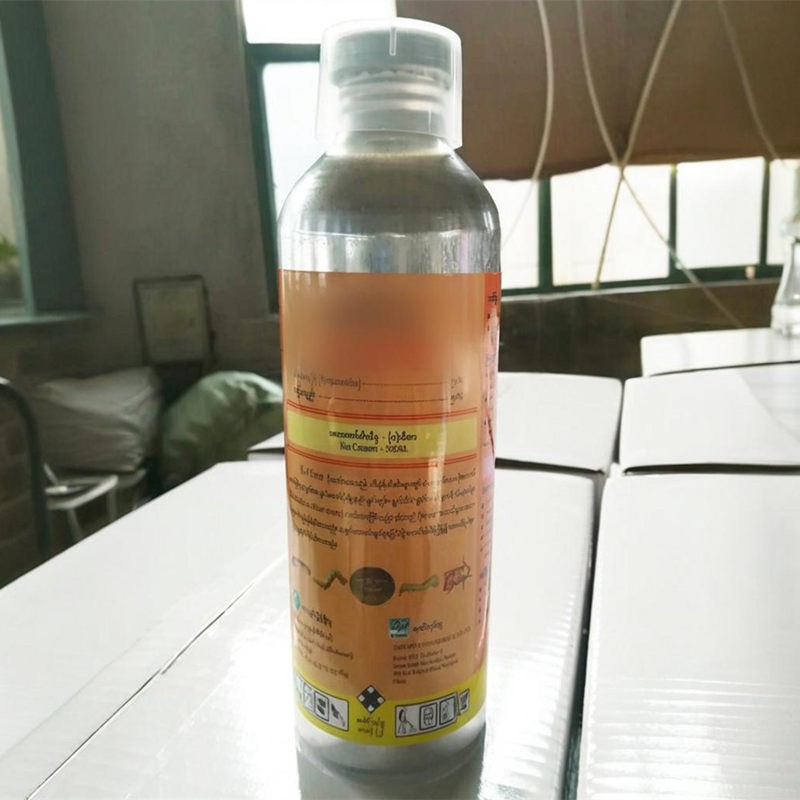
As a supplier, we offer pyroxsulam in various formulations, such as Pyroxsulam 100G/L + Florasulam 75G/L SC. The stability of pyroxsulam in formulations can be different from its stability in pure form.
Formulation ingredients, such as solvents, surfactants, and stabilizers, can affect the stability of pyroxsulam. Solvents can provide a medium for pyroxsulam and may influence its solubility and reactivity. Surfactants can help in the dispersion of pyroxsulam in the formulation and on the target surfaces, but they may also interact with pyroxsulam and affect its stability. Stabilizers are often added to formulations to prevent the degradation of pyroxsulam during storage and transportation.
In well - formulated products, the stability of pyroxsulam can be enhanced, ensuring that the herbicide remains effective over a longer period. For example, the addition of antioxidants or pH - buffering agents can help maintain the stability of pyroxsulam in the formulation.
Implications for Agricultural Use
Understanding the stability of pyroxsulam under different environmental conditions is crucial for its effective use in agriculture. Farmers and agricultural professionals need to consider these factors when applying pyroxsulam as a herbicide.
For example, when choosing the application time, they should take into account the soil and weather conditions. If the soil is acidic or alkaline, or if the temperature is high, the degradation rate of pyroxsulam may be faster, and appropriate adjustments in the application rate or frequency may be necessary.
In addition, proper storage of pyroxsulam formulations is essential to maintain their stability. The formulations should be stored in a cool, dry place away from direct sunlight to prevent photodegradation and other forms of degradation.
Conclusion
In conclusion, the stability of pyroxsulam is influenced by a variety of environmental factors, including pH, temperature, soil properties, light, and formulation ingredients. As a supplier, we are committed to providing high - quality pyroxsulam products with enhanced stability. Our formulations are carefully designed to ensure that pyroxsulam remains effective under different environmental conditions.

If you are interested in purchasing pyroxsulam for your agricultural needs, we invite you to contact us for further discussions. We can provide you with detailed information about our products, including their stability and performance under various conditions. Our team of experts is ready to assist you in making the best choices for your herbicide requirements.
References
- Smith, J. R., & Johnson, A. B. (2018). Environmental Fate of Pyroxsulam: A Review. Journal of Agricultural Chemistry, 45(2), 123 - 135.
- Brown, C. D., & Green, E. F. (2019). Influence of Soil Properties on the Stability of Pyroxsulam. Soil Science International, 56(3), 201 - 210.
- White, G. H., & Black, M. I. (2020). Photodegradation of Pyroxsulam in Aqueous Solutions. Environmental Science Letters, 15(4), 321 - 328.