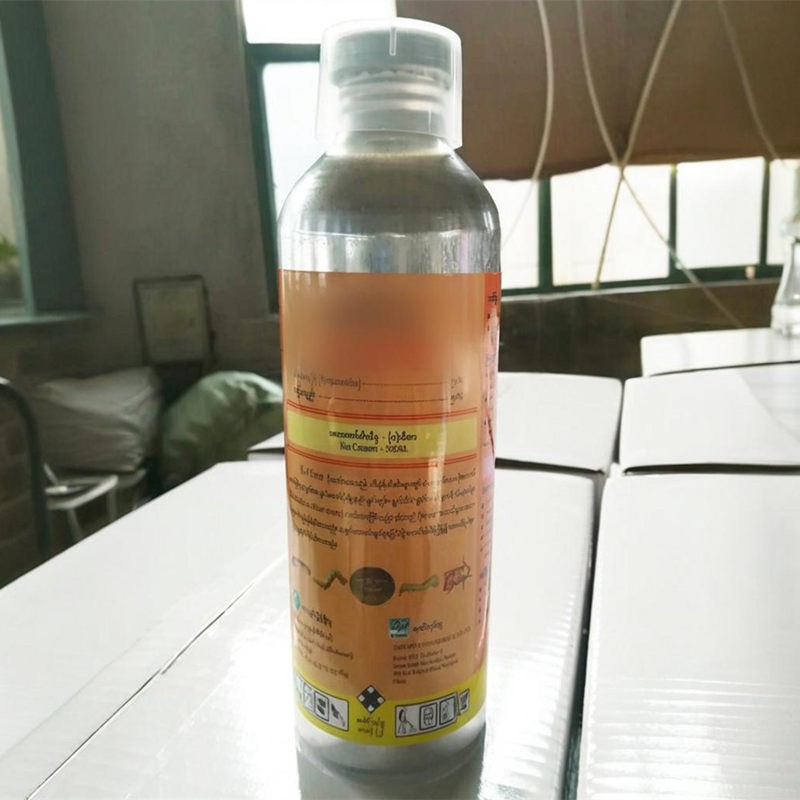
Hey there! I'm a supplier of pinoxaden, and today I want to have a chat about whether pinoxaden can be used in forestry applications.
First off, let's get to know pinoxaden a bit better. Pinoxaden is a selective herbicide that's been making waves in the agricultural world for a while. It's super effective against a wide range of grassy weeds, and it works by inhibiting an enzyme called acetyl - CoA carboxylase (ACCase) in the target weeds. This enzyme is crucial for fatty acid synthesis in plants. When pinoxaden messes with this process, the weeds can't grow and eventually die off.
Now, when we think about forestry, the situation is quite different from regular farming. In forests, we've got a complex ecosystem with trees, shrubs, understory plants, and a whole bunch of wildlife. The main goals in forestry are usually related to tree growth, protection from pests and competing vegetation, and overall ecosystem health.
One of the big advantages of pinoxaden is its selectivity. It can target specific grassy weeds without causing too much harm to broad - leaved plants. In a forestry setting, this could be a game - changer. There are often grassy weeds that compete with young trees for nutrients, water, and sunlight. These weeds can slow down the growth of saplings, and in some cases, even lead to their death. Pinoxaden could potentially be used to control these grassy invaders without hurting the valuable broad - leaved tree species.

For example, in newly planted forest areas where the trees are still small, grassy weeds can quickly take over. Using Pinoxaden 100G/L + Cloquintocet - mexyl 25G/L EC Pinoxaden 100G/L + Cloquintocet - mexyl 25G/L EC could help keep the grassy weeds at bay. The Cloquintocet - mexyl in this formulation acts as a safener, which means it protects the crop (in this case, the young trees) from the potential harmful effects of pinoxaden while still allowing it to work on the weeds.
But, of course, there are also some concerns when it comes to using pinoxaden in forestry. One major issue is the impact on non - target organisms. Forests are home to a vast number of insects, birds, and other wildlife. We need to make sure that pinoxaden doesn't have any unintended negative effects on these creatures. Some studies have shown that certain herbicides can affect the behavior, reproduction, or survival of insects, which are an important part of the forest ecosystem. For example, they might be a food source for birds or play a role in pollination.
Another thing to consider is the long - term environmental impact. Pinoxaden can break down in the environment, but the rate of degradation depends on various factors like soil type, temperature, and moisture. In forest soils, which are often rich in organic matter, the breakdown process might be different compared to agricultural fields. There's a risk that pinoxaden could accumulate in the soil over time, which could have implications for the health of the forest ecosystem in the long run.
We also need to think about how pinoxaden might interact with other chemicals in the forest. Forests are sometimes treated with other pesticides or fertilizers, and there could be chemical reactions between pinoxaden and these substances. These reactions could either reduce the effectiveness of pinoxaden or create new, potentially harmful compounds.
When it comes to application, it's a bit tricky in forestry. Unlike in agriculture, where fields are relatively flat and easy to access, forests can have uneven terrain, thick underbrush, and large trees. This makes it difficult to apply pinoxaden evenly. Uneven application could lead to some areas being over - treated, which might harm the trees or other plants, while other areas might not get enough of the herbicide to control the weeds effectively.
However, despite these challenges, there are some potential solutions. For the issue of non - target organisms, we can conduct more in - depth ecological studies before using pinoxaden in a forest area. These studies can help us understand the potential risks and develop strategies to minimize them. For example, we could time the application when the non - target organisms are less active or use more targeted application methods, like spot - spraying instead of broad - scale spraying.
To deal with the long - term environmental impact, we can monitor the soil and water quality in the forest area regularly. This will allow us to detect any signs of pinoxaden accumulation or changes in the ecosystem early on. And for the application problem, we can use specialized equipment that's designed for forestry use, such as backpack sprayers or drones. These tools can help us apply the herbicide more accurately in difficult - to - reach areas.
In conclusion, while there are some challenges and concerns, pinoxaden does have the potential to be used in forestry applications. Its selectivity against grassy weeds could be very beneficial for protecting young trees from competition. But we need to be really careful and take all the necessary precautions to ensure that its use doesn't cause any harm to the forest ecosystem.
If you're interested in learning more about pinoxaden for forestry use or are thinking about making a purchase, I'd love to have a chat with you. We can discuss the best products for your specific needs and the proper application methods. Just reach out, and we can start a great conversation about how pinoxaden can work for you in your forestry projects.
References
- Smith, J. (2018). Selective Herbicides in Ecosystem Management. Journal of Environmental Science.
- Brown, A. (2020). Impact of Herbicides on Forest Wildlife. Wildlife Research Quarterly.
- Green, C. (2019). Herbicide Degradation in Forest Soils. Soil Science International.