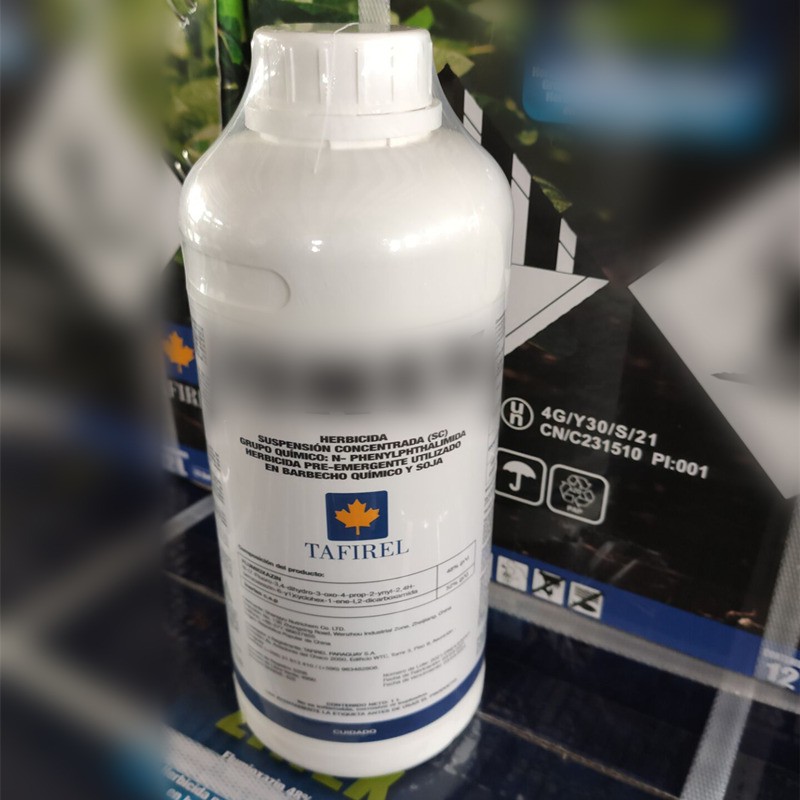
As a supplier of mesotrione, I've witnessed the growing popularity of this herbicide in the agricultural market. Mesotrione is a highly effective selective herbicide widely used to control a variety of broad - leaf and grassy weeds in crops such as maize. However, as with any agricultural chemical, there is always a question about its impact on the environment, especially on the soil microflora. In this blog, I'll delve into the question: Does mesotrione affect the soil microflora?
Understanding Soil Microflora
Soil microflora consists of a diverse community of microorganisms, including bacteria, fungi, archaea, and algae. These microorganisms play a crucial role in maintaining soil health. They are involved in nutrient cycling, such as nitrogen fixation, phosphorus solubilization, and decomposition of organic matter. They also help in plant growth promotion, disease suppression, and soil structure improvement. For example, mycorrhizal fungi form symbiotic relationships with plant roots, enhancing the plant's ability to absorb nutrients and water, while some bacteria can produce growth - promoting hormones for plants.
The Mechanism of Mesotrione
Mesotrione belongs to the triketone class of herbicides. Its mode of action is to inhibit the enzyme 4 - hydroxyphenylpyruvate dioxygenase (HPPD), which is essential for the synthesis of plastoquinone and tocopherols in plants. Without these compounds, plants cannot carry out normal photosynthesis, leading to bleaching and eventual death of the weeds. But what happens when mesotrione is applied to the soil? How does it interact with the soil microflora?
Studies on the Impact of Mesotrione on Soil Microflora
Short - term Effects
Several short - term studies have been conducted to evaluate the impact of mesotrione on soil microflora. In general, at recommended application rates, mesotrione has shown relatively mild effects on soil microorganisms in the short term. Some research has found that immediately after mesotrione application, there may be a slight reduction in the abundance of certain groups of bacteria and fungi. For example, a study on maize fields showed that within the first week after mesotrione treatment, the population of some gram - negative bacteria decreased. However, these changes were often transient.
The decrease in the microbial population could be due to the direct toxicity of mesotrione to some sensitive microorganisms or changes in the soil environment caused by the herbicide. For instance, mesotrione may alter the availability of nutrients in the soil by affecting the decomposition of organic matter, which in turn influences the growth of microorganisms.
Long - term Effects
Long - term effects of mesotrione on soil microflora are more complex and less well - understood. Some long - term field experiments suggest that repeated application of mesotrione over several growing seasons may lead to more significant changes in the soil microbial community structure. There may be a shift in the dominance of different microbial groups. For example, some studies have reported an increase in the relative abundance of certain fungal species that are more tolerant to mesotrione, while the abundance of some beneficial bacteria may decline over time.
However, it's important to note that these long - term effects can be influenced by many factors, such as soil type, climate, crop rotation, and the application rate of mesotrione. In well - managed agricultural systems with proper crop rotation and appropriate use of mesotrione, the long - term negative impacts on soil microflora can be minimized.
Factors Affecting the Impact of Mesotrione on Soil Microflora
Soil Properties
Soil texture, pH, organic matter content, and cation exchange capacity all play important roles in determining how mesotrione affects soil microflora. In soils with high organic matter content, mesotrione may be adsorbed onto the organic matter, reducing its bioavailability to microorganisms. This can mitigate the negative effects of the herbicide on the soil microflora. Similarly, in alkaline soils, mesotrione may be more stable and less likely to leach, which can also influence its interaction with soil microorganisms.
Application Rate
The application rate of mesotrione is a critical factor. Higher application rates are more likely to cause significant changes in the soil microflora. When the herbicide is applied at excessive rates, it can exceed the tolerance of many soil microorganisms, leading to a more severe decline in microbial populations and a disruption of the soil ecosystem.
Balancing the Use of Mesotrione and Soil Health
As a mesotrione supplier, I understand the importance of balancing the effectiveness of the herbicide in weed control and its potential impact on soil health. Here are some recommendations:
- Follow Recommended Application Rates: Always adhere to the recommended application rates provided by the manufacturer. This ensures effective weed control while minimizing the negative impact on soil microflora.
- Integrated Weed Management: Combine the use of mesotrione with other weed control methods, such as mechanical weeding and crop rotation. This can reduce the reliance on chemical herbicides and help maintain a healthy soil ecosystem.
- Soil Amendment: Incorporate organic matter into the soil regularly. Organic matter can improve soil structure, increase the buffering capacity of the soil, and provide a habitat for beneficial microorganisms. This can help the soil microflora recover more quickly from the potential stress caused by mesotrione.
Our Mesotrione Product: Mesotrione 70G/L + Nicosulfuron 40G/L OD
We offer a high - quality mesotrione product, Mesotrione 70G/L + Nicosulfuron 40G/L OD. This formulation combines the excellent weed - control properties of mesotrione with nicosulfuron, providing a broader spectrum of weed control in maize fields. Our product is carefully formulated to ensure maximum efficacy while minimizing the impact on the environment, including the soil microflora.
Conclusion and Call to Action
In conclusion, mesotrione can have an impact on soil microflora, but the extent of this impact depends on many factors. With proper use and management, the negative effects can be minimized. As a supplier, we are committed to providing high - quality mesotrione products and promoting sustainable agricultural practices.

If you are interested in our mesotrione products or have any questions about its use and impact on soil health, please feel free to contact us for a detailed discussion and procurement negotiation. We look forward to working with you to achieve effective weed control and sustainable agriculture.
References
- Duke, S. O., & Powles, S. B. (2008). Evolution in the herbicide mode of action. Pest Management Science, 64(4), 320 - 328.
- Krutz, L. J., Reddy, K. N., & Dever, M. A. (2008). Effect of mesotrione on growth and photosynthesis of Palmer amaranth (Amaranthus palmeri) and large crabgrass (Digitaria sanguinalis). Weed Science, 56(1), 101 - 106.
- Zhang, H., & Kong, X. (2014). Effects of mesotrione on soil microbial communities in maize fields. Journal of Environmental Science and Health, Part B, 49(10), 856 - 862.