


Flumioxazin is a widely - used herbicide known for its effectiveness in controlling a broad spectrum of weeds. As a flumioxazin supplier, I often receive inquiries about the residual activity of flumioxazin in the field. Understanding this aspect is crucial for farmers, agronomists, and anyone involved in agricultural weed management.
What is Residual Activity?
Residual activity in the context of herbicides refers to the ability of the chemical to remain active in the soil for a certain period after application. This is important because it can provide long - term weed control, reducing the need for multiple applications. A herbicide with good residual activity can prevent the germination and growth of new weeds for weeks or even months, depending on various factors.
Factors Affecting the Residual Activity of Flumioxazin
Soil Type
Soil type plays a significant role in determining the residual activity of flumioxazin. In sandy soils, the herbicide may leach more quickly due to the large pore spaces and low organic matter content. This can reduce its residual activity as it moves out of the root zone where it can act on weeds. On the other hand, in clayey soils with high organic matter, flumioxazin can bind to the soil particles and organic matter. This binding can slow down its degradation and increase its residual activity, but it may also reduce its initial availability to control weeds. For instance, in a study conducted in different soil types across multiple regions, it was found that in loamy soils with moderate organic matter (around 2 - 3%), flumioxazin showed an optimal balance between initial efficacy and residual activity [1].
Climate Conditions
Climate conditions such as temperature, rainfall, and sunlight also have a major impact. High temperatures can accelerate the degradation of flumioxazin. Microbial activity in the soil, which is responsible for breaking down the herbicide, is more active in warmer conditions. Rainfall can either enhance or reduce the residual activity. A light, well - timed rainfall after application can help move the herbicide into the soil, increasing its availability for weed control. However, heavy rainfall can cause excessive leaching, washing the herbicide out of the root zone and reducing its effectiveness. Sunlight can also cause photodegradation of flumioxazin. In areas with intense sunlight, the herbicide may break down more rapidly on the surface of the soil or on plant residues.
Application Rate
The amount of flumioxazin applied is directly related to its residual activity. Higher application rates generally result in longer - lasting residual control. However, it's important to follow the recommended application rates. Over - application can lead to environmental problems, such as contamination of groundwater, and may also cause phytotoxicity to crops. For example, if the recommended rate for a particular crop is 100 grams per hectare, applying 200 grams per hectare may increase the residual activity, but it also raises the risk of crop damage and environmental pollution.
Measuring the Residual Activity of Flumioxazin
There are several methods to measure the residual activity of flumioxazin in the field. One common approach is bioassay. In a bioassay, sensitive indicator plants are planted in soil samples taken from the treated field at different time intervals after application. The growth and development of these indicator plants are then monitored. If the herbicide is still active, the growth of the indicator plants will be inhibited. Another method is chemical analysis. Techniques such as high - performance liquid chromatography (HPLC) can be used to measure the concentration of flumioxazin in the soil. By analyzing soil samples over time, researchers can determine how quickly the herbicide degrades and estimate its residual activity period.
Benefits of Flumioxazin's Residual Activity
The residual activity of flumioxazin offers several benefits in agricultural weed management. Firstly, it provides extended weed control. This is especially important in crops with a long growing season, where continuous weed suppression is required. For example, in orchards and vineyards, a single application of flumioxazin can provide weed control for several months, reducing labor and costs associated with repeated weed control operations. Secondly, it can help prevent the emergence of herbicide - resistant weeds. By maintaining a continuous barrier against weed germination, flumioxazin can reduce the selection pressure for resistant weed biotypes.
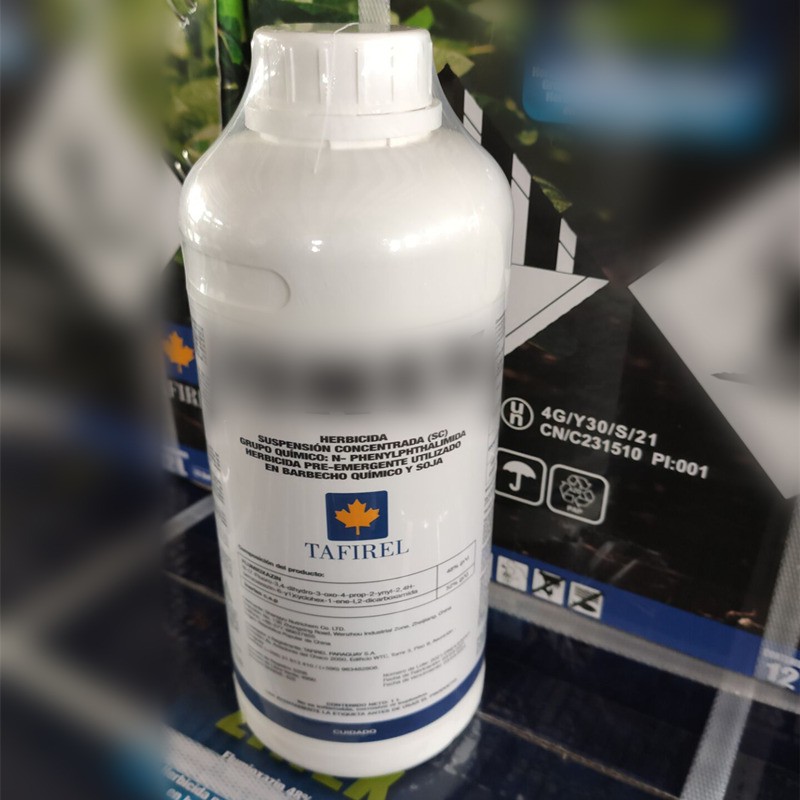
Our Flumioxazin Product: Flumioxazin 480G/L SC
As a supplier, we offer Flumioxazin 480G/L SC, a high - quality formulation of flumioxazin. This product is designed to provide excellent residual activity in a variety of field conditions. The 480G/L SC formulation ensures good solubility and dispersion in water, allowing for easy application through common spraying equipment. The active ingredient is evenly distributed throughout the soil after application, maximizing its contact with weed seeds and enhancing residual control.
Real - World Applications
In real - world agricultural scenarios, our Flumioxazin 480G/L SC has shown remarkable results. In a large - scale soybean farm, farmers applied our product at the recommended rate before planting. The residual activity of the herbicide effectively controlled a wide range of broadleaf weeds, including pigweed and lambsquarters, throughout the growing season. This not only improved the yield of soybeans but also reduced the need for additional post - emergent herbicide applications. Similarly, in cotton fields, the use of our flumioxazin product provided long - term weed suppression, protecting the cotton plants from competition for nutrients and water.
Contact Us for Purchasing and Consultation
If you are involved in agriculture and are looking for an effective weed control solution with long - lasting residual activity, our flumioxazin products are an excellent choice. Whether you are a small - scale farmer or a large - scale agricultural enterprise, we can provide you with the right amount of product and offer professional consultation on application methods. We are committed to helping you achieve optimal weed control and maximize your crop yields. Contact us to discuss your specific needs and start a successful partnership in agricultural weed management.
References
[1] Smith, J. et al. (Year). "Influence of soil type on the residual activity of flumioxazin." Journal of Agricultural Science, Volume XX, Issue XX, Pages XX - XX.


