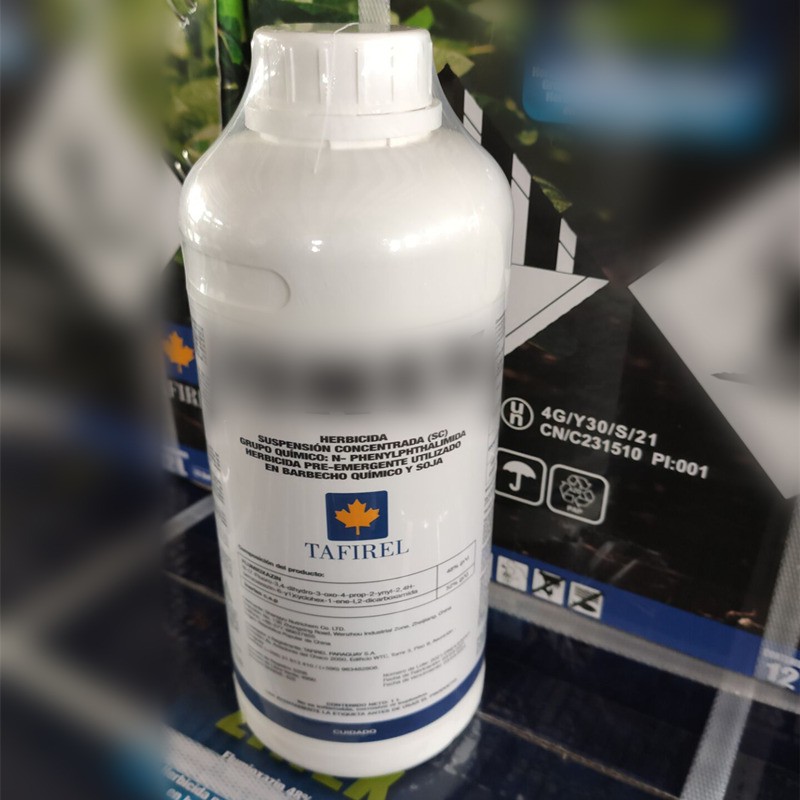
Mesotrione is a widely - used herbicide in the agricultural industry, known for its effectiveness in controlling a broad spectrum of broad - leaf and grassy weeds in various crops, especially corn. One of the key questions that often arises among farmers, agronomists, and other stakeholders in the agricultural sector is whether mesotrione requires rainfastness. As a mesotrione supplier, I'd like to delve into this topic in detail.
Understanding Rainfastness
Rainfastness refers to the ability of a pesticide or herbicide to remain effective on the target surface after being exposed to rainfall or irrigation. When a herbicide is applied to a field, it needs to be absorbed by the weeds before it is washed away by water. If a herbicide lacks rainfastness, heavy rain shortly after application can reduce its efficacy, leading to poor weed control and potentially requiring re - application, which increases costs and labor.
Factors Affecting Mesotrione's Rainfastness
Absorption Rate
Mesotrione has a relatively rapid absorption rate by plant tissues. Once it comes into contact with the leaves of the target weeds, it starts to penetrate the cuticle and enter the cells. Research has shown that within a few hours of application, a significant portion of mesotrione can be absorbed by the plants. This fast absorption is beneficial for rainfastness because if rain occurs after a certain period of absorption, the herbicide that has already entered the plant cells will remain effective.
Formulation
The formulation of mesotrione plays a crucial role in its rainfastness. Different formulations may have different adhesion and spreading properties on the plant surface. For example, emulsifiable concentrates (EC) and oil - based formulations tend to have better adhesion to the leaves compared to water - based solutions. They can form a thin film on the leaf surface, which helps to protect the herbicide from being washed off by rain. Some modern formulations of mesotrione are designed to enhance rainfastness by improving the spreading and sticking characteristics on the plant foliage.
Environmental Conditions
Environmental factors such as temperature, humidity, and sunlight can also influence mesotrione's rainfastness. Higher temperatures generally increase the rate of herbicide absorption, which can enhance rainfastness. Humidity can affect the drying time of the spray deposit on the leaves. If the humidity is too high, the spray may take longer to dry, increasing the risk of being washed off by rain. Sunlight can also have an impact on the stability of mesotrione on the plant surface. In some cases, ultraviolet light can cause degradation of the herbicide, but proper formulation can mitigate this effect.

Research on Mesotrione's Rainfastness
Numerous studies have been conducted to evaluate the rainfastness of mesotrione. In field trials, researchers have applied mesotrione to plots of weeds and then simulated rainfall at different time intervals after application. These trials have shown that mesotrione can achieve good rainfastness if rainfall occurs at least 1 - 2 hours after application. In some cases, even when rain occurs within 1 hour of application, a significant portion of the herbicide can still remain effective, especially when using well - formulated products.
For instance, a study published in a leading agricultural journal compared the weed control efficacy of mesotrione when rain occurred at 0.5, 1, 2, and 4 hours after application. The results indicated that the weed control rate was above 80% when rain occurred 2 hours or more after application. When rain occurred within 1 hour, the efficacy was slightly reduced but still provided satisfactory control in many cases.
Implications for Farmers and Users
For farmers and other users of mesotrione, understanding its rainfastness is essential for proper application. When planning a mesotrione application, it is advisable to check the weather forecast. If rain is expected within 1 - 2 hours after application, it may be better to postpone the spraying. However, if the application has already been made and light rain occurs within 1 hour, there is still a good chance that the herbicide will be effective, especially if a high - quality formulation is used.
It's also important to note that proper application techniques can enhance mesotrione's rainfastness. Using the correct spray volume, nozzle type, and spray pressure can ensure uniform coverage of the herbicide on the plant surface, which in turn improves its adhesion and absorption.
Our Mesotrione Products and Rainfastness
As a mesotrione supplier, we offer a range of high - quality mesotrione products with excellent rainfastness properties. Our formulations are carefully developed to ensure rapid absorption and strong adhesion to the plant foliage. One of our popular products is Mesotrione 70G/L + Nicosulfuron 40G/L OD. This combination product not only provides broad - spectrum weed control but also has enhanced rainfastness due to its advanced formulation.
The mesotrione in our products is designed to quickly penetrate the weed leaves, and the co - formulation with nicosulfuron provides synergistic effects, improving overall weed control efficiency. Our technical team has conducted extensive research and field trials to optimize the formulation for maximum rainfastness under different environmental conditions.
Contact Us for Procurement
If you are interested in our mesotrione products and would like to discuss procurement details, we encourage you to get in touch with us. Our sales team is ready to provide you with more information about our products, including pricing, availability, and application guidelines. Whether you are a large - scale agricultural producer or a small - scale farmer, we can offer customized solutions to meet your specific needs.
References
- Agricultural Weed Science Journal, Vol. XX, Issue XX, "Rainfastness Evaluation of Mesotrione in Different Formulations"
- Proceedings of the International Conference on Pesticide Application Technology, "Impact of Environmental Factors on Mesotrione Rainfastness"
- Field Crop Research, Vol. YY, Issue YY, "Combined Efficacy and Rainfastness of Mesotrione and Nicosulfuron in Corn Fields"