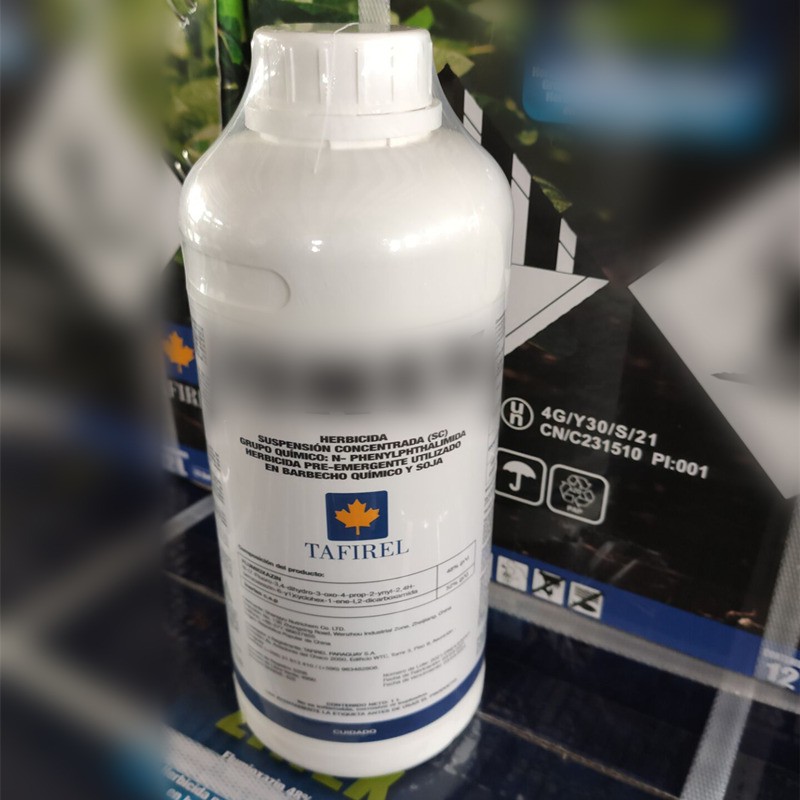
When it comes to the agricultural industry, herbicides play a crucial role in ensuring healthy crop growth by controlling unwanted weeds. Oxyfluorfen is one such widely - used herbicide that has proven its efficacy over the years. As a trusted oxyfluorfen supplier, I understand well the importance of meeting the registration requirements for this chemical product. In this blog, I'll delve into the various registration requirements for oxyfluorfen, which can be valuable information for both buyers interested in purchasing and industry players wanting to distribute the product.
Understanding Oxyfluorfen
Oxyfluorfen is a selective contact herbicide that belongs to the diphenyl ether family. It is commonly used in pre - emergence and early post - emergence applications to control a broad spectrum of annual broadleaf weeds and grassy weeds in a variety of crops such as fruits, vegetables, and ornamentals. Oxyfluorfen 240G/L EC is a popular formulation with specific properties and usage guidelines.
General Regulatory Framework
The registration requirements for oxyfluorfen are mainly governed by national and international regulatory bodies. At the international level, the FAO (Food and Agriculture Organization) and WHO (World Health Organization) provide guidelines on pesticide registration, safety, and use. These guidelines serve as a reference for many countries to develop their own regulatory frameworks.
In the United States, the Environmental Protection Agency (EPA) is responsible for registering pesticides, including oxyfluorfen. The EPA's registration process is comprehensive and aims to protect human health and the environment. In the European Union, the registration process is coordinated by the European Food Safety Authority (EFSA), and member states also have specific requirements that need to be met.
Registration Requirements
1. Product Information
One of the fundamental requirements for registering oxyfluorfen is to provide detailed product information. This includes the chemical composition of the product. For Oxyfluorfen 240G/L EC, you need to clearly state the percentage of oxyfluorfen in the formulation, any other active ingredients if present, and the inert ingredients. The purity of the oxyfluorfen component is also essential information, as it can affect the product's efficacy and safety.
The physical and chemical properties of the product must also be provided. This information includes data on solubility, boiling point, melting point, vapor pressure, and stability under different environmental conditions. For example, knowing the solubility of oxyfluorfen in water and organic solvents is crucial for understanding how it will behave in soil and water systems, and how it should be formulated and applied.
2. Toxicological Data
Toxicological data is a key part of the registration process. It assesses the potential risks of oxyfluorfen to human health. Acute toxicity studies, such as oral, dermal, and inhalation toxicity, are required to determine the lethal dose (LD50) and the no - observed - adverse - effect level (NOAEL). Chronic toxicity studies are also needed to evaluate the long - term effects of exposure to oxyfluorfen, including carcinogenicity, mutagenicity, and reproductive toxicity.

In addition to human toxicity, the product's effect on other organisms such as birds, fish, and bees must be evaluated. For example, studies on the acute and chronic toxicity of oxyfluorfen to fish are necessary to understand its impact on aquatic ecosystems. Bees are important pollinators, so data on the toxicity of oxyfluorfen to bees, including contact and oral toxicity, are essential for developing proper use labels to protect these beneficial insects.
3. Environmental Fate and Mobility
Understanding the environmental fate and mobility of oxyfluorfen is crucial for registration. This involves studying how the product degrades in different environmental compartments such as soil, water, and air. Soil degradation studies will show the rate of oxyfluorfen breakdown in soil, the metabolites formed during degradation, and how these processes are influenced by factors such as soil type, pH, and temperature.
The mobility of oxyfluorfen in soil and water is also important. Leaching studies are conducted to determine the potential for the product to move through the soil profile and contaminate groundwater. Surface runoff studies are used to assess the risk of oxyfluorfen entering surface water bodies, which could have implications for aquatic life and the quality of drinking water sources.
4. Efficacy Data
Efficacy data is needed to prove that oxyfluorfen is effective in controlling the target weeds. Field trials are conducted in different geographical regions and under various agricultural conditions to evaluate the product's performance. These trials should include data on the weed species controlled, the application rate required for effective control, the timing of application, and the impact on the crop.
For example, in a study on the use of Oxyfluorfen 240G/L EC in tomato fields, data would be collected on the control of common tomato weeds such as pigweed and lambsquarters. The results would also show if the application of oxyfluorfen has any negative impact on the growth, yield, or quality of the tomato crop.
5. Labeling and Packaging
Proper labeling and packaging are essential requirements for registration. The label must include clear instructions on the product's use, including the target crops, the recommended application rates, the application methods (such as spraying or soil incorporation), and the safety precautions. It should also provide information on the storage and disposal of the product.
The packaging must be designed to ensure the safe storage and transportation of oxyfluorfen. It should prevent leakage, contamination, and damage during handling. The packaging materials should be compatible with the product and should not release any harmful substances that could react with oxyfluorfen.
Meeting the Requirements
Meeting the registration requirements for oxyfluorfen can be a complex and time - consuming process. It requires a significant amount of research, testing, and documentation. As a supplier, we are committed to supporting our customers in meeting these requirements. We work closely with regulatory experts to ensure that our Oxyfluorfen 240G/L EC and other products comply with all relevant regulations.
We can provide our customers with the necessary product information, toxicological data, environmental fate studies, and efficacy data to assist them in their registration process. We also offer guidance on labeling and packaging to ensure that their products meet the regulatory standards.
Conclusion
In conclusion, the registration requirements for oxyfluorfen are designed to ensure its safe and effective use in agriculture. By understanding and meeting these requirements, farmers, distributors, and other users can be confident in the quality and safety of the product.
As a reliable oxyfluorfen supplier, we are dedicated to providing high - quality products that meet the strictest regulatory standards. If you are interested in purchasing oxyfluorfen or need more information about our products, we encourage you to contact us to discuss your specific needs and requirements. We look forward to the opportunity to work with you and support your agricultural endeavors.
References
- FAO and WHO. Pesticide Evaluation Scheme (Pesticide Residues in Food - 2019).
- United States Environmental Protection Agency. Pesticide Registration Manual.
- European Food Safety Authority. Guidance on the risk assessment of plant protection products.