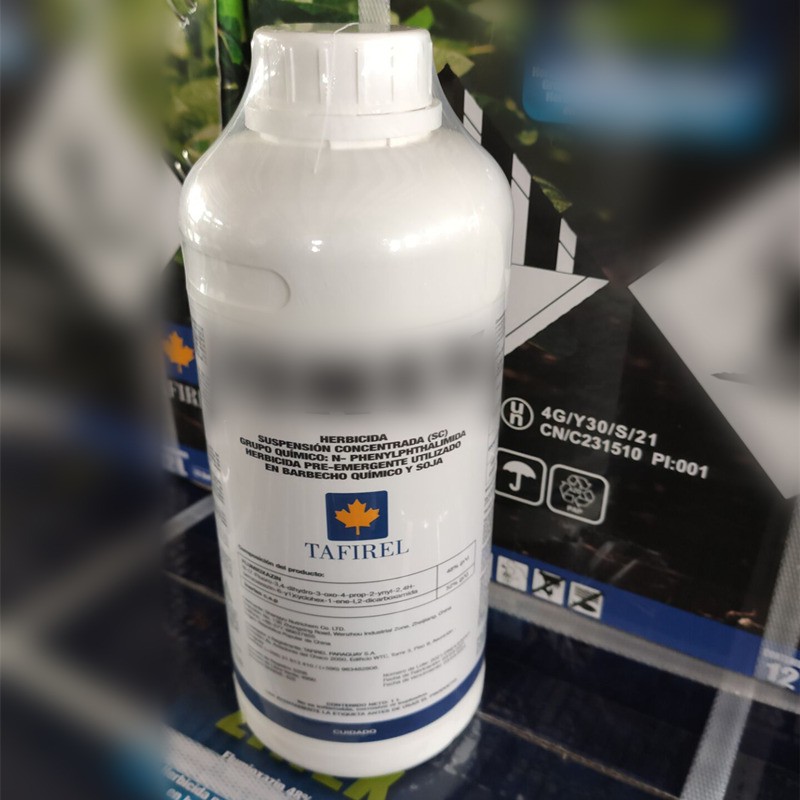
Humidity is a crucial environmental factor that can significantly influence various chemical processes and the performance of many agricultural chemicals. As a supplier of oxyfluorfen, a widely - used herbicide, I've witnessed firsthand how humidity can impact its efficacy. In this blog, I'll explore the relationship between humidity and the effectiveness of oxyfluorfen, providing insights that are valuable for farmers, agricultural professionals, and anyone interested in herbicide application.
Understanding Oxyfluorfen
Oxyfluorfen is a pre - and post - emergent herbicide that belongs to the diphenyl ether chemical family. It works by inhibiting protoporphyrinogen oxidase (PPO), an enzyme essential for chlorophyll biosynthesis in plants. When oxyfluorfen is applied to the soil or plant surfaces, it disrupts the normal functioning of this enzyme, leading to the accumulation of toxic intermediates that damage cell membranes and ultimately cause plant death.
Oxyfluorfen is highly effective against a wide range of broadleaf weeds and some grasses. It is commonly used in various crops such as fruits, vegetables, and field crops. For those interested in our Oxyfluorfen product, you can find more details about Oxyfluorfen 240G/L EC.
How Humidity Affects Herbicide Uptake
Humidity plays a vital role in the uptake of oxyfluorfen by plants. When the humidity is high, the stomata (tiny pores on the plant leaves) tend to open wider. Stomata are responsible for gas exchange in plants, allowing carbon dioxide to enter and water vapor to exit. A high - humidity environment reduces the water vapor gradient between the inside and outside of the leaf, which means that less water is lost through transpiration. As a result, stomata remain open for a longer period, facilitating the entry of oxyfluorfen into the plant.
In addition to stomatal uptake, high humidity can also enhance the absorption of oxyfluorfen through the cuticle, the waxy outer layer of the leaf. The cuticle acts as a barrier to prevent the loss of water and the entry of foreign substances. However, in a humid environment, the cuticle can become more hydrated and more permeable. This increased permeability allows oxyfluorfen to penetrate the cuticle more easily and reach the underlying cells, where it can exert its herbicidal activity.
Conversely, when the humidity is low, stomata tend to close to conserve water. This reduces the uptake of oxyfluorfen through stomatal openings. Moreover, the dry cuticle becomes less permeable, making it more difficult for the herbicide to enter the plant. As a result, the efficacy of oxyfluorfen can be significantly reduced under low - humidity conditions.
Impact on Herbicide Distribution within the Plant
Once oxyfluorfen enters the plant, humidity can also affect its distribution within the plant tissues. In a high - humidity environment, the movement of water within the plant is more rapid. This is because the water potential gradient is maintained, and the plant can easily transport water and nutrients through the xylem and phloem. Oxyfluorfen can be carried along with the water flow, allowing it to be more evenly distributed throughout the plant. This ensures that all parts of the weed, including the roots, stems, and leaves, are exposed to the herbicide, increasing its overall effectiveness.
On the other hand, low humidity can lead to slower water movement within the plant. The reduced water flow may cause oxyfluorfen to accumulate in certain areas of the plant, rather than being evenly distributed. This uneven distribution can result in some parts of the weed being under - exposed to the herbicide, allowing the weed to survive and recover.
Influence on Herbicide Degradation
Humidity can also affect the degradation rate of oxyfluorfen in the environment. In a high - humidity environment, the presence of water can promote chemical reactions that break down oxyfluorfen. For example, hydrolysis, a chemical reaction in which water molecules react with the herbicide, can occur more readily in a wet environment. Hydrolysis can convert oxyfluorfen into less - active or inactive metabolites, reducing its herbicidal efficacy over time.
However, it's important to note that the impact of humidity on degradation is complex and can be influenced by other factors such as temperature and pH. In some cases, high humidity may also slow down the degradation of oxyfluorfen by protecting it from sunlight - induced photodegradation. The water droplets on the plant surface or in the soil can act as a shield, reducing the exposure of oxyfluorfen to ultraviolet light, which is a major cause of photodegradation.
In low - humidity conditions, the degradation of oxyfluorfen may be slower due to the lack of water for hydrolysis. However, the herbicide may be more susceptible to photodegradation because there is less protection from water droplets.
Practical Implications for Herbicide Application
Based on the understanding of how humidity affects the efficacy of oxyfluorfen, there are several practical implications for its application.
Timing of Application
It is generally recommended to apply oxyfluorfen when the humidity is moderate to high. Early morning or late evening are often the best times for application, as these periods usually have higher humidity levels compared to the middle of the day. Avoid applying oxyfluorfen during hot, dry, and windy conditions, as the low humidity and high evaporation rate can reduce its efficacy.
Irrigation Management
Irrigation can be used as a tool to manipulate humidity levels in the field. If the natural humidity is low, applying light irrigation before or after herbicide application can increase the humidity around the plants. This can enhance the uptake and distribution of oxyfluorfen, improving its effectiveness. However, care should be taken not to over - irrigate, as excessive water can also lead to leaching of the herbicide and environmental pollution.
Monitoring and Adjusting Application Rates
Farmers and agricultural professionals should monitor the humidity levels in the field before and after herbicide application. If the humidity is lower than expected, it may be necessary to adjust the application rate of oxyfluorfen to ensure adequate weed control. However, this should be done with caution, as over - application can lead to increased costs and potential environmental risks.

Conclusion
Humidity has a profound impact on the efficacy of oxyfluorfen. It affects the uptake, distribution, and degradation of the herbicide, ultimately determining its ability to control weeds. As a supplier of oxyfluorfen, I understand the importance of providing our customers with accurate information about the factors that can influence the performance of our products. By considering humidity and other environmental factors during herbicide application, farmers and agricultural professionals can optimize the use of oxyfluorfen and achieve better weed control results.
If you are interested in purchasing oxyfluorfen or have any questions about its application, please don't hesitate to contact us for further discussion and negotiation. We are committed to providing high - quality products and excellent customer service to meet your agricultural needs.
References
- Devlin, R. M., & Witham, F. H. (1983). Plant Physiology. New York: Worth Publishers.
- Grossmann, K., & Ehrhardt, T. (2007). Mode of action of diphenyl ether herbicides. Pest Management Science, 63(11), 1099 - 1109.
- Taiz, L., & Zeiger, E. (2010). Plant Physiology. Sunderland, MA: Sinauer Associates.