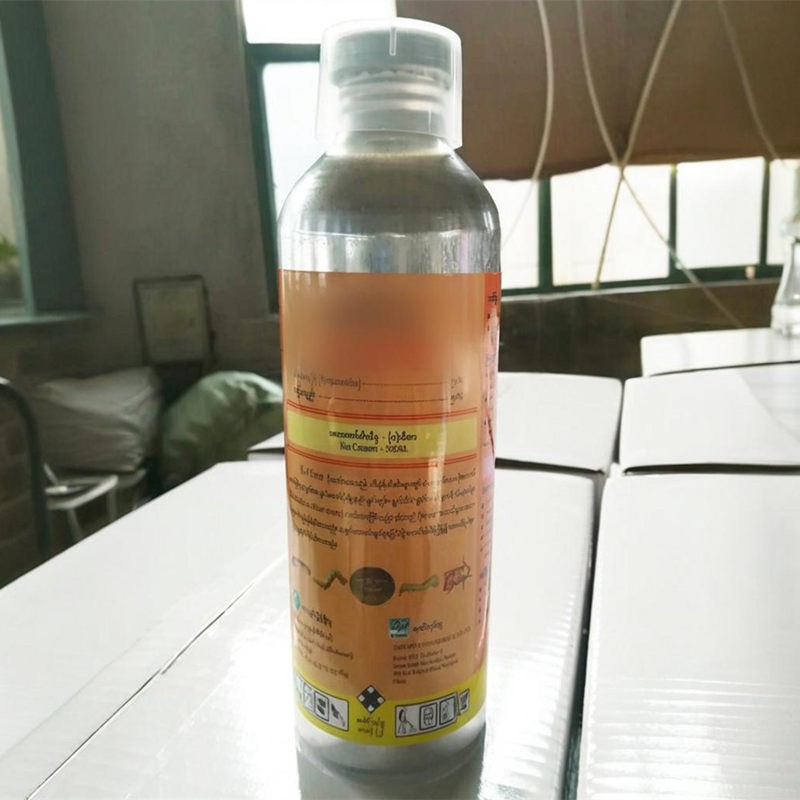
Hey there, folks! I'm a supplier of pyroxsulam, and today I wanna chat about how wind can impact the application of this nifty herbicide.
Let's start by getting to know pyroxsulam a bit. Pyroxsulam is a highly effective herbicide that's widely used to control a variety of grass and broad - leaf weeds in cereal crops. It works by inhibiting the enzyme acetolactate synthase (ALS), which is crucial for the synthesis of branched - chain amino acids in plants. When weeds absorb pyroxsulam, this process gets disrupted, and they eventually die off.
Now, let's dig into the role of wind in all this. Wind is a natural force that can't be ignored when it comes to applying pyroxsulam. One of the most immediate effects of wind is on the spray drift. When you're spraying pyroxsulam, the wind can carry the tiny droplets of the herbicide away from the target area. If the wind is blowing strongly, these droplets can end up in non - target areas, like neighboring fields, water bodies, or even residential areas.
For farmers and applicators, spray drift is a major headache. It not only reduces the effectiveness of the herbicide on the target weeds but can also cause damage to non - target plants. For example, if the wind blows pyroxsulam onto a field of sensitive crops, it can lead to stunted growth, leaf damage, or even crop failure. In addition, there are environmental concerns. If the drifted herbicide reaches water bodies, it can contaminate the water and harm aquatic life.
The speed of the wind is a key factor here. Generally, the higher the wind speed, the greater the risk of spray drift. At low wind speeds (say, less than 3 miles per hour), the spray droplets tend to fall more directly onto the target area. But as the wind speed increases, the droplets are more likely to be carried away. For instance, when the wind speed reaches 10 miles per hour or more, the risk of significant spray drift becomes quite high.

Another aspect is the direction of the wind. If the wind is blowing towards a non - target area, like a nearby orchard or a residential neighborhood, the potential for problems is obvious. Applicators need to be very aware of the wind direction before starting the spraying process. They should always try to position themselves so that the wind is blowing the spray towards the target area and away from sensitive areas.
But it's not all bad news. In some cases, a gentle breeze can actually be beneficial. A light wind can help the spray droplets to disperse more evenly over the target area. This can improve the coverage of the herbicide on the weeds, leading to better control. However, this only works within a certain range of wind speeds. If the wind is too strong, the benefits of better dispersion are quickly outweighed by the risks of spray drift.
Now, let's talk about some strategies to deal with the influence of wind when applying pyroxsulam. First of all, checking the weather forecast is a must. Before starting the spraying, applicators should look at the predicted wind speed and direction for the next few hours. If the conditions are not favorable, they should postpone the spraying until the wind conditions improve.
Using the right equipment can also make a big difference. There are spray nozzles designed to reduce spray drift. These nozzles produce larger droplets, which are less likely to be carried away by the wind. For example, air - induction nozzles can create larger, more stable droplets that are better able to reach the target area even in windy conditions.
In addition, buffer zones can be established. A buffer zone is an area around the target field where no spraying is done. This helps to protect non - target areas from spray drift. The size of the buffer zone depends on various factors, such as the wind speed, the type of nozzle used, and the sensitivity of the surrounding areas.
As a pyroxsulam supplier, I often recommend products like Pyroxsulam 100G/L + Florasulam 75G/L SC. This formulation combines the effectiveness of pyroxsulam with florasulam, providing broad - spectrum weed control. And when it comes to dealing with wind - related issues during application, the same principles apply.
So, if you're a farmer or an applicator looking for high - quality pyroxsulam products, don't hesitate to get in touch with me. I'm here to help you choose the right products and provide advice on how to apply them effectively, especially when dealing with the challenges posed by wind. Whether you're a small - scale farmer or a large - scale agricultural operation, I've got the solutions for you. Let's work together to ensure that your crops are well - protected from weeds while minimizing the impact on the environment.
If you're interested in learning more about pyroxsulam or want to discuss your specific needs, feel free to reach out. We can have a chat about the best products for your situation and how to handle the influence of wind during application. I'm always happy to help you make the most of this great herbicide.
References
- "Weed Control in Cereal Crops": A comprehensive guide on herbicide application and its impact on crops.
- "Spray Drift Management": A research report focusing on the factors affecting spray drift and strategies to reduce it.
- Manufacturer's guidelines for pyroxsulam products, which often include information on wind - related application considerations.