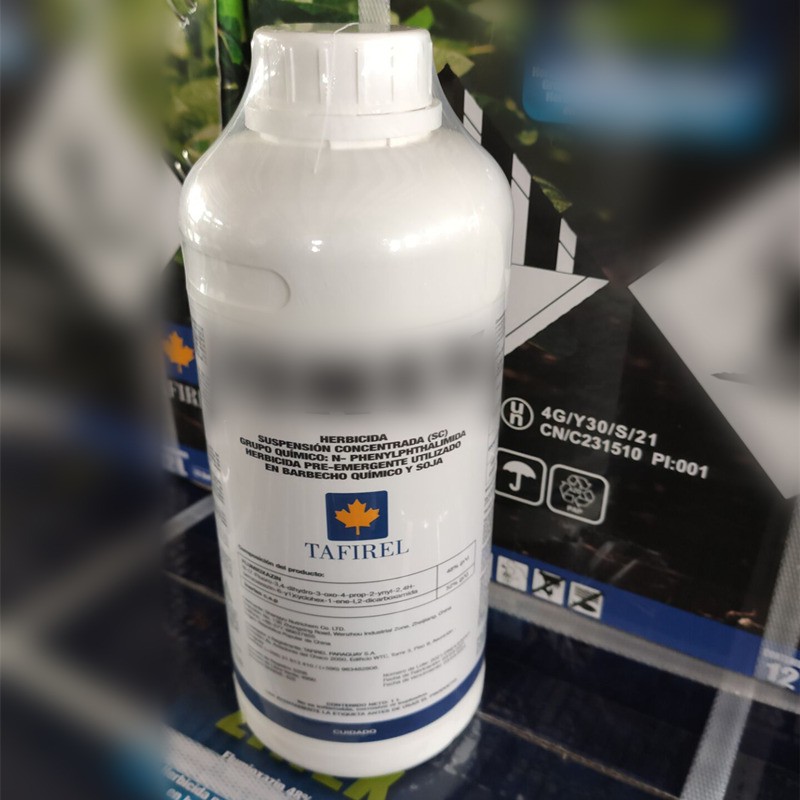
Hey there! As a mesotrione supplier, I often get asked about the solubility of mesotrione in water. It's a pretty important topic, especially for those in the agricultural and chemical industries. So, let's dive right in and explore this question in detail.
First off, what exactly is mesotrione? Well, mesotrione is a selective herbicide that's widely used to control broad - leaf and grassy weeds in crops like corn. It works by inhibiting an enzyme involved in the biosynthesis of carotenoids in plants, which eventually leads to the death of the targeted weeds.
Now, let's talk about solubility. Solubility is basically the ability of a substance (in this case, mesotrione) to dissolve in a solvent (water). The solubility of mesotrione in water is quite low. At 20°C, the solubility of mesotrione in water is approximately 1.6 g/L. This relatively low solubility means that mesotrione doesn't dissolve easily in water on its own.
Why does the solubility matter? In the agricultural field, when using mesotrione as a herbicide, it needs to be properly mixed with water to form a sprayable solution. The low solubility can pose some challenges. If the solubility is not considered, there might be issues like uneven distribution of the herbicide in the water, which can lead to ineffective weed control. Some areas of the field might get too much of the herbicide, while others get too little.
However, don't worry! There are ways to deal with this low - solubility problem. One common approach is to use adjuvants. Adjuvants are substances added to the herbicide - water mixture to improve its performance. They can enhance the solubility of mesotrione in water, making it easier to form a homogeneous solution. For example, some surfactants can reduce the surface tension between mesotrione and water, allowing the mesotrione particles to disperse more evenly in the water.
Another important factor that affects the solubility of mesotrione in water is temperature. Generally, the solubility of most substances increases with an increase in temperature. For mesotrione, as the temperature rises, more of it can dissolve in water. So, if you're having trouble getting mesotrione to dissolve in water, slightly heating the water (within a reasonable range, of course) might help. But be careful not to overheat it, as high temperatures can also degrade the mesotrione.
The pH of the water can also play a role in the solubility of mesotrione. Mesotrione is a weak acid, and its solubility can vary depending on the pH of the solution. In slightly acidic to neutral conditions, its solubility is relatively stable. But in very alkaline or very acidic environments, the solubility might change. For example, in highly alkaline water, mesotrione might react with the hydroxide ions in the water, which could affect its solubility and chemical stability.
When it comes to formulating mesotrione products, manufacturers take the solubility into account. They develop different formulations to ensure that mesotrione can be easily mixed with water and applied effectively. One such product is Mesotrione 70G/L + Nicosulfuron 40G/L OD. This formulation combines mesotrione with nicosulfuron, another herbicide, and is designed to be more soluble and easier to use in water - based applications.
As a supplier, I've seen firsthand how important it is for farmers and agricultural professionals to understand the solubility of mesotrione. It helps them make the most of the product, ensuring better weed control and higher crop yields. If you're using mesotrione in your agricultural operations, I recommend doing some small - scale tests first. Try different water temperatures, pH levels, and adjuvants to find the best combination for your specific needs.
In addition to its use in agriculture, mesotrione's solubility in water is also relevant in environmental studies. When mesotrione is applied to fields, it can potentially enter water bodies through runoff. Understanding its solubility helps in assessing its environmental fate and impact. For example, its low solubility means that it's less likely to be leached deep into the groundwater compared to more soluble substances. But it can still be carried in surface runoff, which might affect nearby streams, rivers, or lakes.
If you're in the market for mesotrione, whether you're a large - scale farmer, a small - scale grower, or an agricultural chemical distributor, I'm here to help. I can provide you with high - quality mesotrione products and offer advice on how to use them effectively. Just because mesotrione has low solubility in water doesn't mean it's difficult to work with. With the right knowledge and approach, you can achieve excellent results.
So, if you're interested in purchasing mesotrione or want to learn more about its solubility and application, don't hesitate to reach out. We can have a chat about your specific requirements, and I'll do my best to provide you with the solutions you need. Whether it's about choosing the right formulation, understanding the best application methods, or dealing with solubility issues, I'm here to support you.

Let's work together to make your agricultural operations more successful. Contact me today, and let's start this journey towards better weed control and higher crop yields!
References
- Tomlin, C. D. S. (Ed.). (2009). The Pesticide Manual: A World Compendium. BCPC.
- USEPA. (2019). Registration Review Chemical Risk Assessment for Mesotrione. U.S. Environmental Protection Agency.