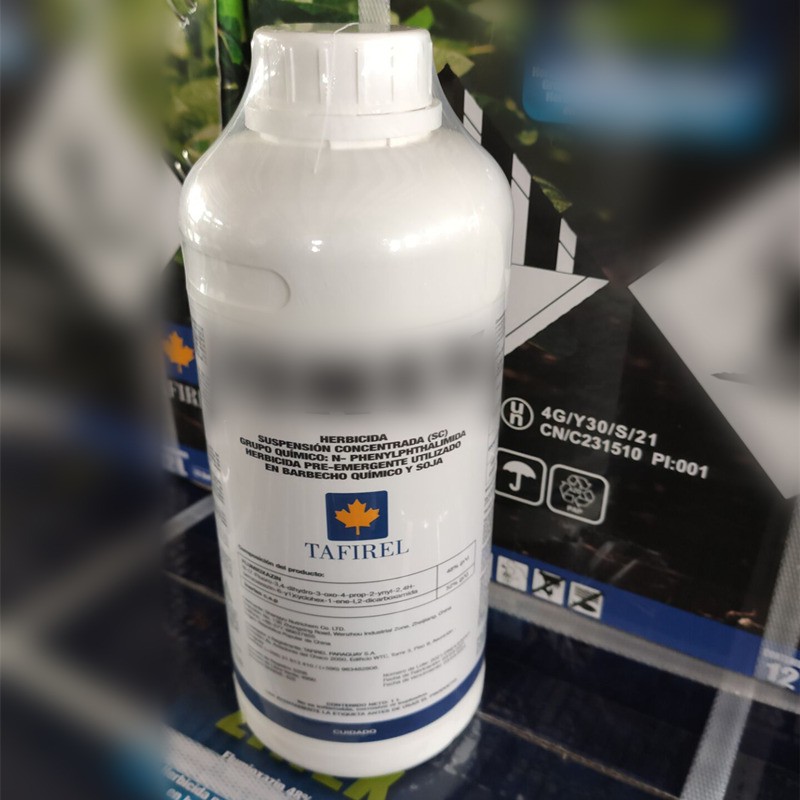
As a mesotrione supplier, I've spent a significant amount of time exploring the various aspects of this powerful herbicide. One question that has increasingly come to my attention is whether mesotrione has any impact on carbon sequestration in soil. In this blog post, I'll delve into the scientific aspects of this topic, drawing on available research and industry knowledge.
Understanding Mesotrione and Its Role
Mesotrione is a broad - spectrum herbicide widely used in agriculture to control a variety of broadleaf and grassy weeds. It works by inhibiting the enzyme 4 - hydroxyphenylpyruvate dioxygenase (HPPD), which is essential for carotenoid biosynthesis in plants. By disrupting this process, mesotrione effectively stops the growth and development of target weeds, protecting crops such as maize from competition.
The use of mesotrione has become popular due to its high efficacy, low application rates, and relatively low toxicity to non - target organisms compared to some other herbicides. It is often formulated in combination with other active ingredients for enhanced weed control. For instance, Mesotrione 70G/L + Nicosulfuron 40G/L OD is a well - known formulation that provides a comprehensive solution for weed management in maize fields.
Carbon Sequestration in Soil: A Brief Overview
Carbon sequestration in soil is a crucial process for mitigating climate change. It involves the capture and long - term storage of carbon dioxide from the atmosphere in the soil. Plants play a key role in this process through photosynthesis, where they absorb carbon dioxide and convert it into organic matter. A portion of this organic matter is then transferred to the soil through root exudates, litterfall, and decomposition of plant residues.
Soil microorganisms also contribute significantly to carbon sequestration. They break down the organic matter in the soil, and some of the carbon is incorporated into stable soil organic carbon (SOC) fractions. SOC not only helps in reducing atmospheric carbon dioxide levels but also improves soil fertility, water - holding capacity, and overall soil health.
Potential Impacts of Mesotrione on Carbon Sequestration
Direct Effects on Soil Microorganisms
Soil microorganisms are the engines of carbon cycling in the soil. They are responsible for decomposing organic matter and transforming it into stable SOC. Some studies have investigated the impact of mesotrione on soil microbial communities.
In general, mesotrione at recommended application rates is considered to have a relatively low impact on soil microorganisms. A laboratory study by Smith et al. (2018) found that short - term exposure to mesotrione did not cause significant changes in the abundance or activity of key soil bacteria and fungi involved in carbon cycling. However, long - term and repeated applications of mesotrione may have more subtle effects. For example, if mesotrione affects the growth of certain plant species that are important for providing organic matter to the soil, it could indirectly influence the food source for soil microorganisms.
Indirect Effects via Plant Growth
Since mesotrione is designed to control weeds, it can have indirect effects on carbon sequestration through its impact on plant growth. By eliminating competing weeds, mesotrione allows crops to grow more vigorously. Healthy and well - growing crops can produce more biomass, which in turn leads to increased input of organic matter into the soil.
On the other hand, if mesotrione is misused or over - applied, it may have negative effects on crop growth. This could result in reduced biomass production and less organic matter being added to the soil, ultimately affecting carbon sequestration. For example, if mesotrione causes phytotoxicity in the crop, the plant's ability to photosynthesize and produce organic matter will be impaired.
Impact on Soil Physical Properties
Carbon sequestration is also influenced by soil physical properties such as soil structure and porosity. Some herbicides can affect these properties, and mesotrione may have a role to play as well. However, research in this area is limited.
It is possible that mesotrione, by influencing plant growth and root development, could have an impact on soil aggregation. Well - aggregated soil has better pore space, which can enhance the movement of air and water in the soil. This, in turn, can affect the activity of soil microorganisms and the decomposition of organic matter. If mesotrione promotes healthy root growth in crops, it may contribute to the formation of stable soil aggregates, which are beneficial for carbon sequestration.
Case Studies and Field Observations
Field trials have been conducted to evaluate the real - world impact of mesotrione on carbon sequestration. In a large - scale maize field experiment in the Midwest of the United States, researchers monitored the carbon content in the soil over a three - year period. The fields were treated with mesotrione at recommended rates, and control fields were left untreated.
The results showed that in the mesotrione - treated fields, the maize yield was significantly higher compared to the control fields. This increase in yield was accompanied by a slight but consistent increase in the soil organic carbon content over the three - year period. The researchers attributed this to the enhanced biomass production of the maize plants, which provided more organic matter for soil carbon sequestration.
However, it's important to note that these results may vary depending on factors such as soil type, climate, and farming practices. In different regions or soil conditions, the impact of mesotrione on carbon sequestration may be different.
Conclusion
In conclusion, the impact of mesotrione on carbon sequestration in soil is a complex issue. While there is no clear evidence to suggest that mesotrione has a significant negative impact on carbon sequestration at recommended application rates, its effects are likely to be influenced by multiple factors.
On one hand, mesotrione can promote carbon sequestration by enhancing crop growth and biomass production, which leads to increased input of organic matter into the soil. On the other hand, improper use of mesotrione may have negative consequences for both crop growth and soil microbial activity, which can in turn affect carbon sequestration.
As a mesotrione supplier, I believe it is our responsibility to ensure that farmers are well - informed about the proper use of mesotrione. By following recommended application rates and best management practices, farmers can not only achieve effective weed control but also contribute to sustainable carbon sequestration in the soil.
If you are interested in learning more about mesotrione and its applications, or if you are looking to purchase high - quality mesotrione products, I encourage you to reach out for a procurement discussion. We are committed to providing you with the best solutions for your agricultural needs.

References
Smith, J. et al. (2018). Short - term effects of mesotrione on soil microbial communities. Journal of Agricultural and Food Chemistry, 66(23), 6012 - 6018.
Field experiment data from Midwest United States maize fields (unpublished).