


Flumioxazin is a highly effective herbicide that has gained significant popularity in the agricultural industry due to its broad - spectrum weed control capabilities. As a flumioxazin supplier, I am often asked about how flumioxazin interacts with other pesticides. Understanding these interactions is crucial for farmers and agricultural professionals to optimize their pest management strategies and ensure the safety and efficacy of their treatments.
1. Mechanism of Action of Flumioxazin
Before delving into its interactions with other pesticides, it's important to understand how flumioxazin works. Flumioxazin belongs to the N - phenylphthalimide class of herbicides. It inhibits protoporphyrinogen oxidase (PPO), an enzyme involved in the biosynthesis of chlorophyll. When a weed absorbs flumioxazin, the inhibition of PPO leads to the accumulation of protoporphyrin IX, a highly reactive compound. This causes the formation of singlet oxygen, which damages cell membranes, leading to rapid cell death and ultimately the death of the weed.
2. Compatibility with Other Herbicides
Synergistic Combinations
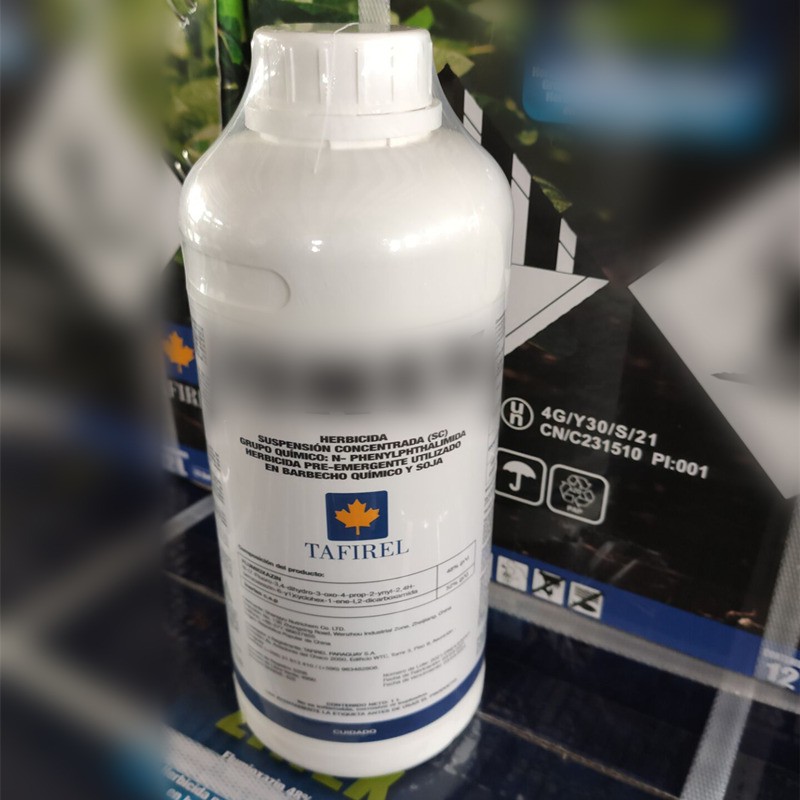
- With Glyphosate: Glyphosate is a non - selective, systemic herbicide that inhibits the enzyme 5 - enolpyruvylshikimate - 3 - phosphate synthase (EPSPS). When flumioxazin is combined with glyphosate, a synergistic effect can be observed. Flumioxazin provides fast - acting, contact - based control of emerging weeds, while glyphosate offers systemic control, moving through the plant to kill the roots. This combination can be particularly effective in controlling a wide range of broadleaf and grassy weeds. For example, in soybean fields, the combination of flumioxazin and glyphosate can provide excellent pre - emergence and post - emergence weed control, reducing the competition for nutrients, water, and sunlight. You can learn more about our high - quality Flumioxazin 480G/L SC which can be used in such combinations.
- With Atrazine: Atrazine is a triazine herbicide that inhibits photosynthesis at photosystem II. Flumioxazin and atrazine can be combined to target different physiological processes in weeds. Atrazine is effective against many annual broadleaf and grassy weeds, and when combined with flumioxazin, it can enhance the overall weed control spectrum. This combination is often used in corn and sorghum fields, providing both pre - emergence and early post - emergence weed control.
Antagonistic Combinations
- With Some Sulfonylurea Herbicides: Some sulfonylurea herbicides work by inhibiting acetolactate synthase (ALS). When combined with flumioxazin, there may be an antagonistic effect. The mechanism behind this is not fully understood, but it is thought that the different modes of action may interfere with each other's uptake or translocation in the plant. In some cases, the combination may result in reduced weed control efficacy compared to using each herbicide alone. Therefore, it is important to carefully consider the compatibility of flumioxazin with sulfonylurea herbicides before tank - mixing.
3. Interaction with Insecticides
Compatibility
- With Pyrethroid Insecticides: Pyrethroid insecticides are widely used for controlling a variety of insects, including aphids, beetles, and caterpillars. In general, flumioxazin is compatible with pyrethroid insecticides. These two types of pesticides have different targets, with flumioxazin targeting weeds and pyrethroids targeting insects. Tank - mixing flumioxazin with pyrethroid insecticides can save time and labor for farmers, allowing them to control both weeds and insects in a single application. For example, in cotton fields, the combination can be used to control weeds and insects such as cotton bollworms and aphids simultaneously.
- With Neonicotinoid Insecticides: Neonicotinoid insecticides are systemic insecticides that act on the insect's nervous system. Similar to pyrethroids, flumioxazin is usually compatible with neonicotinoid insecticides. The combination can be used in various crops, such as vegetables and fruits, to manage both weed and insect pests. However, it is always recommended to conduct a small - scale test before large - scale application to ensure there are no unexpected interactions.
Potential Issues
- Effect on Beneficial Insects: Although flumioxazin is mainly a herbicide, when combined with insecticides, there may be an increased risk of harming beneficial insects. For example, some pyrethroid and neonicotinoid insecticides can be toxic to bees and other pollinators. When using a combination of flumioxazin and these insecticides, farmers need to take appropriate measures to protect beneficial insects, such as applying the pesticides at the right time and using targeted application methods.
4. Interaction with Fungicides
Compatibility
- With Strobilurin Fungicides: Strobilurin fungicides are widely used for controlling a variety of fungal diseases in crops. Flumioxazin is generally compatible with strobilurin fungicides. These two types of pesticides have different modes of action, with flumioxazin targeting weeds and strobilurins targeting fungi. Tank - mixing them can provide comprehensive pest management, protecting crops from both weeds and fungal diseases. For example, in wheat fields, the combination can be used to control weeds and diseases such as powdery mildew and rust.
- With Triazole Fungicides: Triazole fungicides inhibit the biosynthesis of ergosterol, an important component of fungal cell membranes. Flumioxazin can be combined with triazole fungicides without significant negative interactions. This combination can be used in many crops, including grapes and apples, to manage weeds and fungal diseases such as black rot and scab.
Considerations
- pH and Stability: When tank - mixing flumioxazin with fungicides, the pH of the spray solution can affect the stability and efficacy of the pesticides. Some fungicides may require a specific pH range for optimal performance. Therefore, it is important to adjust the pH of the spray solution according to the requirements of both flumioxazin and the fungicide to ensure their stability and effectiveness.
5. Factors Affecting Interactions
Chemical Properties
- Solubility and Compatibility: The solubility of flumioxazin and other pesticides in water can affect their compatibility. If two pesticides have different solubility characteristics, they may not mix well in the spray tank, leading to precipitation or separation. This can result in uneven application and reduced efficacy. It is important to choose pesticides with similar solubility properties or use appropriate adjuvants to improve their compatibility.
- Reactivity: Some pesticides may react chemically with flumioxazin. For example, strong oxidizing or reducing agents may react with flumioxazin, altering its chemical structure and reducing its efficacy. Therefore, it is important to avoid mixing flumioxazin with pesticides that have known reactivity issues.
Environmental Conditions
- Temperature and Humidity: Environmental conditions such as temperature and humidity can also affect the interactions between flumioxazin and other pesticides. High temperatures may increase the volatility of some pesticides, while high humidity may affect the uptake and translocation of pesticides in the plant. For example, in hot and dry conditions, the efficacy of some herbicide combinations may be reduced due to rapid evaporation of the spray solution.
6. Importance of Proper Mixing and Application
Mixing Order
- When tank - mixing flumioxazin with other pesticides, the mixing order is crucial. In general, it is recommended to add flumioxazin to the spray tank first, followed by other pesticides. This helps to ensure that flumioxazin is well - dispersed in the solution before adding other components. After adding each pesticide, the solution should be thoroughly agitated to ensure uniform mixing.
Application Rate
- The application rate of flumioxazin and other pesticides in a combination should be carefully calculated. Using too high a rate can increase the risk of phytotoxicity to the crop, while using too low a rate may result in ineffective pest control. It is important to follow the label instructions of each pesticide and adjust the application rate according to the specific crop, weed or pest pressure, and environmental conditions.
7. Conclusion and Call to Action
Understanding how flumioxazin interacts with other pesticides is essential for effective pest management in agriculture. By carefully selecting compatible pesticides, following proper mixing and application procedures, and considering environmental factors, farmers can optimize their pest control strategies and achieve better crop yields. As a reliable flumioxazin supplier, we are committed to providing high - quality products and technical support to our customers. If you are interested in purchasing flumioxazin or have any questions about its interactions with other pesticides, please feel free to contact us for further discussion and procurement negotiation.
References
- Green, M. B., & Owen, M. D. K. (2011). Herbicides and herbicide - resistant crops: impacts on herbicide use patterns and weed management. Pest Management Science, 67(10), 1049 - 1059.
- Tomlin, C. D. S. (Ed.). (2009). The pesticide manual: a world compendium. BCPC.
- Ware, G. W., & Whitacre, D. M. (2004). The pesticide book. Meister Publishing.


