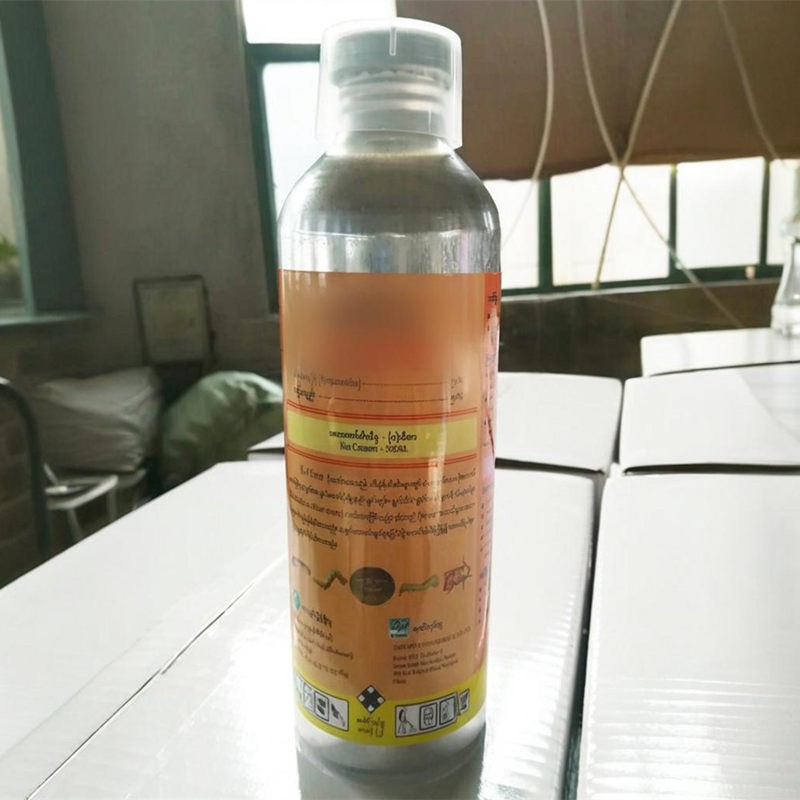
Hey there! As a fipronil supplier, I've seen firsthand how the use of fipronil has changed over the years. It's been quite a journey, and I'm excited to share it with you.
Early Days of Fipronil
Fipronil was first introduced in the late 1980s. It was a game - changer in the world of pest control. At that time, there was a growing need for more effective and long - lasting insecticides. Traditional pesticides were losing their effectiveness due to the development of resistance in pests.
Fipronil works by targeting the insect's central nervous system. It blocks the passage of chloride ions through the gamma - aminobutyric acid (GABA) - gated chloride channels. This disrupts the normal nerve function of insects, leading to hyperexcitation and eventually death.
In the early days, fipronil was mainly used in agricultural settings. Farmers were dealing with a wide range of pests, such as termites, ants, and beetles, that were causing significant damage to their crops. Fipronil offered a solution. It was highly effective against these pests and had a relatively low toxicity to mammals compared to some other pesticides.
Expansion into Household Use
As time went on, the use of fipronil expanded beyond the farm fields. People started to notice its effectiveness in controlling pests in their homes. Termites, in particular, were a major problem for homeowners. They could cause extensive damage to the wooden structures of houses.
Fipronil - based termiticides became very popular. These products were applied around the perimeter of the house or directly into the soil where termites were suspected to be. The slow - acting nature of fipronil was an advantage here. Termites would carry the chemical back to their colonies, spreading it to other members and eventually wiping out the entire colony.
It also found its way into pet products. Fleas and ticks were a constant annoyance for pet owners. Fipronil was formulated into spot - on treatments for dogs and cats. A small amount of the product was applied to the back of the animal's neck, and it would spread across the skin, providing long - lasting protection against fleas and ticks.
Industrial and Public Health Applications
Fipronil also started to be used in industrial settings. Warehouses and food processing facilities had to deal with pests like cockroaches and stored - product insects. Fipronil - based baits and sprays were used to keep these areas pest - free. This was crucial for maintaining food safety and preventing contamination.
In the field of public health, fipronil played a role in controlling disease - carrying insects. Mosquitoes, for example, are vectors for diseases like malaria, dengue fever, and Zika virus. Fipronil was used in mosquito control programs. It could be applied to breeding sites or used in indoor residual spraying to kill adult mosquitoes.

Regulatory Changes and Challenges
However, as the use of fipronil increased, so did concerns about its environmental and health impacts. There were reports of fipronil residues being found in water bodies, which could potentially harm aquatic organisms. Some studies also raised questions about its effects on non - target insects, such as bees.
Regulatory bodies around the world started to take notice. In some regions, restrictions were placed on the use of fipronil. For example, in the European Union, the use of fipronil in outdoor applications was severely limited. This was a significant challenge for the fipronil industry.
But the industry didn't just sit back. Scientists and manufacturers started to work on developing more environmentally friendly formulations of fipronil. They focused on reducing the amount of the chemical needed for effective pest control and minimizing its environmental impact.
Current Trends and Future Outlook
Today, fipronil is still a widely used pesticide, but its use has become more targeted. In agriculture, it's often used in combination with other pest control methods as part of an integrated pest management (IPM) approach. This helps to reduce the overall reliance on fipronil and minimize its potential negative effects.
In the pet industry, new and improved fipronil formulations are being developed. These products are designed to be even more convenient for pet owners and to provide better protection for their furry friends.
Looking to the future, I think fipronil will continue to evolve. There will be more research on its safety and effectiveness. We might see new applications for fipronil in areas we haven't even thought of yet.
If you're in the market for fipronil products, we've got a great option for you. Check out our Fipronil 200G/L SC. It's a high - quality product that's been formulated to meet the latest industry standards.
Whether you're a farmer looking to protect your crops, a homeowner dealing with pests, or a pet owner wanting to keep your furry friend safe, we can help. If you're interested in learning more about our fipronil products or have any questions, don't hesitate to reach out. We're here to assist you with all your pest control needs and are ready to have a discussion about your specific requirements.
References
- "The Pesticide Manual", 17th Edition.
- Various scientific research papers on fipronil published in peer - reviewed journals over the years.