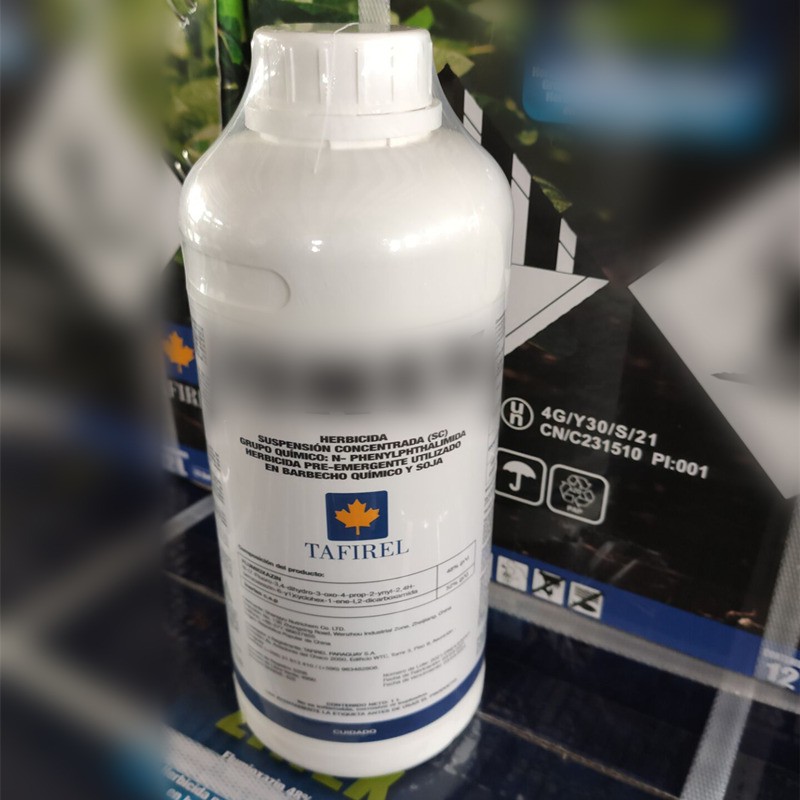
Pinoxaden is a widely used herbicide in modern agriculture, and understanding its mode of action, whether it is a systemic or contact herbicide, is crucial for effective weed management. As a supplier of pinoxaden, I am well - versed in its properties and applications, and I am here to share in - depth knowledge about this important herbicide.
Understanding Systemic and Contact Herbicides
Before delving into the nature of pinoxaden, it is essential to clarify the difference between systemic and contact herbicides. Contact herbicides work by directly affecting the parts of the plant they come into contact with. They cause damage to the plant tissues at the point of application, such as burning or desiccating the leaves. However, they may not be effective in controlling the entire plant, especially if the roots or other underground parts are not reached.
On the other hand, systemic herbicides are absorbed by the plant and translocated throughout the plant's vascular system. Once absorbed, they can move to different parts of the plant, including the roots, stems, and leaves, and disrupt vital physiological processes in the whole plant. This makes systemic herbicides more effective in killing the entire plant, including the root system, which is crucial for long - term weed control.
Pinoxaden: A Systemic Herbicide
Pinoxaden is a systemic herbicide. It belongs to the chemical class of pyrazolines and acts by inhibiting the acetyl - CoA carboxylase (ACCase) enzyme in grass weeds. When pinoxaden is applied to the foliage of target weeds, it is rapidly absorbed through the cuticle of the leaves.
Once inside the plant, pinoxaden is translocated via the phloem, which is responsible for transporting sugars and other organic compounds from the leaves to other parts of the plant. This translocation allows the herbicide to reach the actively growing meristematic tissues, such as the shoot tips and root tips, where the ACCase enzyme is highly active.
The inhibition of ACCase disrupts the biosynthesis of fatty acids in the plant. Fatty acids are essential components of cell membranes, and without their proper synthesis, the cell membranes become unstable, leading to cell death. As a result, the growth of the weed is severely inhibited, and eventually, the entire plant dies.
Advantages of Pinoxaden as a Systemic Herbicide
One of the main advantages of pinoxaden's systemic nature is its ability to control weeds at different growth stages. Whether the weeds are in the early seedling stage or more mature, pinoxaden can be absorbed and translocated to the critical growing points, providing effective control.
Another advantage is its long - lasting effect. Since it can reach the roots and other underground parts of the plant, it can prevent regrowth from the root system. This is particularly important for perennial weeds, which can be difficult to control with contact herbicides alone.
Pinoxaden also has good selectivity. It is safe to use on a wide range of cereal crops, such as wheat, barley, and oats. The selectivity is due to the differential metabolism of pinoxaden in the crop plants compared to the target weeds. Cereal crops can metabolize pinoxaden more rapidly, converting it into non - toxic compounds, while the target grass weeds are more sensitive to its action.
Applications of Pinoxaden
Pinoxaden is commonly used for the control of annual and perennial grass weeds in cereal crops. Some of the target weeds include wild oats, black - grass, ryegrass, and foxtail. It can be applied as a post - emergence herbicide, which means it is sprayed on the weeds after they have emerged from the soil.
The application rate of pinoxaden depends on the type of weed, the growth stage of the weed, and the environmental conditions. Generally, it is recommended to apply pinoxaden when the weeds are in the early to mid - tillering stage for optimal control.
Pinoxaden 100G/L + Cloquintocet - mexyl 25G/L EC
For enhanced performance, pinoxaden is often formulated with cloquintocet - mexyl. Cloquintocet - mexyl is a safener that further improves the selectivity of pinoxaden in cereal crops. It reduces the potential for crop injury by enhancing the metabolism of pinoxaden in the crop plants.
If you are interested in a high - quality formulation of pinoxaden, you can check out Pinoxaden 100G/L + Cloquintocet - mexyl 25G/L EC. This formulation combines the systemic action of pinoxaden with the safening effect of cloquintocet - mexyl, providing excellent weed control while ensuring the safety of your cereal crops.
Factors Affecting Pinoxaden's Efficacy
Although pinoxaden is a highly effective systemic herbicide, its efficacy can be influenced by several factors. Environmental conditions play a significant role. For example, temperature and humidity can affect the absorption and translocation of pinoxaden. High temperatures can increase the rate of herbicide absorption, but extremely high temperatures may also cause the herbicide to volatilize, reducing its effectiveness.
Humidity is also important. Adequate humidity helps the herbicide to remain on the leaf surface for a longer time, allowing for better absorption. Rainfall shortly after application can wash off the herbicide, reducing its efficacy. Therefore, it is recommended to avoid applying pinoxaden if rain is expected within a few hours.
The growth stage of the weeds is another crucial factor. As mentioned earlier, applying pinoxaden at the early to mid - tillering stage of the weeds usually results in the best control. If the weeds are too mature, they may have a thicker cuticle, which can reduce the absorption of the herbicide.
Compatibility with Other Herbicides
Pinoxaden can be tank - mixed with other herbicides to broaden the spectrum of weed control. However, it is important to ensure the compatibility of the herbicides before mixing. Some herbicides may interact with pinoxaden, either reducing its efficacy or increasing the risk of crop injury.
Before tank - mixing, it is advisable to conduct a small - scale compatibility test. This involves mixing small amounts of the herbicides in a container and observing for any signs of precipitation, separation, or chemical reaction. If there are no adverse effects, the tank - mix can be used for large - scale application.
Conclusion
In conclusion, pinoxaden is a systemic herbicide that offers effective control of grass weeds in cereal crops. Its ability to be absorbed and translocated throughout the plant, combined with its selectivity and long - lasting effect, makes it a valuable tool in modern agriculture.

As a pinoxaden supplier, I am committed to providing high - quality products and technical support to farmers and agricultural professionals. If you are interested in purchasing pinoxaden for your weed control needs, I encourage you to contact me for more information and to discuss your specific requirements. We can work together to develop a customized weed management plan that suits your farm.
References
- Devine, M. D., Duke, S. O., & Fedtke, C. (1993). Physiology of herbicide action. Prentice Hall.
- Powles, S. B., & Yu, Q. (2010). Evolution in action: plants resistant to herbicides. Annual Review of Plant Biology, 61, 317 - 347.
- Tomlin, C. D. S. (Ed.). (2009). The pesticide manual: a world compendium. BCPC.