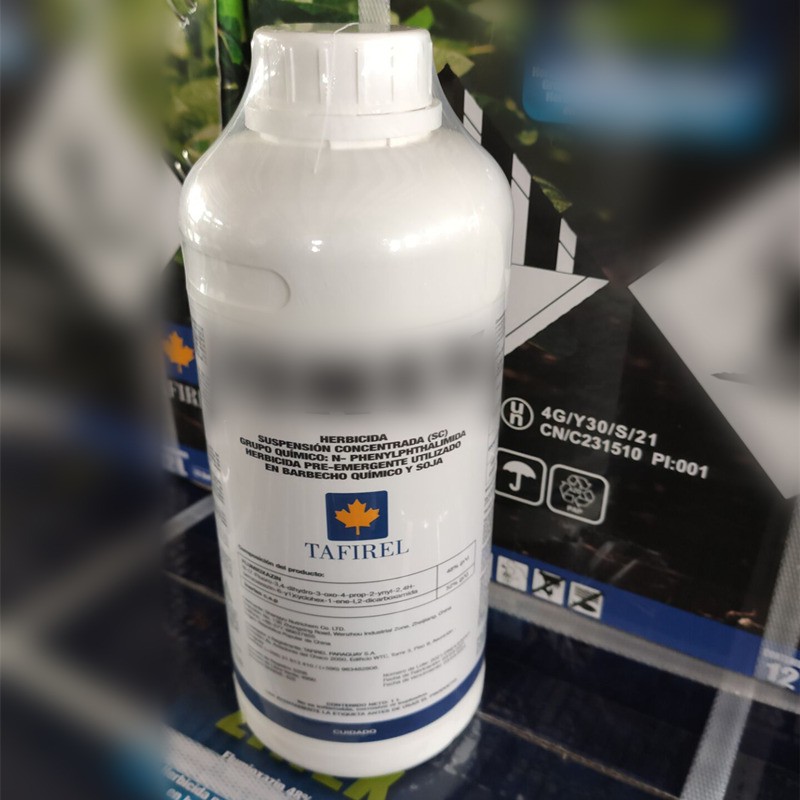
As a supplier of fluroxypyr, I've witnessed firsthand the growing concern among farmers and agricultural professionals about weed resistance. The rise of resistant weed populations poses a significant threat to crop yields and agricultural sustainability. In this blog, I'll delve into the effectiveness of fluroxypyr against these resistant weeds, exploring its mode of action, real - world applications, and the role it plays in integrated weed management strategies.
Understanding Weed Resistance
Weed resistance is a natural phenomenon that occurs when a weed population evolves to tolerate a herbicide that was once effective. This resistance can develop due to repeated use of the same herbicide or herbicides with the same mode of action. Resistant weeds can quickly spread across fields, reducing the efficacy of herbicide treatments and leading to increased weed competition with crops.
There are several types of weed resistance, including target - site resistance, where the weed's target site for the herbicide is altered, and non - target - site resistance, which involves mechanisms such as enhanced herbicide metabolism or reduced herbicide uptake. Some of the most common resistant weed species include Palmer amaranth, waterhemp, and ryegrass.
How Fluroxypyr Works
Fluroxypyr is a selective systemic herbicide belonging to the pyridine carboxylic acid family. Its mode of action is based on disrupting the normal growth processes of broad - leaf weeds. When fluroxypyr is absorbed by the leaves or roots of a weed, it mimics the plant hormone auxin (indole - 3 - acetic acid). This over - stimulation of auxin - related processes leads to uncontrolled growth, malformation of plant tissues, and ultimately, the death of the weed.
One of the advantages of fluroxypyr is its ability to translocate throughout the plant. This means that even if only a portion of the weed is treated, the herbicide can move to other parts of the plant, including the roots, ensuring complete control.
Effectiveness Against Resistant Weed Populations
In the battle against resistant weed populations, fluroxypyr has shown promise. Its unique mode of action sets it apart from many other commonly used herbicides. Unlike some herbicides that target specific enzymes or proteins in the weed, fluroxypyr's action on the auxin - mediated growth processes makes it less likely to be affected by target - site resistance mechanisms that have evolved in some weed populations.
Numerous field trials have been conducted to evaluate the efficacy of fluroxypyr against resistant weeds. For example, in areas where glyphosate - resistant Palmer amaranth has become a major problem, fluroxypyr has been found to provide effective control. A study conducted in a large - scale soybean field showed that applications of fluroxypyr at the recommended rates significantly reduced the density of glyphosate - resistant Palmer amaranth compared to untreated areas.
However, it's important to note that while fluroxypyr can be effective, it is not a silver bullet. There are cases where some weed populations may develop resistance to fluroxypyr over time. This is why it's crucial to use fluroxypyr as part of an integrated weed management (IWM) strategy.
Integrated Weed Management with Fluroxypyr
Integrated weed management involves combining multiple weed control methods to reduce the selection pressure for resistance and achieve long - term weed control. Fluroxypyr can play a key role in such strategies.
Tank Mixes
One common approach is to use fluroxypyr in tank mixes with other herbicides. For example, Fluroxypyr 140G/L + Aminopyralid 10G/L EC is a pre - formulated product that combines the strengths of fluroxypyr and aminopyralid. Aminopyralid also acts on the auxin - like growth processes of weeds but has a different spectrum of activity. By combining these two herbicides, farmers can achieve broader weed control and reduce the risk of resistance development.
Rotation of Herbicides
Another important aspect of IWM is herbicide rotation. Instead of relying solely on fluroxypyr season after season, farmers should rotate it with herbicides from different chemical families and with different modes of action. This helps to prevent the build - up of resistant weed populations. For instance, rotating fluroxypyr with a herbicide from the sulfonylurea family can disrupt the selection pressure on weeds and maintain the effectiveness of both herbicides over time.
Cultural and Mechanical Control
In addition to chemical control, cultural and mechanical methods should also be incorporated into the weed management plan. Practices such as crop rotation, tillage, and hand - weeding can help to reduce the weed seed bank in the soil and complement the effects of herbicide applications. For example, in a corn - soybean rotation system, tillage between crops can physically remove some of the weeds and expose weed seeds to unfavorable conditions, reducing their germination rate.
Real - World Applications and Success Stories
Farmers around the world have reported positive results when using fluroxypyr in their weed management programs. In Australia, where ryegrass resistance to multiple herbicides has been a major issue, some farmers have successfully used fluroxypyr in combination with other herbicides to control resistant ryegrass populations in wheat fields. By implementing an IWM strategy that included the use of fluroxypyr - based products, they were able to achieve significant reductions in weed density and improve crop yields.

In the United States, cotton farmers in the southern states have also benefited from the use of fluroxypyr. In areas with glyphosate - resistant Palmer amaranth, the application of fluroxypyr as part of a pre - emergent and post - emergent herbicide program has helped to keep the weed population in check and protect cotton yields.
Conclusion
In conclusion, fluroxypyr can be an effective tool in the fight against resistant weed populations. Its unique mode of action, ability to translocate within the plant, and compatibility with other herbicides make it a valuable component of integrated weed management strategies. However, to ensure its long - term effectiveness, it's essential to use fluroxypyr responsibly and in combination with other control methods.
If you're facing challenges with resistant weeds on your farm or in your agricultural operation, I encourage you to consider incorporating fluroxypyr into your weed management plan. Our company offers a range of high - quality fluroxypyr products, including the Fluroxypyr 140G/L + Aminopyralid 10G/L EC. Contact us to discuss your specific needs and explore how our products can help you achieve better weed control and higher crop yields.
References
- Duke, S. O., & Powles, S. B. (2008). Glyphosate: A once - in - a - century herbicide. Pest Management Science, 64(4), 319 - 325.
- Heap, I. (2023). The International Survey of Herbicide Resistant Weeds. Available at: http://www.weedscience.org
- Owen, M. D. K., & Zelaya, I. A. (2005). Glyphosate - resistant crops, glyphosate resistance in weeds, and implications for herbicide - resistant cropping systems. Pest Management Science, 61(4), 301 - 311.