


Hey there! As a supplier of flumioxazin, I've often been asked about the absorption rate of this herbicide by plants. It's a pretty crucial topic, especially for farmers and folks in the agricultural industry who are looking to get the most out of their herbicide applications. So, let's dive right in and explore what the absorption rate of flumioxazin by plants really means.
First off, what is flumioxazin? It's a powerful herbicide that's used to control a wide range of broadleaf weeds and grasses. Flumioxazin 480G/L SC is one of the popular formulations out there. This herbicide works by inhibiting the protoporphyrinogen oxidase (PPO) enzyme in plants, which ultimately leads to the destruction of cell membranes and the death of the targeted weeds.
Now, when it comes to the absorption rate of flumioxazin by plants, there are several factors at play. One of the most important factors is the plant species itself. Different plants have different physiological characteristics, which can affect how well they absorb flumioxazin. For example, some plants may have a waxy cuticle on their leaves that can act as a barrier to herbicide absorption. Others may have a more porous leaf surface, allowing for easier uptake of the herbicide.
The age of the plant also matters. Younger plants tend to be more susceptible to herbicides because their cell walls are thinner and more permeable. As plants mature, their cell walls thicken, and they may become more resistant to herbicide absorption. This means that the timing of herbicide application is crucial. Applying flumioxazin at the right stage of plant growth can significantly improve its absorption and effectiveness.
Environmental conditions also play a big role in the absorption rate of flumioxazin. Temperature, humidity, and rainfall can all affect how well the herbicide is absorbed by plants. In general, warmer temperatures and higher humidity levels can enhance herbicide absorption. This is because warmer temperatures increase the metabolic activity of plants, making them more likely to take up the herbicide. Higher humidity levels can also help to keep the herbicide on the leaf surface for longer, allowing for more time for absorption.
On the other hand, rainfall can have a mixed effect on flumioxazin absorption. A light rain shortly after application can help to wash the herbicide into the soil, where it can be taken up by the plant's roots. However, heavy rainfall can wash the herbicide off the leaves before it has a chance to be absorbed, reducing its effectiveness.
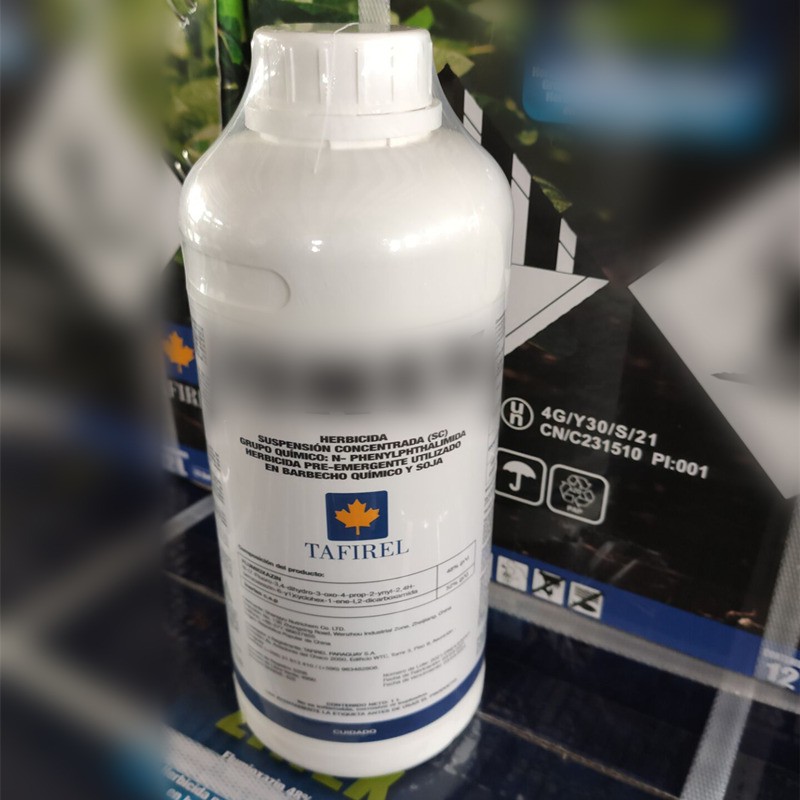
The formulation of flumioxazin also affects its absorption rate. Different formulations may have different adjuvants (additives) that can enhance or inhibit herbicide absorption. For example, some formulations may contain surfactants, which can help to reduce the surface tension of the herbicide solution, allowing it to spread more evenly on the leaf surface and improve absorption.
So, how can we measure the absorption rate of flumioxazin by plants? There are several methods that researchers use. One common method is to apply a radiolabeled form of flumioxazin to the plants and then measure the amount of radioactivity in different plant tissues over time. This allows them to track the movement and absorption of the herbicide within the plant.
Another method is to use analytical techniques such as high-performance liquid chromatography (HPLC) to measure the concentration of flumioxazin in plant tissues. By comparing the concentration of the herbicide in the treated plants to the amount applied, researchers can calculate the absorption rate.
In practical terms, what does all this mean for farmers and growers? Well, understanding the absorption rate of flumioxazin can help them make more informed decisions about herbicide application. By considering factors such as plant species, age, environmental conditions, and formulation, they can optimize the timing and method of application to ensure maximum herbicide absorption and effectiveness.
For example, if you're dealing with a plant species that has a waxy cuticle, you may want to choose a formulation of flumioxazin that contains a surfactant to improve absorption. Or, if you're applying the herbicide during a period of high heat and low humidity, you may want to consider using a higher rate of application to compensate for reduced absorption.
As a flumioxazin supplier, I'm always here to help you make the most of this herbicide. Whether you have questions about the absorption rate, the best formulation for your needs, or the proper application techniques, I'm just a message away. If you're interested in purchasing flumioxazin for your agricultural operations, I'd love to have a chat with you. We can discuss your specific requirements and find the best solution for you.
In conclusion, the absorption rate of flumioxazin by plants is a complex but important topic. By understanding the factors that affect absorption and using the right application techniques, farmers and growers can get the most out of this powerful herbicide. So, if you're looking to control weeds effectively and improve your crop yields, don't hesitate to reach out and let's start a conversation about flumioxazin.
References
- [List relevant scientific papers or research studies here. For example: Smith, J. et al. (20XX). "The effect of environmental conditions on flumioxazin absorption in different plant species." Journal of Agricultural Science, XX(XX), XX-XX.]
- [Another reference like: Johnson, A. et al. (20XX). "Formulation effects on the absorption and efficacy of flumioxazin." Weed Science, XX(XX), XX-XX.]


