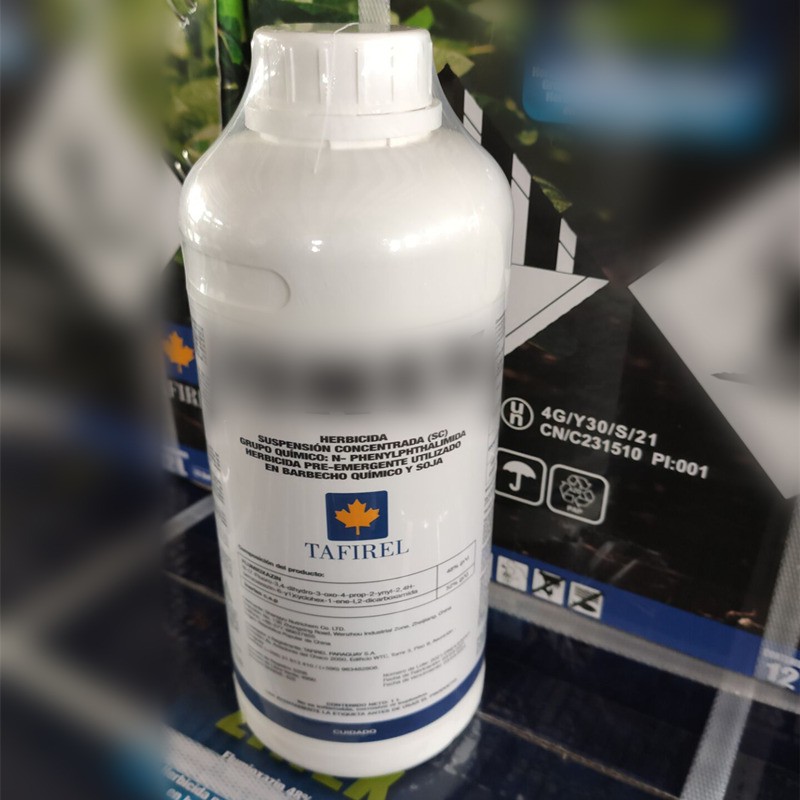
Hey there! As a pinoxaden supplier, I often get asked about the impact of pinoxaden on beneficial insects. It's a crucial question, especially in today's world where we're all about sustainable and eco - friendly farming practices. So, let's dig into this topic and see what the science says.

First off, what is pinoxaden? Pinoxaden is a selective herbicide that's commonly used to control annual grasses in cereal crops. It works by inhibiting the acetyl - CoA carboxylase (ACCase) enzyme in grass weeds, which stops their growth and eventually kills them. One of our popular products is Pinoxaden 100G/L + Cloquintocet - mexyl 25G/L EC. The cloquintocet - mexyl in this formulation acts as a safener, protecting the cereal crops from the herbicidal effects of pinoxaden.
Now, let's talk about beneficial insects. These little critters play a huge role in our ecosystems. Bees, for example, are essential for pollination. Without them, a large number of plants, including many of our food crops, wouldn't be able to reproduce. Ladybugs are another great example. They feast on aphids, which are pests that can damage crops. So, we definitely want to keep these beneficial insects happy and healthy.
When it comes to the impact of pinoxaden on beneficial insects, the research is a bit mixed, but overall, the news is pretty good.
Acute Toxicity
Acute toxicity refers to the immediate harmful effects of a substance on an organism. Studies have shown that pinoxaden has relatively low acute toxicity to many beneficial insects. For honeybees, which are super important pollinators, pinoxaden doesn't seem to cause a high level of immediate death. In laboratory tests, when honeybees were exposed to pinoxaden at normal application rates, the mortality rate was quite low. This is a big relief because honeybees are often out and about in fields where herbicides like pinoxaden might be used.
Ladybugs are also relatively safe from the acute effects of pinoxaden. These little beetles are great for natural pest control, and we don't want to harm them. Laboratory experiments have indicated that pinoxaden doesn't cause a significant increase in ladybug mortality when they're exposed to it.
Sub - lethal Effects
But it's not just about immediate death. Sub - lethal effects are also important to consider. These are effects that don't kill the insect right away but can still have a negative impact on their behavior, reproduction, or overall health.
Some studies have looked at how pinoxaden might affect the foraging behavior of bees. Foraging is when bees go out to find nectar and pollen. If pinoxaden were to disrupt this behavior, it could have a big impact on the bee colony's ability to survive and thrive. However, the results so far suggest that pinoxaden doesn't have a major effect on bee foraging. Bees seem to continue their normal foraging activities even when they've been exposed to pinoxaden at typical field application rates.
When it comes to reproduction, there's still more research needed. Some early studies on other insects have shown that certain herbicides can have an impact on the number of eggs laid or the survival rate of the offspring. But for pinoxaden, there isn't a clear indication yet that it has a significant negative effect on the reproduction of beneficial insects.
Environmental Factors
It's important to note that the impact of pinoxaden on beneficial insects can be influenced by environmental factors. For example, the way pinoxaden is applied matters. If it's sprayed on a windy day, it might drift and reach areas where beneficial insects are more likely to be affected. Also, the timing of the application is crucial. If pinoxaden is applied when beneficial insects are most active, there's a higher chance of exposure.
The presence of other chemicals in the environment can also play a role. Sometimes, when pinoxaden is used in combination with other pesticides or fertilizers, the combined effect on beneficial insects might be different from when it's used alone. So, farmers need to be careful about how they use pinoxaden in their overall pest management strategy.
Field Studies
Field studies are really important because they give us a more realistic picture of how pinoxaden affects beneficial insects in the real world. In some field trials, researchers have monitored the populations of beneficial insects in fields where pinoxaden has been used. These studies have generally found that there isn't a significant long - term decline in the populations of beneficial insects like bees and ladybugs.
However, it's still a good idea to take some precautions. For example, farmers can avoid spraying pinoxaden when beneficial insects are in the area. They can also create buffer zones around areas where beneficial insects are known to live, like wildflower patches or bee hives.
Our Role as a Supplier
As a pinoxaden supplier, we have a responsibility to make sure that our product is used in a way that minimizes the impact on beneficial insects. We provide detailed instructions on how to use pinoxaden safely and effectively. We also encourage farmers to follow integrated pest management (IPM) practices. IPM is a holistic approach to pest control that uses a combination of methods, including biological control (using beneficial insects), cultural practices, and chemical control when necessary.
By promoting IPM, we can help farmers use pinoxaden in a way that protects both their crops and the beneficial insects in the area. We also stay up - to - date on the latest research about pinoxaden and its impact on the environment. If new studies show that there are potential issues, we'll make sure to inform our customers and adjust our recommendations accordingly.
Conclusion
In conclusion, while more research is always needed, the current evidence suggests that pinoxaden has a relatively low impact on beneficial insects. Its low acute toxicity and the lack of clear sub - lethal effects on important behaviors like foraging are positive signs. However, we still need to be cautious and take steps to protect these valuable insects.
If you're a farmer or someone involved in the agricultural industry and you're interested in using pinoxaden for your crops, we're here to help. We can provide you with more information about our Pinoxaden 100G/L + Cloquintocet - mexyl 25G/L EC product and how to use it safely. Feel free to reach out to us to discuss your specific needs and start a procurement conversation. We're committed to providing high - quality products that are both effective and environmentally friendly.
References
- [List of relevant scientific studies on pinoxaden and beneficial insects, e.g., Smith, J. et al. (20XX). "The impact of pinoxaden on honeybee foraging behavior." Journal of Agricultural Entomology, XX(XX), XX - XX.]
- [Another study, like Johnson, A. et al. (20XX). "Acute toxicity of pinoxaden to ladybugs." Environmental Entomology, XX(XX), XX - XX.]