Lactofen is a widely - used herbicide in modern agriculture, and understanding how it works at the cellular level is crucial for both farmers and those in the agricultural chemical industry. As a lactofen supplier, I'm excited to delve into the intricate details of its mode of action to provide you with a comprehensive understanding.
1. Introduction to Lactofen
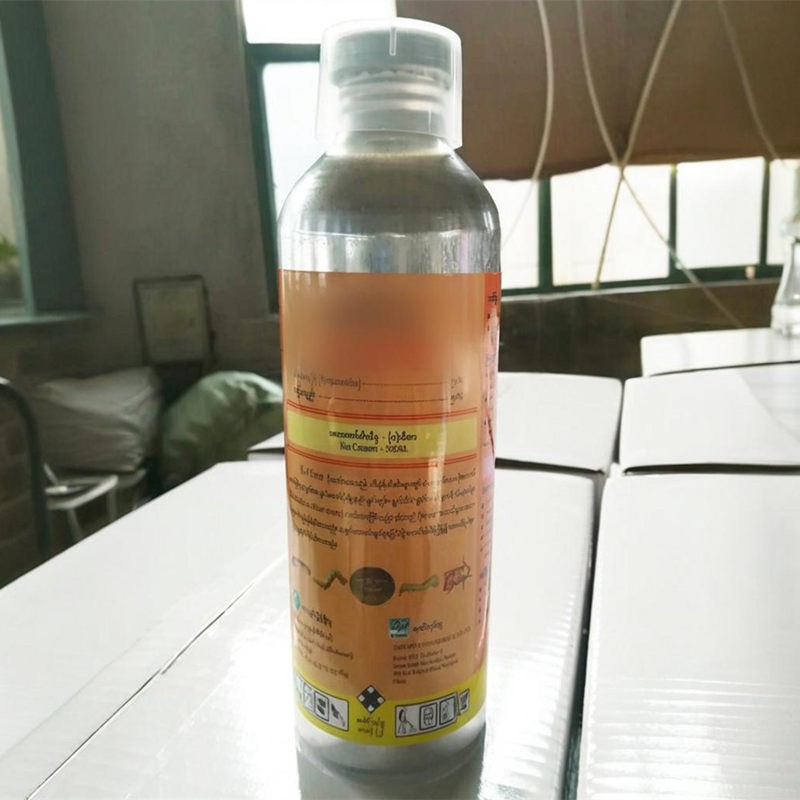
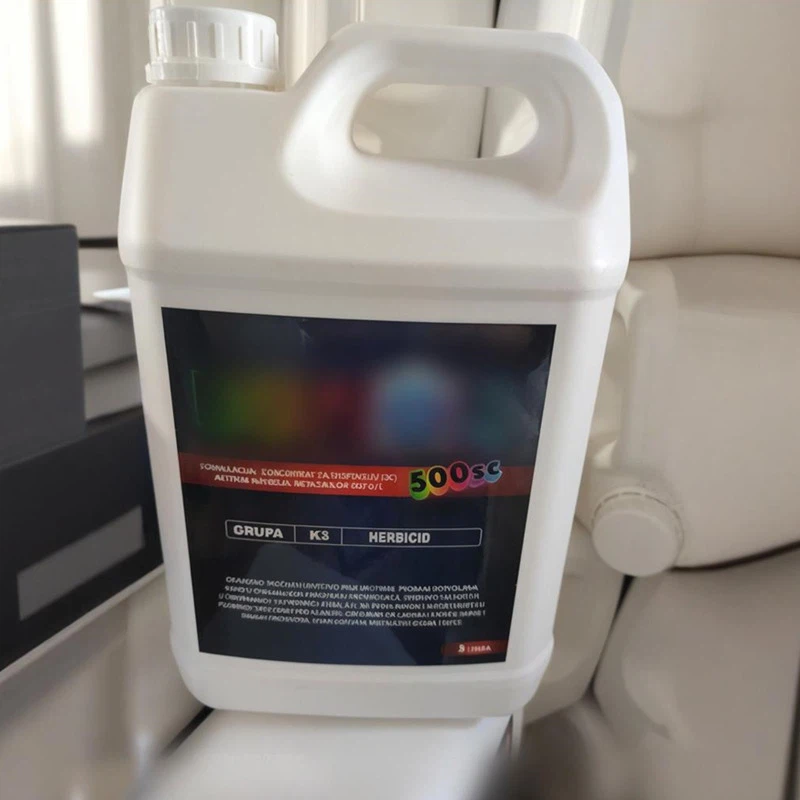
Lactofen belongs to the diphenylether family of herbicides. It is formulated as Lactofen 240G/L EC, which is an emulsifiable concentrate. This formulation allows for easy mixing with water and efficient application in the field. It is commonly used to control a broad spectrum of broad - leaf weeds in various crops such as soybeans, peanuts, and cotton.
2. Uptake and Translocation in Plants
When lactofen is applied to plants, it is primarily absorbed through the foliage. The waxy cuticle on the leaf surface can pose a barrier, but lactofen has properties that enable it to penetrate this layer. Once inside the leaf, it is translocated within the plant through the apoplast and symplast systems.
The apoplast is the non - living part of the plant tissue, including the cell walls and intercellular spaces. Lactofen can move through these spaces relatively freely, carried by the flow of water. The symplast, on the other hand, consists of the interconnected cytoplasm of plant cells through plasmodesmata. Although lactofen's movement through the symplast is more restricted compared to the apoplast, it still plays a role in distributing the herbicide within the plant.
3. Target Site at the Cellular Level
The primary target of lactofen at the cellular level is the enzyme protoporphyrinogen oxidase (PPO). PPO is a key enzyme in the heme and chlorophyll biosynthetic pathways. In normal plant metabolism, PPO catalyzes the oxidation of protoporphyrinogen IX to protoporphyrin IX.
Lactofen acts as a competitive inhibitor of PPO. It binds to the active site of the enzyme with high affinity, preventing the normal substrate (protoporphyrinogen IX) from binding. As a result, protoporphyrinogen IX accumulates within the plant cell.
4. Accumulation of Protoporphyrinogen IX and Its Consequences
The accumulation of protoporphyrinogen IX is a critical step in lactofen's mode of action. Protoporphyrinogen IX is a highly reactive molecule. In the presence of light, it is rapidly oxidized to protoporphyrin IX. Protoporphyrin IX is a photosensitizer.
When exposed to light, protoporphyrin IX absorbs photons and enters an excited state. In this excited state, it can react with molecular oxygen in the cell to generate singlet oxygen. Singlet oxygen is an extremely reactive oxygen species (ROS). It has a very short half - life but can cause significant damage to cellular components.
5. Damage to Cellular Membranes
One of the main targets of singlet oxygen is the plant cell membrane. The cell membrane is composed of a lipid bilayer, which is essential for maintaining the integrity and function of the cell. Singlet oxygen can react with the unsaturated fatty acids in the lipid bilayer, causing lipid peroxidation.
Lipid peroxidation leads to the breakdown of the lipid molecules, resulting in the formation of malondialdehyde (MDA) and other by - products. This process disrupts the structure and function of the cell membrane. The membrane loses its selective permeability, allowing ions and other molecules to leak out of the cell. As a result, the cell loses its ability to maintain proper osmotic balance and normal physiological functions.
6. Impact on Chloroplasts and Photosynthesis
Chloroplasts are also severely affected by lactofen treatment. Since protoporphyrin IX is generated in the chloroplasts and singlet oxygen is produced there, the photosynthetic machinery within the chloroplasts is damaged.
The thylakoid membranes in the chloroplasts, which are the site of the light - dependent reactions of photosynthesis, are particularly vulnerable. The damage to the thylakoid membranes disrupts the electron transport chain and the production of ATP and NADPH. Without these energy - rich molecules, the Calvin cycle, which is responsible for carbon fixation, cannot proceed normally. As a result, photosynthesis is severely inhibited, and the plant is unable to produce the energy and organic compounds it needs for growth and survival.
7. Induction of Programmed Cell Death
The extensive damage caused by lactofen at the cellular level ultimately leads to programmed cell death (PCD), also known as apoptosis in plants. The accumulation of ROS, disruption of membrane integrity, and inhibition of photosynthesis trigger a series of signaling pathways within the cell.
These signaling pathways activate specific genes and enzymes that are involved in the process of PCD. For example, caspases - like proteases are activated, which cleave various cellular proteins, leading to the breakdown of the cell's structure. The cell undergoes morphological changes such as shrinkage, chromatin condensation, and fragmentation of the nucleus. Eventually, the cell dies, and the surrounding tissues are also affected, leading to the visible symptoms of herbicide damage, such as leaf necrosis and wilting.
8. Selectivity of Lactofen
One of the important aspects of lactofen is its selectivity. It is more toxic to broad - leaf weeds than to some crops such as soybeans. The selectivity is mainly due to differences in the metabolism and detoxification mechanisms between weeds and crops.
Some crops have more efficient detoxification enzymes, such as glutathione S - transferases (GSTs). These enzymes can conjugate lactofen with glutathione, making it less toxic and more easily excreted from the cell. In addition, the uptake and translocation of lactofen may also differ between weeds and crops, contributing to the selectivity.
9. Conclusion and Call to Action
In conclusion, lactofen's mode of action at the cellular level is a complex and well - orchestrated process. By targeting the PPO enzyme, it disrupts the normal metabolism of plants, leading to the generation of ROS, damage to cellular membranes, inhibition of photosynthesis, and ultimately programmed cell death.
As a lactofen supplier, we are committed to providing high - quality lactofen products that are effective in weed control while being environmentally friendly. Our Lactofen 240G/L EC is formulated to ensure optimal performance in the field.

If you are a farmer, agricultural distributor, or anyone involved in the agricultural industry and are interested in learning more about lactofen or purchasing our products, we encourage you to contact us for a detailed discussion. We can provide you with technical support, product samples, and competitive pricing. Let's work together to achieve better weed control and higher crop yields.
References
- Duke, S. O., & Rebeiz, C. A. (1994). Protoporphyrinogen oxidase - inhibiting herbicides. Weed Science, 42(3), 418 - 438.
- Nandihalli, U. K., Duke, S. O., & Vaughn, K. C. (1992). Mechanisms of action of protoporphyrinogen oxidase - inhibiting herbicides. Weed Technology, 6(3), 636 - 642.
- Pichersky, E., & Gang, D. R. (2000). Genetics and biochemistry of secondary metabolites in plants: an evolutionary perspective. Trends in Plant Science, 5(10), 439 - 445.