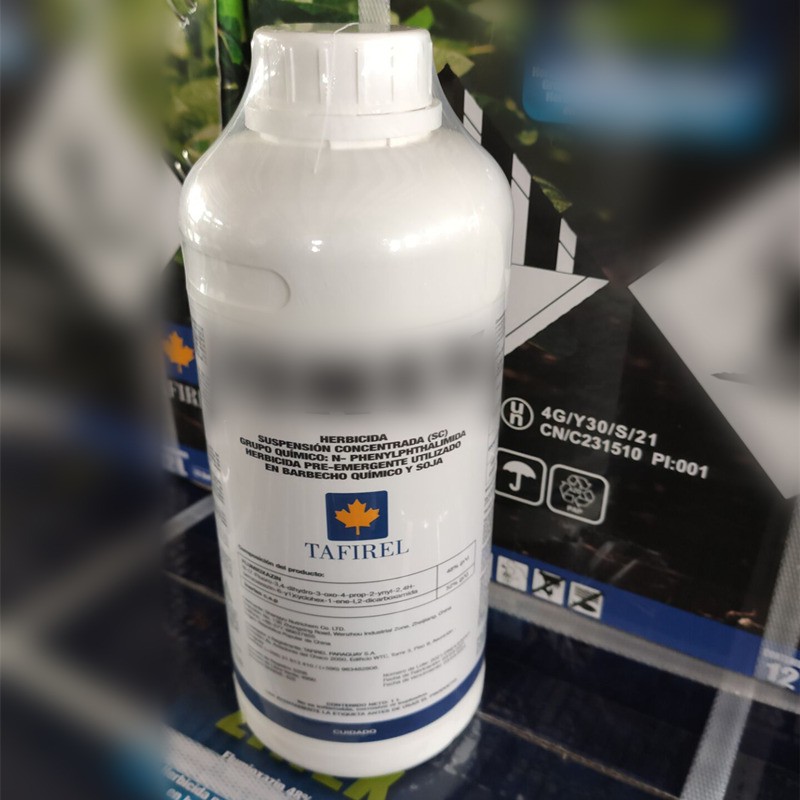
Hey there, fellow farmers and gardening enthusiasts! I'm a supplier of mesotrione, and today I want to take you on a deep - dive into how this amazing herbicide works in controlling weeds.
First off, let's talk a bit about what mesotrione is. It's a selective herbicide that's been a game - changer in the world of weed control. It belongs to the triketone family of herbicides, and it's often used in corn fields, but can also be effective in some other crops.
How Mesotrione Enters Weeds
The first step in the weed - killing process is getting mesotrione into the weeds. When we spray mesotrione on fields, it can be absorbed by both the leaves and the roots of the weeds. Through the leaves, it gets into the plant's system via the cuticle, which is the waxy outer layer of the leaf. The cuticle allows small, lipophilic (fat - loving) molecules like mesotrione to pass through. Once it's inside the leaf cells, it starts its journey through the plant's vascular system.
For root absorption, mesotrione in the soil solution is taken up by the root hairs of the weeds. Root hairs are tiny, finger - like projections on the roots that increase the surface area for absorption. The herbicide then moves up through the xylem, which is the plant's water - conducting tissue. This upward movement is driven by transpiration, the process by which water evaporates from the leaves, creating a suction force that pulls water and dissolved substances like mesotrione up from the roots.
The Target Enzyme: 4 - Hydroxyphenylpyruvate Dioxygenase (HPPD)
Once mesotrione is inside the weed, it goes after a specific enzyme called 4 - Hydroxyphenylpyruvate Dioxygenase, or HPPD for short. HPPD is a crucial enzyme in the plant's biochemical pathway. It plays a key role in the synthesis of plastoquinone and tocopherols.
Plastoquinone is essential for photosynthesis. It's involved in the electron - transport chain in the thylakoid membranes of chloroplasts. During photosynthesis, plants use sunlight to convert carbon dioxide and water into glucose and oxygen. Plastoquinone helps to transfer electrons between different components of the photosynthetic machinery, which is necessary for the production of ATP (adenosine triphosphate), the energy currency of the cell, and NADPH (nicotinamide adenine dinucleotide phosphate), which is used in the synthesis of carbohydrates.
Tocopherols, on the other hand, are antioxidants. They protect the plant from oxidative stress, which can be caused by factors like high light intensity, drought, and pathogens. Oxidative stress can damage cell membranes, proteins, and DNA in the plant. Tocopherols neutralize free radicals, which are highly reactive molecules that can cause this damage.
Inhibition of HPPD by Mesotrione
Mesotrione works by binding to the active site of the HPPD enzyme. The active site is the part of the enzyme where the substrate (in this case, 4 - hydroxyphenylpyruvate) binds and the chemical reaction takes place. When mesotrione binds to the active site, it prevents the normal substrate from binding. This is called competitive inhibition.
As a result of this inhibition, the synthesis of plastoquinone and tocopherols is disrupted. Without enough plastoquinone, the photosynthetic electron - transport chain is interrupted. This means that the plant can't produce enough ATP and NADPH, and the overall process of photosynthesis is severely hampered.
The lack of tocopherols also makes the plant more vulnerable to oxidative stress. Free radicals start to accumulate in the plant cells, causing damage to the cell membranes, proteins, and DNA. This leads to a cascade of negative effects on the plant's metabolism and growth.
Visible Symptoms of Mesotrione Action
As the weed's photosynthesis and antioxidant defense systems are disrupted, visible symptoms start to appear. Usually, within a few days of mesotrione application, the leaves of the weeds begin to turn white or yellow. This is because the chlorophyll, the green pigment in plants that is essential for photosynthesis, starts to break down. Without the protection of tocopherols and the proper functioning of the photosynthetic machinery, chlorophyll molecules are degraded.

As the damage progresses, the weeds become stunted in growth. They can't produce enough energy and building blocks for normal cell division and expansion. Eventually, the weeds die. The time it takes for the weeds to die can vary depending on factors like the weed species, the growth stage of the weeds at the time of application, and environmental conditions.
Selectivity of Mesotrione
One of the great things about mesotrione is its selectivity. It can control a wide range of broad - leaf and grassy weeds while being relatively safe for certain crops, especially corn. Corn has a natural ability to metabolize mesotrione. Inside the corn plant, mesotrione is broken down into less - toxic compounds through a process called conjugation. Enzymes in the corn plant attach certain molecules to mesotrione, making it more water - soluble and easier to excrete from the cells.
This selectivity allows farmers to use mesotrione in their corn fields to get rid of weeds without causing significant harm to their crops. However, it's important to follow the recommended application rates and timings to ensure the best results and minimize any potential risk to the crops.
Combining Mesotrione with Other Herbicides
Sometimes, mesotrione is used in combination with other herbicides to enhance its effectiveness. For example, Mesotrione 70G/L + Nicosulfuron 40G/L OD is a popular formulation. Nicosulfuron is another herbicide that works by inhibiting the acetolactate synthase (ALS) enzyme in weeds. ALS is involved in the synthesis of branched - chain amino acids, which are essential for protein synthesis in plants.
By combining mesotrione and nicosulfuron, we can target different biochemical pathways in the weeds. This not only increases the spectrum of weeds that can be controlled but also reduces the risk of weed resistance. Weeds can develop resistance to a single herbicide over time if it's used repeatedly. But when we use a combination of herbicides with different modes of action, it's much harder for the weeds to develop resistance.
Environmental Factors Affecting Mesotrione Performance
Environmental conditions play a big role in how well mesotrione works. Temperature is an important factor. Mesotrione works best at moderate temperatures. If it's too cold, the uptake and metabolism of the herbicide in the weeds can be slow, which means it may take longer for the weeds to show symptoms and die. On the other hand, if it's too hot, the herbicide may volatilize (turn into a gas) more quickly, reducing its effectiveness and potentially causing off - target damage.
Moisture is also crucial. Adequate soil moisture is necessary for root absorption of mesotrione. If the soil is too dry, the herbicide may not be able to move effectively through the soil to the roots of the weeds. Similarly, if the leaves are dry at the time of application, the absorption of mesotrione through the leaves may be reduced.
Conclusion
In conclusion, mesotrione is a powerful and selective herbicide that works by inhibiting the HPPD enzyme in weeds, disrupting their photosynthesis and antioxidant defense systems. It has visible effects on weeds, leading to their eventual death. Its selectivity makes it a valuable tool for farmers, especially in corn production. And when combined with other herbicides like in the Mesotrione 70G/L + Nicosulfuron 40G/L OD formulation, it can provide even better weed control.
If you're interested in purchasing mesotrione for your weed - control needs, I'd love to have a chat with you. Whether you're a large - scale farmer or a small - scale gardener, we can find the right mesotrione product and solution for you. Reach out to start the procurement discussion and let's make your fields and gardens weed - free!
References
- Duke, S. O., & Powles, S. B. (2008). Retrospective on the evolution of herbicide resistance. Pest Management Science, 64(4), 303 - 311.
- Hetherington, A. M., & Woodward, F. I. (2003). The role of stomata in sensing and driving environmental change. Nature, 424(6951), 901 - 908.
- Lee, K. H., & Nissen, S. J. (2002). Physiological basis for selectivity of mesotrione in corn (Zea mays) and velvetleaf (Abutilon theophrasti). Weed Science, 50(6), 760 - 766.