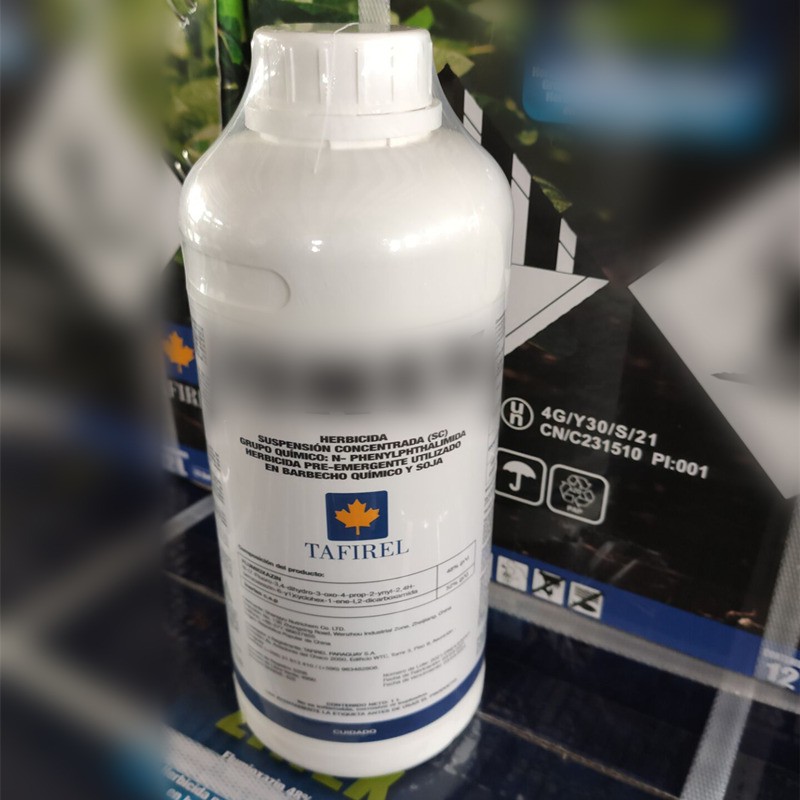
Hey there! As a lactofen supplier, I'm super excited to chat with you about the future prospects for the use of lactofen. Lactofen is a herbicide that's been making waves in the agricultural world, and I think it's got some really bright days ahead.
First off, let's talk about what lactofen is. It's a contact herbicide that belongs to the diphenylether family. This herbicide works by inhibiting the enzyme protoporphyrinogen oxidase (PPO), which is crucial for the synthesis of chlorophyll in plants. When lactofen is applied to weeds, it causes rapid cell membrane disruption, leading to the death of the targeted plants. This mode of action is pretty effective against a wide range of broad - leaf weeds, making it a valuable tool for farmers.
One of the biggest future prospects for lactofen is its role in integrated weed management (IWM) strategies. IWM is all about using multiple methods to control weeds, rather than relying on a single herbicide. With the increasing problem of herbicide - resistant weeds, IWM has become more important than ever. Lactofen can be a key player in these strategies because of its unique mode of action. It can be used in combination with other herbicides that have different modes of action, reducing the selection pressure for resistant weed populations. For example, it can be tank - mixed with glyphosate or other post - emergence herbicides to provide broader spectrum weed control. This combination approach not only helps in controlling existing weeds but also slows down the development of resistance.
Another area where lactofen has great potential is in the management of difficult - to - control weeds. There are some weeds that have evolved to be resistant to many commonly used herbicides. Lactofen's distinct mode of action makes it effective against these resistant weeds. For instance, some biotypes of Palmer amaranth, a highly invasive and troublesome weed in many agricultural regions, have developed resistance to glyphosate. Lactofen can be used as an alternative or in combination with other herbicides to manage these resistant populations. This ability to tackle resistant weeds is going to be crucial in the future as the problem of herbicide resistance continues to grow.
In addition to its weed - control capabilities, lactofen is also known for its relatively low environmental impact compared to some other herbicides. It has a short half - life in the soil, which means it breaks down relatively quickly and doesn't persist in the environment for long periods. This is a big plus in today's environmentally conscious world. Farmers are increasingly looking for products that can effectively control weeds while minimizing harm to the environment. Lactofen fits the bill in this regard, and as environmental regulations become more stringent, its demand is likely to increase.
Now, let's talk about the market trends. The global demand for herbicides is on the rise, driven by the need to increase agricultural productivity to feed a growing population. As more farmers adopt modern farming practices and look for effective weed - control solutions, lactofen is well - positioned to capture a larger share of the market. In emerging economies, where agriculture is a major sector, there is a growing awareness of the benefits of using high - quality herbicides like lactofen. The expansion of the agricultural sector in these regions presents a huge opportunity for lactofen sales.
If you're interested in learning more about our lactofen products, you can check out our Lactofen 240G/L EC. This formulation is a popular choice among farmers because of its high efficacy and ease of use. It's formulated to provide quick and effective control of a wide range of broad - leaf weeds, and it's compatible with many other agricultural chemicals.
When it comes to application, lactofen is quite versatile. It can be applied post - emergence, which means it can be sprayed on the weeds after they have emerged from the soil. This post - emergence application allows farmers to target specific weeds at the right stage of growth, maximizing the herbicide's effectiveness. It can be used in a variety of crops, including soybeans, peanuts, and cotton. In soybean fields, for example, lactofen can be used to control weeds like common lambsquarters, pigweed, and velvetleaf, which can compete with the soybeans for nutrients, water, and sunlight.
However, like any herbicide, lactofen also has some limitations. It is a contact herbicide, which means it only affects the parts of the plant that it comes into direct contact with. This can be a problem if the weed has a large root system or if the application is not thorough. Also, it may cause some temporary phytotoxicity to the crop if not applied correctly. But with proper training and following the recommended application rates and timings, these issues can be minimized.

In the future, we can expect to see more research and development focused on lactofen. Scientists are likely to work on improving its formulation to increase its effectiveness and reduce the potential for crop damage. There may also be efforts to develop new application methods that can ensure more uniform coverage of the herbicide on the weeds.
As a lactofen supplier, I'm committed to providing high - quality products and excellent customer service. We understand the needs of farmers and are constantly working to meet them. If you're a farmer looking for an effective and environmentally friendly herbicide, or if you're in the agricultural supply business and interested in adding lactofen to your product line, I encourage you to get in touch with us. We can discuss your specific requirements and how lactofen can fit into your weed - control strategy.
In conclusion, the future prospects for the use of lactofen are very promising. Its unique mode of action, effectiveness against resistant weeds, low environmental impact, and versatility in application make it a valuable herbicide in modern agriculture. Whether you're a small - scale farmer or a large agricultural enterprise, lactofen can be a great addition to your weed - control toolkit. So, don't hesitate to reach out if you want to learn more about our lactofen products and how they can benefit your farming operations.
References
- "Weed Science Principles and Practices" by Steven C. Weller
- "Herbicide Resistance in Weeds and Crops" edited by Ian N. Morrison and Stephen B. Powles