


Hey there! As a supplier of flumioxazin, I often get asked about the crops that this amazing herbicide can be used on. So, I thought I'd put together this blog post to give you all the deets.
Flumioxazin is a pre - emergence and early post - emergence herbicide. It's known for its effectiveness in controlling a wide range of broadleaf weeds. Let's dive into the different crops where flumioxazin can work its magic.
Soybeans
Soybeans are one of the most common crops where flumioxazin is used. In soybean fields, weeds can be a real headache. They compete with soybeans for nutrients, water, and sunlight. Flumioxazin can be applied either before the soybeans emerge from the soil (pre - emergence) or just after they've started to grow (early post - emergence).
When applied pre - emergence, it forms a barrier in the soil that prevents weed seeds from germinating. This gives the soybean plants a head start in the race for resources. The active ingredient in flumioxazin inhibits the growth of weeds at a very early stage, so you don't have to worry about those pesky weeds taking over your soybean fields.
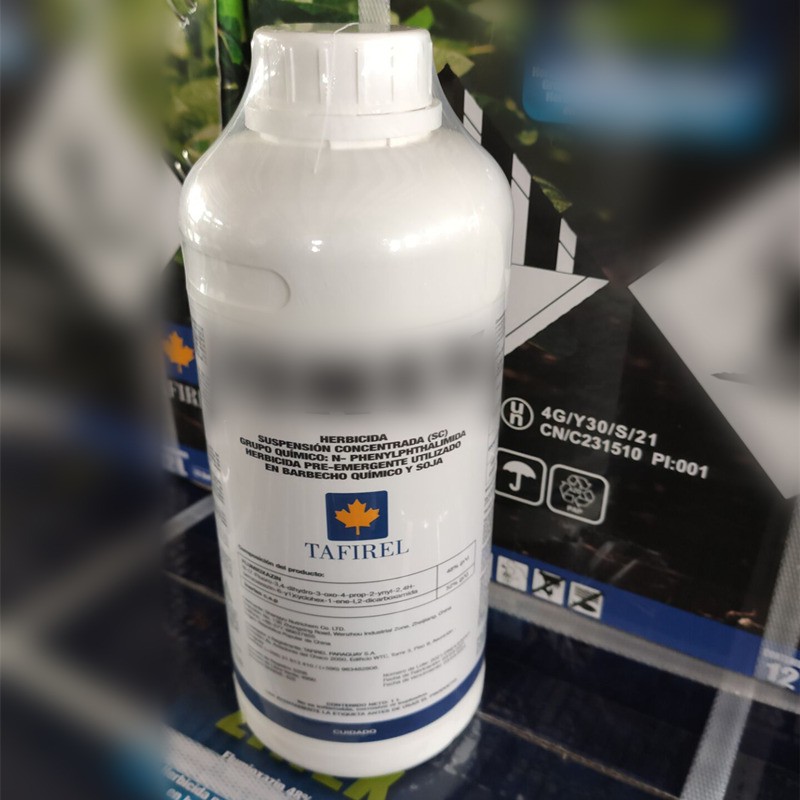
For example, common broadleaf weeds like pigweed, lambsquarters, and morning glory can be effectively controlled with flumioxazin. This helps the soybean plants grow healthier and produce better yields. If you're a soybean farmer, you can check out Flumioxazin 480G/L SC for a product that can do the job.
Peanuts
Peanut crops also benefit greatly from flumioxazin. Peanuts are sensitive to competition from weeds, especially during their early growth stages. Flumioxazin can be used as a pre - emergence treatment to keep the weed population in check.
It's important to note that peanuts have a unique growth habit. They grow underground, and the herbicide needs to be carefully applied to avoid any negative impacts on the peanut plants themselves. Flumioxazin is designed to target the weeds while being relatively safe for peanut crops when used according to the label instructions.
Some of the weeds that flumioxazin can control in peanut fields include spurge, cocklebur, and sicklepod. By using flumioxazin, peanut farmers can reduce the need for manual weeding, which can be time - consuming and labor - intensive.
Cotton
Cotton is another crop where flumioxazin has found its place. In cotton production, weed management is crucial for achieving high yields. Flumioxazin can be applied pre - emergence to control a variety of broadleaf weeds.
Cotton plants are often grown in large fields, and weeds can quickly spread and cause problems. Flumioxazin helps to create a clean and weed - free environment for the cotton plants to grow. It works by interfering with the weeds' ability to produce certain enzymes, which ultimately leads to their death.
Some of the common weeds in cotton fields, such as Palmer amaranth and velvetleaf, can be effectively managed with flumioxazin. This not only improves the yield of cotton but also reduces the cost of production by minimizing the need for multiple herbicide applications.
Vegetable Crops
Flumioxazin can also be used on some vegetable crops. For example, in tomato and pepper fields, it can be used as a pre - emergence herbicide. These vegetables are vulnerable to weed competition, especially in the early stages of growth.
When used on vegetables, it's essential to follow the label directions precisely. The label will provide information on the appropriate application rates and timing to ensure the safety of the vegetable crops. Flumioxazin can control many of the broadleaf weeds that commonly plague vegetable gardens, such as purslane and chickweed.
However, not all vegetable crops are suitable for flumioxazin treatment. Some vegetables may be more sensitive to the herbicide, so it's always a good idea to do a small - scale test before applying it to a large area.
Ornamental Plants
In the ornamental plant industry, flumioxazin can be a valuable tool for weed control. Nurseries that grow ornamental shrubs, trees, and flowers often face challenges with weeds. Flumioxazin can be used as a pre - emergence herbicide in these settings.
It helps to keep the beds and containers free of weeds, which is important for the aesthetic appeal of the ornamental plants. Since many ornamental plants are sold based on their appearance, having a weed - free environment is essential. Flumioxazin can control a wide range of weeds that might otherwise compete with the ornamental plants for nutrients and space.
How to Use Flumioxazin Safely
While flumioxazin is a great herbicide, it's important to use it safely. Always read and follow the label instructions. The label will tell you the correct application rate, the best time to apply, and any safety precautions you need to take.
When applying flumioxazin, wear appropriate protective clothing, such as gloves and goggles. Avoid applying it on windy days to prevent the herbicide from drifting onto non - target areas. Also, make sure to store the herbicide in a cool, dry place away from children and pets.
Why Choose Our Flumioxazin Products
As a supplier, we take pride in offering high - quality flumioxazin products. Our products are formulated to be as effective as possible while being environmentally friendly. We use the latest technology to ensure that the herbicide is evenly distributed and has a long - lasting effect.
Our team of experts is always available to answer any questions you might have about using flumioxazin on your crops. Whether you're a small - scale farmer or a large - scale agricultural operation, we can provide you with the right product and advice to meet your needs.
If you're interested in purchasing flumioxazin for your crops, don't hesitate to reach out. We're here to help you with your weed control needs and ensure that your crops grow to their full potential. Contact us today to start a conversation about how our flumioxazin products can benefit your farm.
References
- "Weed Control in Soybean Production", Journal of Agricultural Science
- "Peanut Crop Management and Weed Control", Agricultural Research Magazine
- "Cotton Production and Weed Management Strategies", International Journal of Cotton Science
- "Vegetable Crop Protection and Herbicide Use", Vegetable Growers Association Bulletin
- "Ornamental Plant Nursery Weed Management", Journal of Ornamental Horticulture


