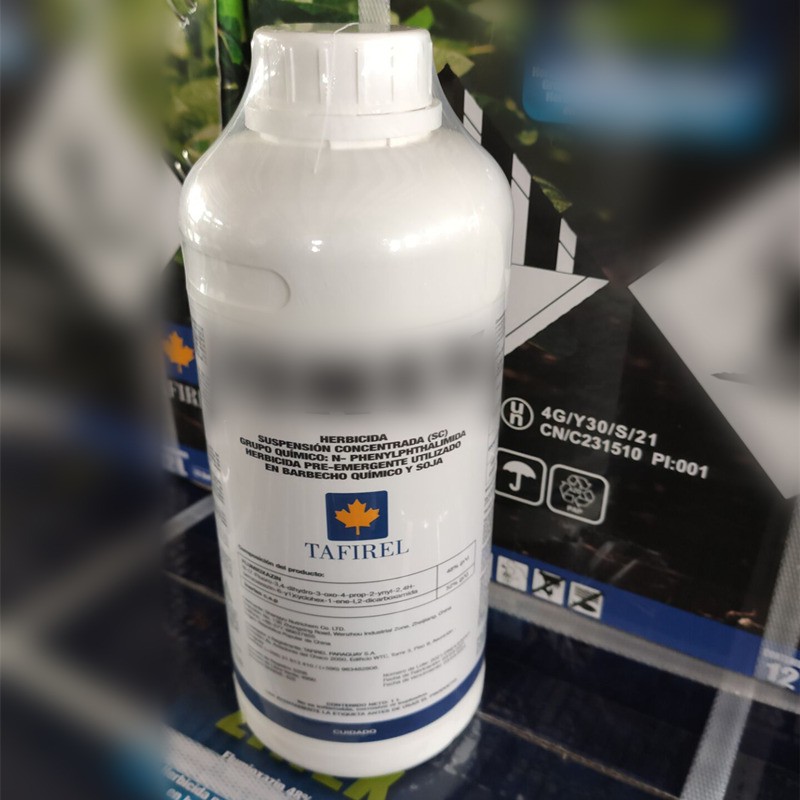
Hey there! I'm a supplier of bentazone, and today I wanna chat about the application frequency of this super - useful herbicide.
Bentazone is a well - known post - emergence herbicide that's widely used in various agricultural settings. Its application frequency can vary quite a bit depending on several factors. Let's dig into what these factors are and how they affect how often you should use bentazone.
Crop Type
First off, different crops have different requirements when it comes to bentazone application. For example, in soybean fields, bentazone is often used to control broad - leaf weeds. Soybeans are quite sensitive to certain weeds that can compete for nutrients, water, and sunlight. Usually, a single application of bentazone during the early growth stages of soybeans can be quite effective. This is typically around the 2 - 3 trifoliate leaf stage of the soybean plants. But in some cases, if there's a heavy weed infestation or if new weeds emerge later in the season, a second application might be necessary.
On the other hand, in rice paddies, the situation is a bit different. Bentazone can be used to target specific weeds like sedges and broad - leaf weeds. In rice, it's common to apply bentazone at the tillering stage. Sometimes, due to the continuous growth of weeds in the wet environment of rice paddies, a follow - up application may be needed about 2 - 3 weeks after the first one.
Weed Pressure
The level of weed pressure in a field is a major determinant of bentazone application frequency. If you've got a field with a light weed infestation, a single application of bentazone may be sufficient to keep the weeds under control. For instance, if there are only a few scattered broad - leaf weeds in a wheat field, spraying bentazone once at the right time can take care of them.
However, in fields with heavy weed pressure, you might need to apply bentazone more frequently. Let's say you're dealing with a field that has a high density of pigweed or lambsquarters. These weeds can grow rapidly and outcompete the crops if not managed properly. In such cases, an initial application at the early weed growth stage followed by a second application 10 - 14 days later may be required to completely eliminate the weeds.
Environmental Conditions
Environmental factors also play a huge role in how often you should use bentazone. Temperature, humidity, and rainfall can all impact the effectiveness of the herbicide and the growth rate of weeds.
In warm and humid conditions, weeds tend to grow faster. This means that the window of opportunity to control them with bentazone may be shorter. As a result, you might need to apply the herbicide more frequently. For example, in the southern parts of the United States during the summer months, where temperatures are high and humidity is often above 70%, weeds can sprout up quickly. In such areas, farmers may need to apply bentazone every 2 - 3 weeks during the peak growing season.
On the contrary, in cooler and drier climates, weed growth is slower. This gives you more time between applications. In regions with a Mediterranean climate, where summers are hot and dry, a single application of bentazone at the appropriate time may last for a longer period, perhaps up to a month or more before any new weed growth becomes a concern.
Rainfall is another important factor. If it rains shortly after applying bentazone, it can wash away the herbicide before it has a chance to work effectively. In such cases, a re - application may be necessary. However, if there's too much rain, it can also dilute the herbicide in the soil, reducing its efficacy. So, farmers need to carefully time their bentazone applications around the weather forecast.
Application Methods
The way you apply bentazone can also influence the application frequency. There are two main application methods: foliar spray and soil application.
Foliar spray is the most common method. When you spray bentazone directly on the leaves of the weeds, it acts quickly to kill them. But the effects of a foliar spray may not last as long as a soil application. This is because the herbicide on the leaves can be degraded by sunlight and weather conditions. So, with foliar spray, you may need to apply bentazone more frequently, especially if new weeds emerge.

Soil application, on the other hand, can provide longer - lasting control. When bentazone is incorporated into the soil, it can be taken up by the roots of the emerging weeds. This method can reduce the need for frequent applications, as it can prevent weed growth over a longer period. However, soil application requires more careful planning and may not be suitable for all crops.
Bentazone 480G/L SL
If you're looking for a high - quality bentazone product, check out Bentazone 480G/L SL. This formulation is known for its excellent weed - control properties and can be adjusted for different application frequencies based on your specific needs.
Conclusion
In conclusion, the application frequency of bentazone is not a one - size - fits - all situation. It depends on crop type, weed pressure, environmental conditions, and application methods. As a supplier, I understand that farmers need to make informed decisions about how often to use bentazone to get the best results for their crops.
If you're interested in purchasing bentazone for your agricultural needs, I'd love to have a chat with you. Whether you're dealing with a small family farm or a large commercial operation, we can work together to figure out the right application frequency and quantity of bentazone for your fields. Reach out to me, and let's start a discussion about how we can help you control those pesky weeds and boost your crop yields.
References
- Smith, J. (2020). Agricultural Herbicides: A Comprehensive Guide. Publisher X.
- Johnson, A. et al. (2019). Weed Management in Different Cropping Systems. Journal of Agricultural Sciences.