


Hey there, plant enthusiasts and fellow growers! I'm a supplier of flumioxazin, and today I want to dive into an interesting topic: What is the effect of flumioxazin on the color of plants?
First off, let's get a bit of background on flumioxazin. It's a really powerful herbicide that's widely used in the agricultural and horticultural industries. Flumioxazin works by inhibiting protoporphyrinogen oxidase (PPO), an enzyme that's crucial in the biosynthesis of chlorophyll. Chlorophyll, as we all know, is what gives plants their green color and is essential for photosynthesis.
When flumioxazin is applied to plants, especially weeds, it disrupts the normal functioning of PPO. This disruption leads to the accumulation of a toxic intermediate, which causes damage to the cell membranes of the plant. As a result, the plant starts to show visible changes in color.
One of the most common effects is a bleaching or whitening of the plant tissue. This is because the disruption of chlorophyll synthesis means that there's less green pigment being produced. The plant cells lose their ability to maintain the normal green color, and instead, they turn white or pale yellow. You can think of it like a painter running out of green paint while trying to color a picture.
In some cases, the affected plants may also develop a reddish or purple tint. This is due to the accumulation of other pigments, such as anthocyanins. Anthocyanins are secondary metabolites that are produced in response to stress. When the plant is under stress from the flumioxazin, it starts to produce these pigments as a sort of defense mechanism.
Now, I know what you're thinking. Is this all bad news for the plants? Well, it depends on the context. If you're using flumioxazin as a herbicide to control weeds, then these color changes are actually a good sign. They indicate that the herbicide is working effectively. The bleaching and discoloration of the weeds mean that they're losing their ability to photosynthesize and grow, which will eventually lead to their death.
On the other hand, if you accidentally apply flumioxazin to non - target plants, these color changes can be a big problem. Non - target plants may experience reduced growth, lower yields, and even death. So, it's really important to use flumioxazin carefully and follow the application instructions to the letter.
Let's talk a bit more about how these color changes occur at a molecular level. When flumioxazin inhibits PPO, the normal pathway for chlorophyll synthesis is blocked. Protoporphyrinogen IX, which is supposed to be converted into protoporphyrin IX by PPO, accumulates. This accumulated protoporphyrinogen IX is then oxidized non - enzymatically to form singlet oxygen. Singlet oxygen is a highly reactive molecule that can damage cell membranes, proteins, and DNA.
The damage to the cell membranes leads to the leakage of cellular contents, which further disrupts the normal functioning of the plant cells. As a result, the chloroplasts, where chlorophyll is synthesized and stored, are also affected. The chlorophyll molecules start to break down, and the green color fades away.
At the same time, the stress caused by the singlet oxygen and the disruption of the normal metabolic pathways triggers the production of anthocyanins. These anthocyanins are synthesized in the cytoplasm and then transported to the vacuoles of the plant cells. The presence of anthocyanins gives the plant the reddish or purple color.
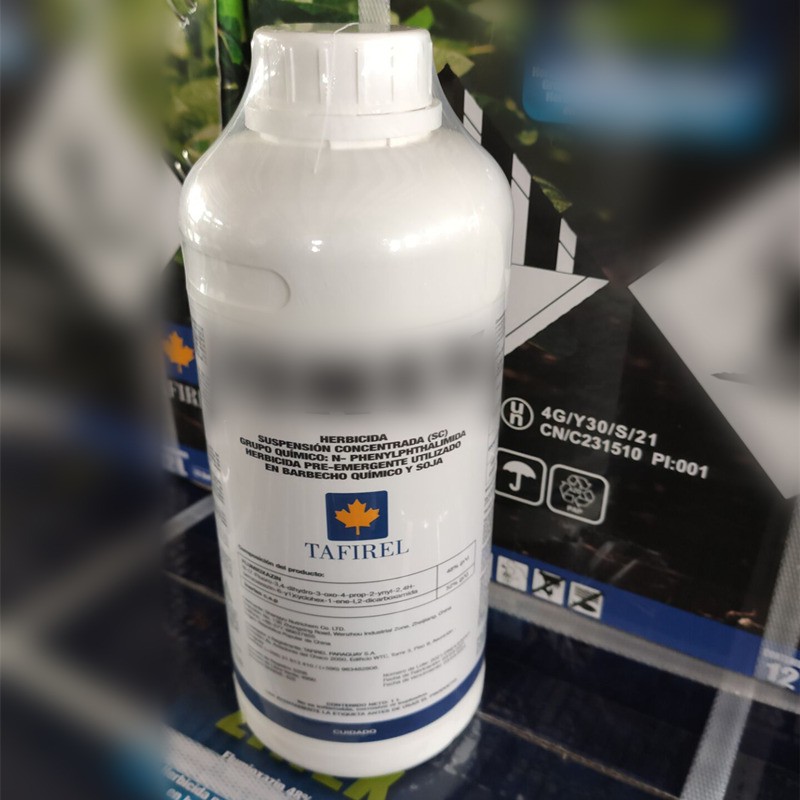
Now, I'd like to introduce one of our popular products, Flumioxazin 480G/L SC. This formulation of flumioxazin is highly effective in controlling a wide range of broadleaf and grassy weeds. It has a fast - acting mode of action, and you can see the color changes in the target weeds within a few days of application.
The 480G/L SC formulation is easy to mix and apply. It can be used in various crops, including soybeans, peanuts, and vineyards. When using this product, make sure to wear appropriate protective clothing and follow the safety instructions.
In terms of the color changes, with our Flumioxazin 480G/L SC, you'll notice that the target weeds start to bleach and turn white within 2 - 3 days of application. If you look closely, you may also see some reddish or purple tints developing in the affected areas. This is a clear indication that the herbicide is working and that the weeds are on their way out.
But remember, as I mentioned earlier, it's crucial to avoid contact with non - target plants. If you're unsure about the application, it's always a good idea to do a small test patch first.
So, to sum it up, flumioxazin has a significant effect on the color of plants. It causes bleaching, whitening, and in some cases, the development of reddish or purple tints. These color changes are a result of the disruption of chlorophyll synthesis and the production of stress - related pigments.
If you're in the market for an effective herbicide that can give you visible results in terms of weed control, our flumioxazin products, like the Flumioxazin 480G/L SC, are definitely worth considering. Whether you're a large - scale farmer or a small - scale gardener, we have the right solution for you.
If you're interested in learning more about our flumioxazin products or want to discuss your specific weed control needs, don't hesitate to reach out. We're here to help you make the most of your growing season and keep those pesky weeds at bay.
References
- Duke, S. O., & Powles, S. B. (2008). Glyphosate: A once - in - a - century herbicide. Pest Management Science, 64(4), 319 - 325.
- Dayan, F. E., Duke, S. O., & Romagni, J. G. (2010). Natural products as sources of herbicides: current status and future trends. Journal of Agricultural and Food Chemistry, 58(11), 6699 - 6710.
- Nandula, V. K., Reddy, K. N., & Webster, T. M. (2008). Influence of soil texture and organic matter on flumioxazin activity. Weed Technology, 22(3), 438 - 444.


