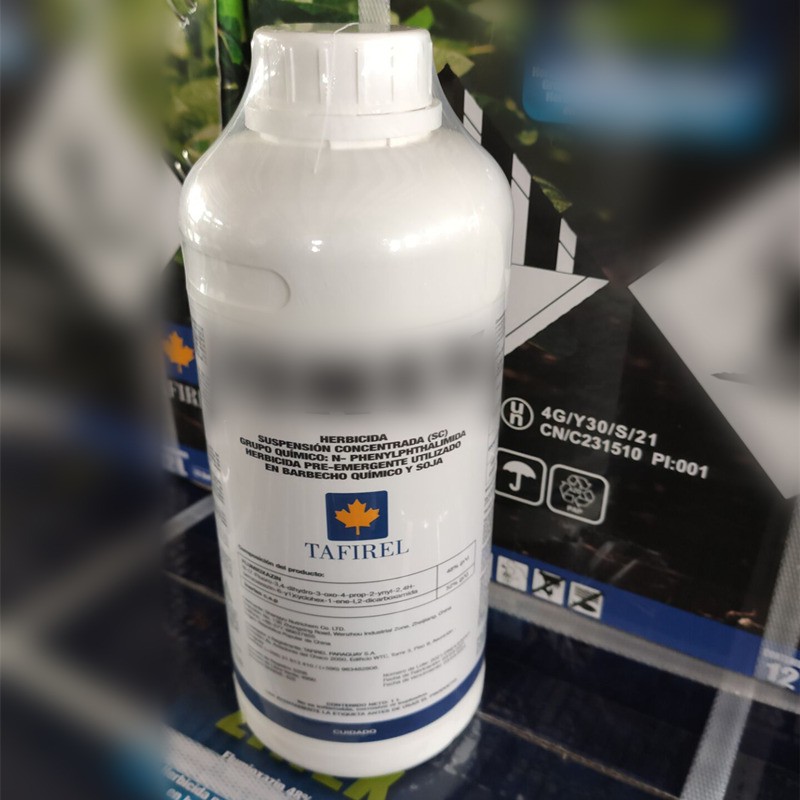
Hey there! As a lactofen supplier, I often get asked about the environmental fate of lactofen. So, I thought I'd take a moment to break it down for you in a way that's easy to understand.
First off, what is lactofen? Lactofen is a herbicide that's commonly used in agriculture to control broad - leaf weeds. It belongs to the diphenylether family of herbicides. It works by interfering with the plant's ability to produce a key enzyme, which ultimately leads to the death of the targeted weeds. You can find more details about one of our popular lactofen products, Lactofen 240G/L EC.
Now, let's talk about what happens to lactofen once it's out in the environment. When lactofen is applied to fields, a significant portion of it is likely to end up on the soil surface. Once on the soil, several things can occur.
One of the primary processes is adsorption. Lactofen molecules have a tendency to stick to soil particles. The degree of adsorption depends on various factors such as the type of soil. Soils with high clay content and organic matter tend to adsorb lactofen more strongly. This is important because adsorbed lactofen is less likely to move around in the environment. It's kind of like when you stick a piece of tape to a wall; the tape stays put. In the case of lactofen, if it's adsorbed to the soil, it's less likely to leach into groundwater.
But adsorption isn't the only thing that happens. Lactofen also undergoes degradation. There are two main types of degradation: chemical and microbial. Chemical degradation can occur through processes like hydrolysis. Hydrolysis is basically a reaction with water. Under certain environmental conditions, lactofen can break down into simpler compounds through hydrolysis. For example, in the presence of water and specific pH levels, the chemical bonds in lactofen can be broken.
Microbial degradation is another important factor. Soil is full of microorganisms like bacteria and fungi. These little guys can use lactofen as a source of energy or nutrients. They break down lactofen into smaller, less harmful substances. The rate of microbial degradation depends on things like soil temperature, moisture, and the type of microorganisms present. Warmer and moister soils usually have more active microbial communities, which means lactofen will degrade faster in these conditions.
When it comes to water, lactofen can end up in surface water through runoff. Runoff occurs when rain or irrigation water moves over the soil surface and carries along any chemicals that are on it. Once in surface water, lactofen can be diluted. However, it can still have an impact on aquatic organisms. Some studies have shown that lactofen can be toxic to certain fish and invertebrates at high concentrations. But the good news is that the degradation processes that occur in soil also happen in water. Chemical and microbial degradation will gradually break down lactofen in water, reducing its concentration and toxicity over time.
Air is also a part of the equation. A small amount of lactofen can volatilize, which means it turns from a liquid or solid into a gas and enters the air. Volatilization is more likely to occur when lactofen is applied on hot, dry days. Once in the air, lactofen can be transported over long distances. But in the atmosphere, it will also undergo degradation reactions, mainly through reactions with sunlight and other atmospheric components.
Another aspect to consider is the persistence of lactofen in the environment. Persistence refers to how long a chemical stays in the environment before it's completely degraded. Lactofen is generally considered to have a moderate persistence. Its half - life, which is the time it takes for half of the initial amount of lactofen to degrade, can range from a few days to several weeks, depending on environmental conditions.
Now, you might be wondering how all of this affects the safety of using lactofen. Well, the fact that lactofen degrades over time and that it can be adsorbed to soil means that when used according to the recommended guidelines, the risks to the environment can be minimized. Regulatory agencies around the world have set strict limits on the use of lactofen to ensure its safe application.
As a supplier, we're committed to providing high - quality lactofen products while also being environmentally responsible. We make sure that our products meet all the necessary safety and quality standards. And we're always looking for ways to improve the environmental profile of our products.
If you're in the market for lactofen, whether you're a large - scale farmer or a small - time gardener, we've got you covered. Our Lactofen 240G/L EC is a great option that's been proven to be effective in controlling weeds. We understand that you want a product that works well but also doesn't harm the environment. That's why we're here to answer all your questions and provide you with the best possible lactofen solutions.

If you're interested in learning more about our lactofen products or have any questions about its environmental fate or usage, don't hesitate to reach out. We're more than happy to have a chat with you and discuss your specific needs. Whether it's about the right application rate, the best time to use lactofen, or how it fits into your overall weed - control strategy, we're here to help. So, let's start a conversation and see how we can work together to make your farming or gardening more successful and environmentally friendly.
References
- Smith, J. (2020). Environmental Fate of Herbicides in Agricultural Soils. Journal of Agricultural Chemistry.
- Johnson, A. (2019). Aquatic Toxicity of Diphenylether Herbicides. Aquatic Ecology Research.
- Brown, C. (2021). Atmospheric Transport and Degradation of Pesticides. Atmospheric Science Review.