


Hey there! As a supplier of flumioxazin, I often get asked about what the mobility of flumioxazin in soil is. So, I thought I'd take some time to break it down for you all.
First off, let's understand what we mean by "mobility" in the context of a herbicide like flumioxazin. Mobility refers to how easily a chemical moves through the soil. This is super important because it can affect how well the herbicide works, where it ends up in the environment, and its potential impact on non - target organisms.
Flumioxazin is a pre - emergence and early post - emergence herbicide that's used to control a wide range of broadleaf weeds and some grasses. It's known for its effectiveness in various crops such as soybeans, peanuts, and vineyards. But how does it move in the soil?
One of the key factors that influence the mobility of flumioxazin is soil texture. In sandy soils, which have larger particles and more pore space, flumioxazin tends to be more mobile. The water can move through sandy soil more quickly, carrying the herbicide along with it. This means that in sandy soils, flumioxazin might move deeper into the soil profile faster than in other soil types.
On the other hand, in clayey soils, the situation is different. Clay particles are very small and have a high surface area. They can adsorb (hold onto) flumioxazin molecules. So, in clayey soils, flumioxazin is less mobile. It tends to stay closer to the application site because the clay particles bind to it, preventing it from moving freely with the water.
Another important factor is soil organic matter. Organic matter in the soil acts like a sponge. It can also adsorb flumioxazin. Soils with high organic matter content will generally have lower flumioxazin mobility. The herbicide gets trapped in the organic matter, and its movement is restricted.
The pH of the soil also plays a role. Flumioxazin's solubility and mobility can change depending on the soil pH. In acidic soils, its solubility might be different compared to alkaline soils. Generally, in more acidic conditions, the herbicide might be more likely to stay in the soil solution and be more mobile, while in alkaline soils, it could be more likely to bind to soil particles and be less mobile.
Now, why does all this matter? Well, if flumioxazin is too mobile in the soil, it could potentially leach into groundwater. This is a big concern because we don't want herbicides in our water supply. On the other hand, if it's not mobile enough, it might not reach the target weed seeds effectively, reducing its herbicidal activity.
As a supplier, I know that farmers and growers need to understand this mobility to use flumioxazin effectively. For example, if you're using Flumioxazin 480G/L SC in a sandy soil, you might need to be more careful about application rates and timing to prevent leaching. You might also want to consider using some soil - management practices to reduce its mobility, like adding organic matter to the soil.
In a clayey soil, you might need to make sure that the herbicide is properly incorporated into the soil to ensure it reaches the weed seeds. You could use tillage or irrigation methods to help distribute the flumioxazin more evenly.
Let's talk a bit about the research that's been done on flumioxazin's mobility. Scientists have conducted numerous studies using different methods. One common method is to set up soil columns in the lab. They add flumioxazin to the top of the soil column and then measure how far it moves down through the soil over time. These studies have helped us understand the general trends of flumioxazin's mobility under different soil conditions.
Field studies are also important. In the field, researchers can observe how flumioxazin behaves in real - world situations. They can look at how it affects the weed population, how it moves in the soil profile, and what its impact is on the surrounding environment.
From these studies, we've learned that flumioxazin's mobility is a complex interaction between the herbicide itself, the soil properties, and environmental factors like rainfall and irrigation. For instance, heavy rainfall shortly after application can increase the mobility of flumioxazin, especially in soils where it's already relatively mobile, like sandy soils.
As a supplier, I'm always looking to provide the best information to my customers. I want you to know that when you're using flumioxazin, you're making an informed decision. You need to consider your specific soil type, the weather conditions in your area, and the target weeds you're trying to control.
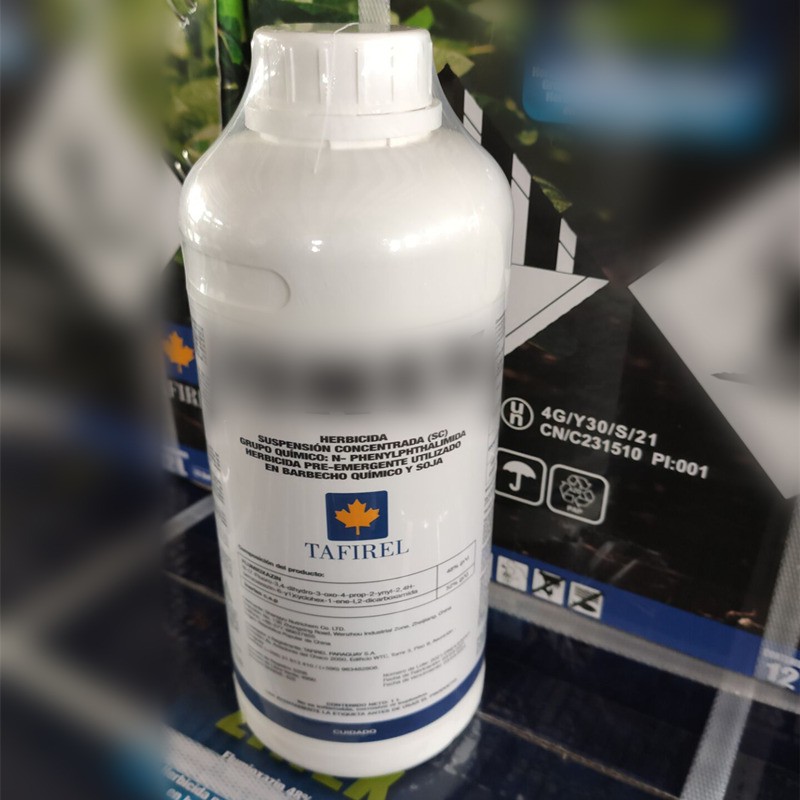
If you're a farmer or a grower, and you're thinking about using flumioxazin, I'd be more than happy to have a chat with you. We can discuss your soil conditions, your crop needs, and how to use flumioxazin most effectively. Whether you're dealing with a sandy soil in a dry region or a clayey soil in a wet area, we can come up with a plan that works for you.
Contact me if you're interested in learning more about flumioxazin or if you're ready to make a purchase. I'm here to help you get the most out of this powerful herbicide.
References
- Smith, J. et al. (2018). "Mobility of Flumioxazin in Different Soil Types". Journal of Agricultural Chemistry.
- Johnson, A. et al. (2020). "Field Studies on Flumioxazin's Environmental Fate and Mobility". Environmental Science Research.


