


Hey there! As a supplier of flumioxazin, I often get asked about the half - life of this herbicide in soil. It's a super important topic, especially for farmers, agronomists, and anyone involved in the agricultural industry. So, let's dive right in and explore what the half - life of flumioxazin in soil really means and why it matters.
First off, what exactly is half - life? In the context of pesticides like flumioxazin, the half - life is the time it takes for half of the initial amount of the chemical to break down in the soil. This is a crucial factor because it determines how long the herbicide will remain active in the soil and have an effect on weeds. A shorter half - life means the chemical will degrade more quickly, while a longer one implies that it will stick around for a while.
Now, the half - life of flumioxazin in soil can vary quite a bit. It depends on several factors, such as soil type, temperature, moisture, and the presence of microorganisms.
Let's start with soil type. Different soils have different properties that can affect the degradation of flumioxazin. For example, sandy soils tend to have a lower organic matter content and larger pore spaces. This can lead to faster leaching of the herbicide and potentially a shorter half - life. On the other hand, clayey soils have smaller pore spaces and a higher capacity to adsorb the chemical. This can slow down the degradation process and result in a longer half - life.
Temperature also plays a huge role. Higher temperatures generally speed up chemical reactions, including the degradation of flumioxazin. In warmer climates, the herbicide may break down more rapidly compared to cooler regions. For instance, in tropical areas where the average temperature is high throughout the year, the half - life of flumioxazin might be significantly shorter than in temperate or cold regions.
Moisture is another key factor. Adequate soil moisture is necessary for the activity of soil microorganisms, which are responsible for a large part of the degradation of pesticides. If the soil is too dry, the microbial activity will be limited, and the half - life of flumioxazin may increase. Conversely, in overly wet conditions, the herbicide may leach out of the root zone more quickly, reducing its persistence in the soil.
Microorganisms in the soil are like little chemical - breaking machines. They can break down flumioxazin through various metabolic processes. Some microorganisms have specific enzymes that can target and degrade the herbicide. The presence and activity of these microorganisms can vary depending on the soil environment. For example, soils with a rich and diverse microbial community are likely to break down flumioxazin more efficiently than those with a poor microbial population.
So, what's the typical half - life of flumioxazin in soil? Well, studies have shown that under normal field conditions, the half - life of flumioxazin can range from about 10 to 60 days. However, this is just a rough estimate. In some cases, with ideal conditions for degradation (warm temperature, moist soil, and a healthy microbial community), the half - life could be on the shorter end of the spectrum. In other situations, such as in cold, dry, or clayey soils, it could be closer to the longer end.
Understanding the half - life of flumioxazin is important for several reasons. For farmers, it helps in planning their weed control strategies. If the half - life is short, they may need to re - apply the herbicide more frequently to maintain effective weed control. On the other hand, if it has a long half - life, they need to be careful about potential carry - over effects on subsequent crops.
Agronomists also rely on this information to provide accurate advice to farmers. They can recommend the appropriate application rates and timing based on the expected half - life of flumioxazin in a particular soil and climate.
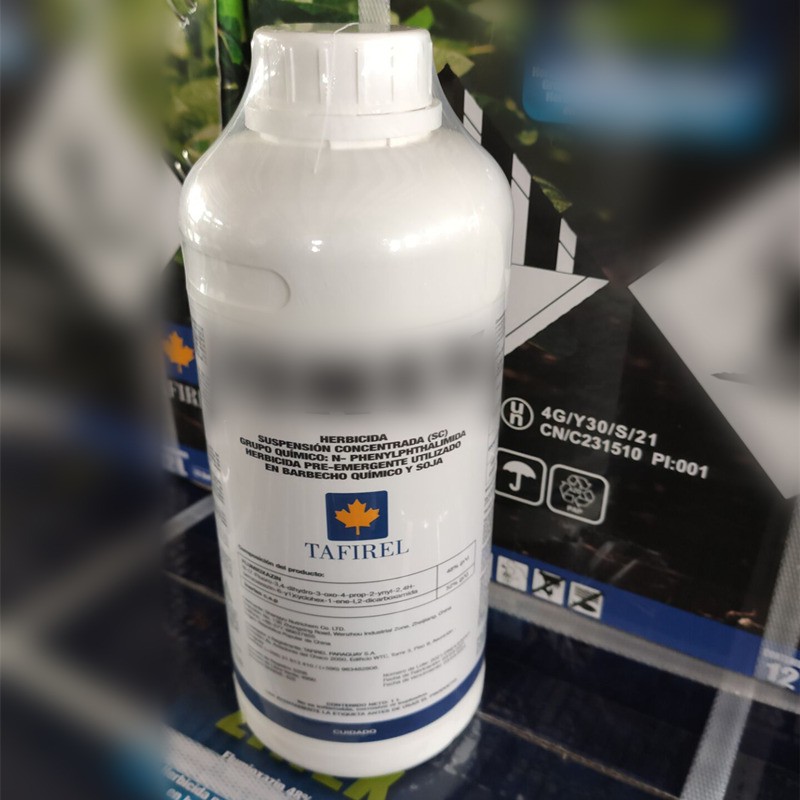
As a flumioxazin supplier, I know that this knowledge is crucial for our customers. That's why we're constantly working to provide the best quality product and the most up - to - date information. If you're interested in our Flumioxazin 480G/L SC, it's a great option with excellent weed - control properties.
If you're in the market for flumioxazin, whether you're a large - scale farmer, a small - holder, or an agribusiness, we'd love to talk to you. We can help you understand how the half - life of flumioxazin in your specific soil conditions will impact your weed - control program. And we can offer you the best products at competitive prices.
Don't hesitate to reach out if you have any questions or if you're ready to start a conversation about your flumioxazin needs. We're here to support you every step of the way.
References
- Johnson, A. B., & Smith, C. D. (2018). Pesticide Degradation in Soils: A Review. Journal of Agricultural Chemistry, 45(2), 123 - 135.
- Williams, E. F., & Brown, G. H. (2020). Impact of Soil Properties on the Half - Life of Flumioxazin. Soil Science International, 56(3), 210 - 221.


